

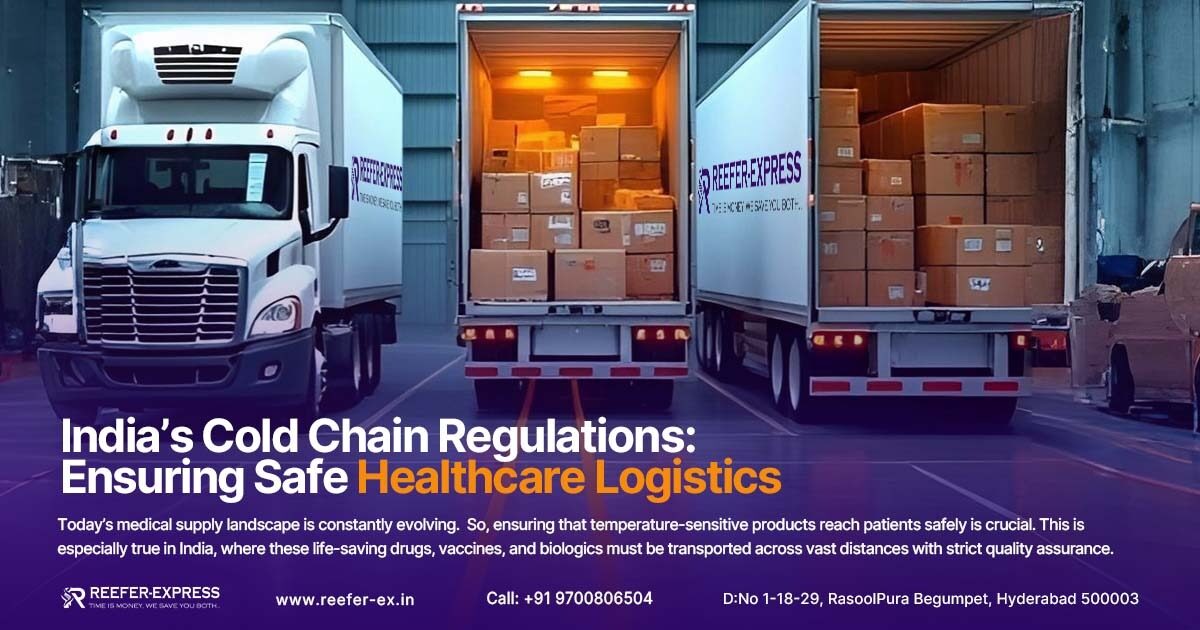
Today’s medical supply landscape is constantly evolving. So, ensuring that temperature-sensitive products reach patients safely is crucial. This is especially true in India, where these life-saving drugs, vaccines, and biologics must be transported across vast distances with strict quality assurance.
For any healthcare logistics company in India, understanding and complying with the regulatory framework for temperature-sensitive goods is a moral imperative.
Come learn about the regulations, compliance mechanisms, and real-world best practices that shape India’s cold chain ecosystem. These rules empower logistics professionals to uphold the highest standards.
What Are Temperature-Sensitive Goods and Why Does Regulation Matter?
Temperature-sensitive goods include pharmaceuticals like vaccines, insulin, biologics, and certain diagnostic materials. These materials can lose potency when exposed to temperatures outside a narrow range. Any deviation during storage or transport can render them unsafe or ineffective, risking patient health.
Regulation is essential because it:
- Protects patient safety
- Maintains drug efficacy
- Reduces wastage and economic loss
- Builds trust in supply chains
Regulatory oversight ensures every link in the supply chain adheres to strict standards, starting from warehouses to refrigerated transport vehicles.
Which Bodies Govern Cold Chain and Healthcare Logistics in India?
Here are the major bodies that govern this sector in the country:
Central Drugs Standard Control Organization (CDSCO)
The CDSCO is the principal authority overseeing pharmaceutical products, including their storage, distribution, and quality control across the country. It ensures that all drug logistics, especially those involving temperature sensitivity, meet Indian and international safety benchmarks.
Food Safety and Standards Authority of India (FSSAI)
While FSSAI primarily handles food products, many cold chain platforms handle both food and medical supplies. So, FSSAI’s standards on hygiene, temperature control, and handling contribute to broader cold chain compliance.
National Centre for Cold-chain Development (NCCD)
The NCCD acts as a nodal think-tank, steering policy recommendations and industry standards for cold chains. It brings together government, industry, and technical experts to strengthen infrastructure and compliance.
International Standards Influencing India
India aligns with guidelines like Good Distribution Practices (GDP), World Health Organization (WHO) recommendations, and global standards that guide temperature monitoring, storage, and transport safety.
What Regulatory Framework Applies to Temperature-Sensitive Pharmaceuticals?
At the core of India’s pharmaceutical compliance system are the Drugs and Cosmetics Rules. It governs the import, storage, distribution, and sale of medicines. These rules include clauses for temperature-controlled products, ensuring they are handled according to specified conditions throughout the logistics process.
Good Distribution Practices (GDP)
GDP standards are widely recognized globally. They have been adopted in India to ensure that products remain within acceptable temperature ranges. It is typically 2-8°C for refrigerated items, but with specific variations depending on the product. Companies are required to:
- Maintain validated storage and transport environments
- Use temperature-monitoring devices and data loggers
- Document temperature excursions and corrective actions
- Train personnel in standard operating procedures (SOPs)
GDP guidelines help harmonize the country’s logistics protocols with international expectations.
Good Manufacturing Practices (GMP)
GMP principles, though mostly meant for production, extend into cold chain components as well. Facilities handling temperature-sensitive products must have qualified equipment, documented procedures, and monitoring systems that align with GMP requirements.
What Does Compliance Look Like in Practice for a Healthcare Logistics Company in India?
Here is how logistics companies follow the rules and regulations:
Temperature Monitoring and Control
Devices such as real-time sensors and data loggers are now essential tools for compliance. Cold chain solution companies and suppliers get continuous monitoring and can generate reports required for audits. This ensures that any temperature excursions are instantly flagged and corrected.
Documentation and Traceability
Accurate records from manufacturing through the final delivery point are mandatory. Traceability ensures that products can be tracked through every step. It strengthens accountability and quality assurance.
Facility and Vehicle Requirements
Cold chain facilities and vehicles must be designed to maintain precise temperature ranges. This often includes multilayer insulation, backup power systems, and contingency protocols to prevent temperature deviations.
Training and SOPs
Regulatory compliance isn’t just about technology; it’s about the people handling the products. Staff at every level must be trained in SOPs, safety protocols, emergency response procedures, and record-keeping to ensure smooth operations.
How Do Cold Chain Solution Companies Navigate These Regulations?
A reputable Cold Chain Solution Company in India will integrate regulatory compliance as a core part of its service offering. This means:
- Implementing GDP-compliant processes
- Using certified infrastructure and transport vehicles
- Offering temperature-monitoring technologies
- Ensuring trained personnel handle complex logistics
- Maintaining robust documentation that meets audit standards
This dedication plays a crucial role in upholding quality and safety for healthcare products across the country.
How Is the Regulatory Framework Evolving?
The country is investing in strengthening its cold chain through new policies, infrastructure incentives, and alignment with international best practices. These efforts aim to:
- Standardize compliance across regions
- Expand temperature-controlled networks
- Encourage adoption of IoT and real-time tracking solutions
- Foster training and certification programs for logistics staff.
As technology and regulation evolve together, Indian healthcare logistics will continue to become more robust, transparent, and safe.
Why Compliance Matters for Your Supply Chain?
Robust regulatory compliance is a foundation for trust, quality, and safety in India’s healthcare logistics landscape. Whether it is a logistics manager, pharmaceutical partner, or healthcare provider, understanding and implementing these frameworks ensures temperature-sensitive goods reach their destination with integrity intact.
If you’re looking for a trusted partner that understands compliance inside out, Reefer Express offers advanced solutions tailored to India’s diverse geography and stringent standards.
For businesses ready to elevate their cold chain operations, we deliver reliable, compliant, and end-to-end support.
As the complexity of medical logistics grows, aligning with regulatory best practices becomes a competitive advantage for any healthcare logistics company aiming for excellence. Contact us today to learn more!