

Temperature-controlled logistics plays a decisive role in pharmaceutical distribution, where product stability is as important as delivery itself. Medicines, injectables, vaccines, and temperature-sensitive formulations must remain within strict thermal limits throughout transportation to preserve efficacy and meet regulatory standards. In this context, refrigerated transport solutions form the backbone of dependable pharmaceutical cold chain logistics, supporting consistent and controlled movement across regional and long-distance routes.
Why Temperature-Controlled Logistics Is Essential for Pharmaceuticals
Pharmaceutical products are highly sensitive to temperature fluctuations, and even brief deviations can impact drug quality and patient safety. Temperature-controlled logistics ensures that medicines are transported under validated conditions from dispatch to delivery. Unlike general cargo transport, pharmaceutical logistics requires disciplined temperature management, monitored handling, and process consistency to protect product integrity throughout the supply chain.
The Role of Refrigerated Transport in Pharma Distribution Networks
Refrigerated transport services enable pharmaceutical companies to maintain stable cold chain conditions across manufacturing units, warehouses, distribution centers, hospitals, and pharmacies. These services focus on continuity rather than urgency, allowing medicines to move under controlled environments across planned delivery cycles. This stability is critical for routine pharmaceutical distribution, stock replenishment, and regional supply operations.
Refrigerated Trucking as a Controlled Cold Chain Environment
Refrigerated trucking for pharmaceuticals is designed to function as a mobile cold storage environment. Insulated vehicles and calibrated refrigeration systems maintain consistent temperature ranges throughout transit, even during extended journeys. This controlled environment reduces exposure risks, limits handling disruptions, and supports safe transport of temperature-sensitive medicines at scale.
Monitoring and Visibility in Temperature-Controlled Logistics
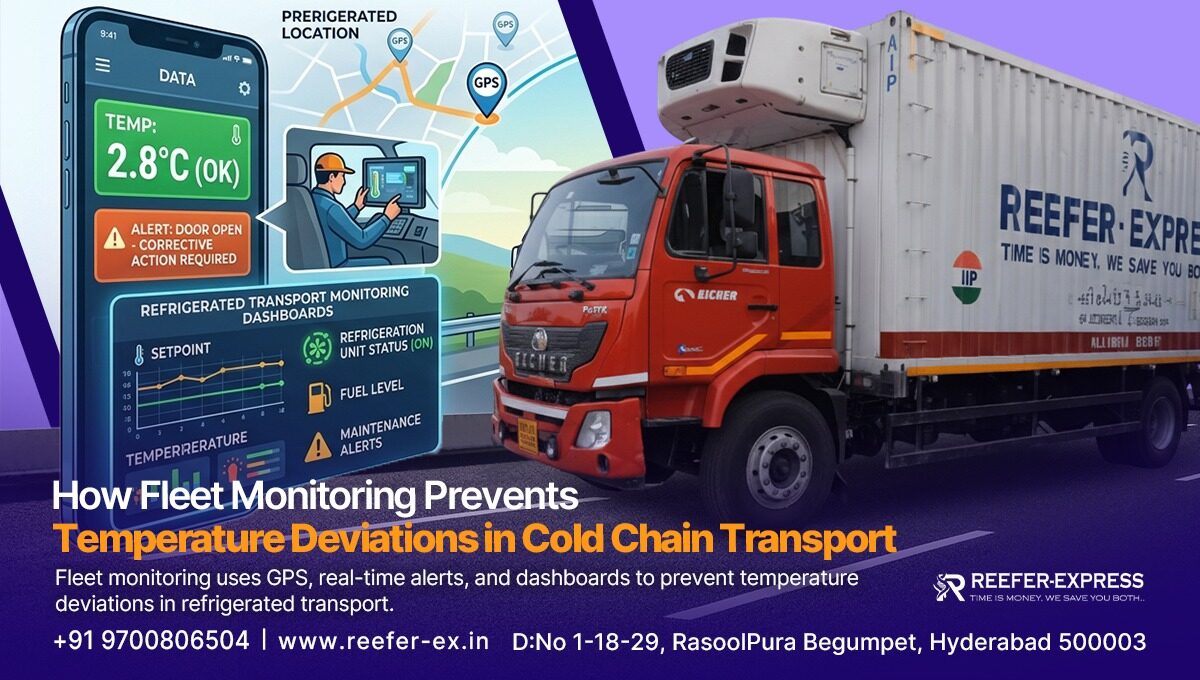
Modern temperature-controlled logistics relies on continuous monitoring to ensure compliance and accountability. Real-time temperature tracking, GPS visibility, and digital logging systems provide insight into shipment conditions throughout transit. This visibility allows logistics teams to respond proactively to deviations, preventing losses before they occur and supporting regulatory documentation requirements.
Compliance and Quality Assurance in Pharmaceutical Cold Chains
Pharmaceutical cold chain logistics must align with strict regulatory frameworks and quality standards. Refrigerated transport operations support compliance by maintaining documented temperature records, validated processes, and traceable shipment data. This level of quality assurance not only protects products but also strengthens audit readiness and long-term trust with pharmaceutical partners.
Reefer’s Approach to Temperature-Controlled Pharmaceutical Logistics
At Reefer, temperature-controlled logistics is built around stability, monitoring, and operational discipline. Refrigerated transport solutions are designed to maintain consistent temperature conditions throughout planned pharmaceutical distribution routes. By focusing on controlled environments and compliance-driven operations, Reefer supports pharmaceutical partners in preserving product integrity across the cold chain.
Conclusion
Temperature-controlled logistics is not simply a transport service; it is a safeguard for pharmaceutical quality and patient safety. Reliable refrigerated transport solutions ensure medicines arrive in the same condition they were dispatched, supporting compliance and continuity across supply chains. As pharmaceutical distribution grows in complexity, dependable temperature-controlled logistics remains essential for maintaining trust, stability, and operational excellence.
Frequently Asked Questions (FAQ)
1. What is temperature-controlled logistics in pharmaceuticals?
Temperature-controlled logistics in pharmaceuticals refers to transporting medicines under strict temperature conditions to maintain safety, effectiveness, and regulatory compliance throughout the supply chain.
2. Why is refrigerated transport important for pharmaceutical products?
Refrigerated transport is important because many pharmaceutical products can degrade if exposed to temperature variations. Controlled refrigeration preserves drug quality and reduces compliance risks.
3. How does temperature monitoring support cold chain logistics?
Temperature monitoring provides real-time visibility into shipment conditions, allowing early detection of deviations and enabling corrective action before product integrity is compromised.
4. What regulations apply to pharmaceutical cold chain logistics?
Pharmaceutical cold chain logistics must follow Good Distribution Practices and other regulatory guidelines that require validated temperature control, documentation, and traceability.
5. How does Reefer ensure reliable temperature-controlled logistics?
Reefer ensures reliability through monitored refrigerated transport, disciplined handling processes, consistent temperature control, and compliance-focused logistics operations.