



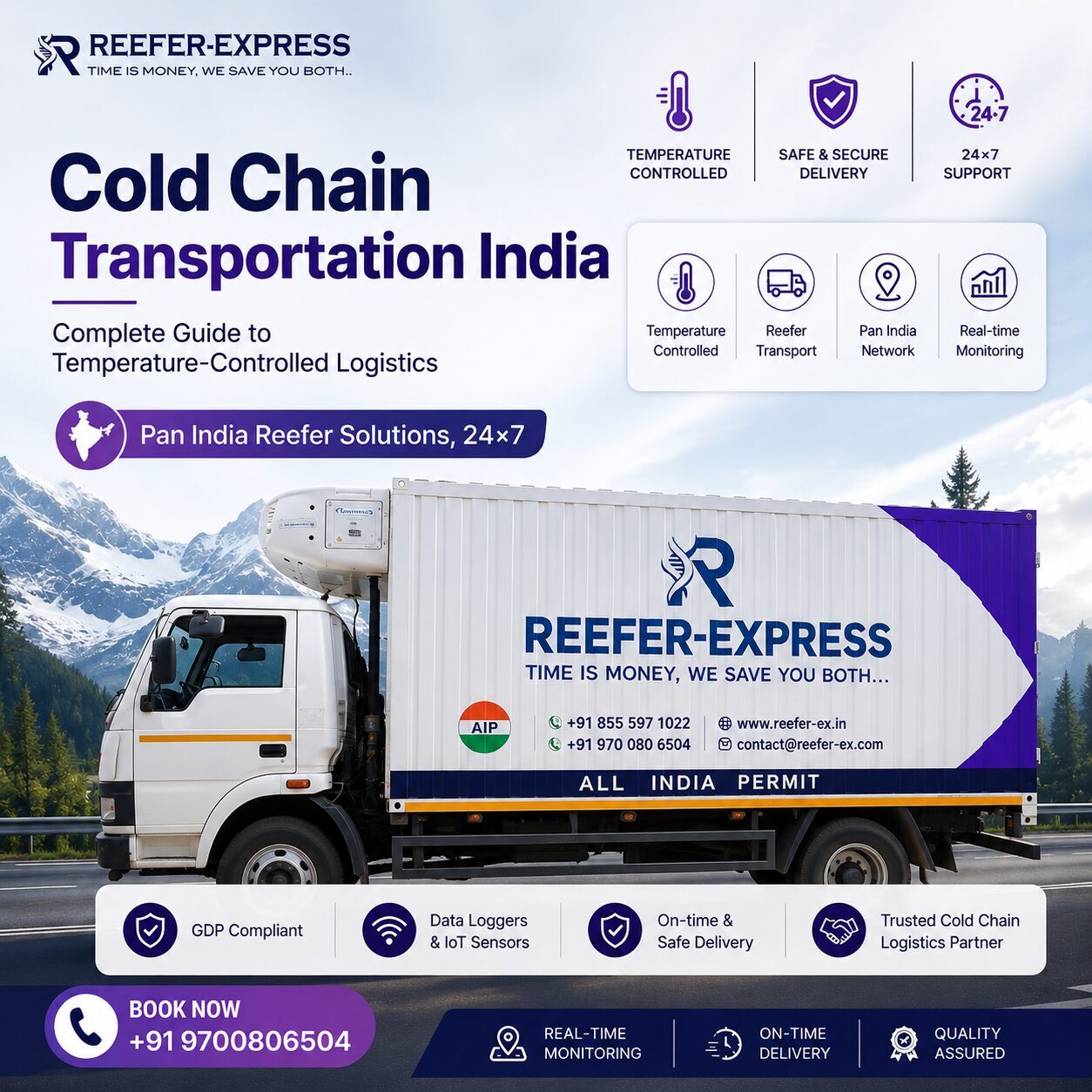
Cold chain transportation in India has emerged as one of the most critical pillars of modern supply chain infrastructure. As the country’s pharmaceutical, healthcare, food, and biotechnology sectors continue to expand at a rapid pace, the demand for reliable, temperature-controlled logistics has never been higher. Whether it’s a life-saving vaccine travelling from a manufacturing plant in Hyderabad to a remote health centre in Assam, or fresh produce making its way from farms in Maharashtra to supermarkets in Delhi, maintaining an unbroken cold chain is essential to preserving product integrity, safety, and efficacy.
India’s unique geographic diversity, tropical climate, and rapidly growing middle class make cold chain logistics both indispensable and challenging. With the pharmaceutical sector alone valued at over USD 50 billion and the food processing industry growing steadily, the need for professional refrigerated transport partners has reached an all-time high. This comprehensive guide covers everything businesses need to know about cold chain transportation from how it works to how to choose the right logistics partner.
What is Cold Chain Transportation?
Cold chain transportation is the movement of temperature-sensitive products through a controlled logistics network that maintains specific temperature ranges during storage and transit to preserve product quality, safety, and effectiveness. It encompasses refrigerated vehicles, specialised packaging, real-time monitoring technology, and trained personnel working together to prevent temperature excursions from origin to final delivery.
Common temperature ranges used in cold chain logistics include:
2°C to 8°C — Vaccines, biologics, and most pharmaceutical product
-15°C to -25°C — Frozen foods, certain plasma products, and ice cream
Below -60°C — Ultra-cold products such as certain mRNA vaccines
15°C to 25°C — Controlled room temperature (CRT) pharmaceuticals
Why Cold Chain Transportation is Important in India
India’s vast geography spanning over 3.2 million square kilometres with varying climatic zones from the Himalayan highlands to coastal tropics makes maintaining temperature integrity across long distances a significant operational challenge. Several factors highlight why robust cold chain transportation is non-negotiable:
India is the world’s largest vaccine producer, supplying over 60% of global vaccine demand, making uninterrupted cold chain logistics a public health imperative.
The pharmaceutical sector contributes significantly to export revenue, and international buyers demand full GDP (Good Distribution Practice) compliance.
India wastes an estimated 30–40% of fresh produce annually due to inadequate cold chain infrastructure, representing billions in economic losses.
FSSAI regulations mandate temperature-controlled storage and transport for a wide range of food products.
The COVID-19 pandemic underscored the critical need for a resilient and scalable cold chain network capable of handling large-scale vaccine distribution.
Industries That Depend on Cold Chain Transportation
Pharmaceuticals
The pharmaceutical industry is perhaps the largest driver of cold chain demand in India. Medicines such as insulin, biologics, monoclonal antibodies, and specialty drugs are highly temperature-sensitive. Even a brief excursion outside the recommended range can degrade potency, render a product unsafe, and result in costly recalls. Pharmaceutical companies rely on temperature-controlled transportation for domestic distribution as well as for export shipments that must comply with WHO and IATA standards.
Vaccines
Vaccines represent one of the most demanding categories in cold chain logistics. The WHO stipulates that most vaccines must be maintained between 2°C and 8°C throughout the entire supply chain from manufacturer to the point of administration. Any temperature breach not only compromises vaccine efficacy but can also endanger lives. India’s Universal Immunisation Programme (UIP) depends entirely on a well-functioning cold chain network to reach children across the country.
Food and Beverage
Dairy products, frozen foods, fresh produce, seafood, and processed meats all require strict temperature management. The food and beverage sector relies on refrigerated transport to reduce spoilage, meet FSSAI compliance requirements, and deliver products that meet consumer safety standards. The rise of quick commerce and online grocery delivery has further intensified the need for last-mile cold chain capabilities.
Biotechnology
Biotechnology firms transport research materials, clinical trial samples, cell cultures, and genetic specimens that often require ultra-low temperatures. These shipments are not just commercially valuable they can represent years of irreplaceable research. Precision, reliability, and real-time monitoring are critical for this sector.
How Cold Chain Transportation Works
Temperature-Controlled Storage
The process begins at temperature-controlled warehouses or cold storage facilities where products are held at the required temperature until ready for dispatch. These facilities maintain precise climatic conditions and are equipped with backup power systems, temperature alarms, and regular calibration protocols.
Refrigerated Vehicles (Reefer Trucks)
Specialised refrigerated trucks commonly called reefer vehicles are equipped with integrated cooling units capable of maintaining temperatures from -25°C to +25°C, depending on cargo requirements. Modern reefer fleets include multi-temperature compartments to carry different products simultaneously.
Packaging and Insulation
Validated cold chain packaging including insulated boxes, gel packs, dry ice, and phase-change materials provides an additional layer of thermal protection during loading, unloading, and any unexpected delays. Packaging is selected based on payload type, transit duration, and ambient temperature conditions.
Real-Time Monitoring
GPS trackers and IoT-enabled data loggers continuously record temperature, humidity, and location data throughout the journey. Automated alerts notify operations teams the moment a deviation is detected, enabling rapid corrective action before products are compromised.
Delivery and Documentation
Upon delivery, complete temperature logs, chain-of-custody records, and compliance certificates are handed over to the recipient. This documentation is essential for regulatory audits, pharmaceutical batch release, and quality assurance records.
Key Challenges in Cold Chain Transportation India
Despite rapid progress, cold chain logistics in India faces several structural and operational hurdles:
Temperature Excursions: Inadequate pre-cooling, improper loading, or door breaches during transit can cause brief but damaging temperature spikes.
Infrastructure Gaps: Many rural and semi-urban areas still lack adequate cold storage facilities, creating ‘last-mile’ challenges for reaching remote locations.
Long-Distance Hauls: Transporting temperature-sensitive goods across multiple states involves longer transit times, increasing exposure risk and logistics complexity.
Regulatory Compliance: Meeting CDSCO, FSSAI, and GDP guidelines requires thorough documentation, calibrated equipment, and trained personnel at every touchpoint.
Power Interruptions: Inconsistent power supply in certain regions can disrupt cold storage units, making backup power and generator systems essential.
Seasonal Weather Extremes: Indian summers regularly push ambient temperatures above 45°C in some regions, placing additional strain on refrigeration systems.
Benefits of Professional Cold Chain Logistics Services
Product Integrity: Ensures pharmaceuticals and food products reach consumers in the exact condition they left the manufacturer.
Regulatory Compliance: Helps organisations meet GDP, FSSAI, CDSCO, and WHO distribution standards with full documentation support.
Reduced Wastage: Minimises product losses caused by temperature deviations, directly improving profitability.
Real-Time Visibility: Continuous GPS and temperature tracking gives operations teams full shipment visibility at all times.
Customer Confidence: Demonstrated cold chain reliability builds trust with clients, regulators, and end consumers.
Supply Chain Efficiency: Streamlined processes, automated alerts, and professional handling reduce delays and operational disruptions.
Technologies Used in Modern Cold Chain Transportation
Data Loggers
Electronic data loggers are compact devices placed inside shipments to record temperature and humidity at set intervals. At delivery, the log provides an immutable record of the entire transit environment, which is essential for pharmaceutical batch documentation and regulatory submissions.
GPS Tracking
Advanced GPS systems track vehicle location in real time, enabling operations teams to monitor route adherence, predict arrival times, and quickly identify any unplanned stoppages that could affect temperature stability.
IoT Sensors
Internet of Things (IoT) sensors installed across vehicles and cold storage units continuously transmit environmental data to central monitoring platforms. This enables predictive maintenance of refrigeration units and early detection of potential failures.
Real-Time Alerts
Automated alert systems notify logistics managers via SMS, email, or mobile applications the moment temperature readings approach or breach acceptable thresholds, enabling rapid intervention and preventing product loss.
Digital Monitoring Platforms
Cloud-based cold chain management platforms integrate data from vehicles, warehouses, and packaging sensors into a single dashboard. These platforms generate compliance reports, audit trails, and analytics that support quality management and regulatory inspections.
How to Choose the Right Cold Chain Transportation Partner in India
Selecting the wrong cold chain partner can result in product losses, compliance failures, and reputational damage. Use this checklist when evaluating potential logistics providers:
GDP Compliance Confirm the provider adheres to WHO Good Distribution Practice guidelines for pharmaceutical logistics.
Fleet Quality Inspect the age, maintenance records, and refrigeration unit specifications of their reefer fleet.
Temperature Monitoring Verify that real-time temperature tracking and data logging are standard, not optional.
Nationwide Coverage Ensure the partner can service all your delivery locations, including tier-2, tier-3 cities, and remote areas.
Emergency Response Capability Assess their protocols for refrigeration failures, vehicle breakdowns, and contingency rerouting.
Industry Experience Prefer partners with a proven track record in your specific industry (pharma, food, biotech) rather than generalist transporters.
Documentation Support Ensure they provide complete transit logs, chain-of-custody certificates, and compliance reports for every shipment.
Why Reefer Express is a Trusted Cold Chain Logistics Partner
Reefer Express has built its reputation as one of India’s most dependable cold chain transportation providers by combining a modern reefer fleet, advanced monitoring technology, and deep pharmaceutical logistics expertise.
Temperature-Controlled Transportation: Multi-temperature reefer vehicles capable of maintaining 2°C–8°C, -20°C, and CRT ranges simultaneously.
Real-Time Tracking: GPS-integrated fleet monitoring with live temperature dashboards accessible to clients 24/7.
Pharmaceutical Logistics Expertise: Dedicated pharma division with GDP-trained personnel and CDSCO-compliant documentation workflows.
Nationwide Operations: Coverage across all major metros, manufacturing hubs, and healthcare distribution centres across India.
Monitoring and Compliance Support: Automated temperature alerts, validated data loggers, and end-to-end documentation for every shipment.
Frequently Asked Questions
What is cold chain transportation?
Cold chain transportation is the end-to-end movement of temperature-sensitive products through a controlled logistics network that maintains specific temperature ranges from origin to destination, preserving product quality, safety, and efficacy throughout.
Why is cold chain transportation important for pharmaceuticals?
Pharmaceutical products such as vaccines, biologics, and insulin can lose potency or become unsafe if exposed to temperatures outside their specified range, even briefly. A robust cold chain ensures these products reach patients in a safe and effective condition, while also meeting CDSCO and GDP regulatory requirements.
What temperature is maintained during vaccine transportation?
Most vaccines require continuous maintenance between 2°C and 8°C during storage and transportation, as mandated by the WHO. Some specialised vaccines, such as certain mRNA vaccines, require ultra-cold storage at temperatures as low as -70°C.
How do refrigerated trucks maintain temperature?
Reefer trucks use integrated refrigeration units powered by the vehicle engine or an independent diesel generator to maintain precise internal temperatures. Advanced models include IoT sensors and data loggers that continuously monitor and record temperature, triggering alerts if any deviation is detected.
What technologies are used in cold chain logistics?
Modern cold chain logistics uses data loggers, GPS tracking systems, IoT sensors, real-time temperature monitoring platforms, automated alert systems, and cloud-based digital dashboards to ensure full visibility and control over every shipment.
How can companies choose a reliable cold chain transportation provider?
Companies should evaluate potential partners on GDP compliance, fleet quality, real-time temperature monitoring capabilities, nationwide coverage, emergency response protocols, industry-specific experience, and the quality of documentation and compliance support they provide.
Looking for Reliable Cold Chain Transportation in India?
Reefer Express provides temperature-controlled logistics solutions with real-time monitoring, compliance support, and nationwide delivery capabilities for pharmaceutical, healthcare, and temperature-sensitive shipments. Our GDP-trained team and modern reefer fleet are ready to protect your products at every step of the journey.
Contact Reefer Express today to discuss your cold chain transportation requirements.
Comments5
[4998]58vin – Nhà Cái Casino Uy Tín | Link Vào & Tải App 58vin Chính Thức,58vin là nhà cái casino uy tín hàng đầu Việt Nam, cung cấp kho game bài, nổ hũ và cá cược thể thao hấp dẫn. Truy cập link vào 58vin chính thức để tải app nhanh chóng, bảo mật và nhận khuyến mãi đặc biệt ngay hôm nay! visit: 58vin
Finally found a site that does not lag during the big wins. The interface is very user friendly and the payouts are legit. Love jili188login so much!
Finally found a site that doesn't lag during peak hours. The graphics are crisp and the bonuses are generous. Give kr12kr333 a try, you wont regret it.
Downloaded the app and it completely changed how I enjoy mobile gaming. The interface is clean and all the popular slots load instantly on my device. I also noticed that the mobile bonuses are just as generous as the desktop version which is a nice surprise. mcwcasinoappdownload
[3415]smashcasino লগইন ও অ্যাপ ডাউনলোড | বিকাশ অনলাইন ক্যাসিনো,smashcasino লগইন করুন এবং বিকাশ দিয়ে অনলাইন ক্যাসিনো গেম উপভোগ করুন। এখানে পাবেন সেরা স্লট গেম সাইট ও লাইভ ক্যাসিনো খেলার নিয়ম। আজই জয়েন করুন। visit: smashcasino