

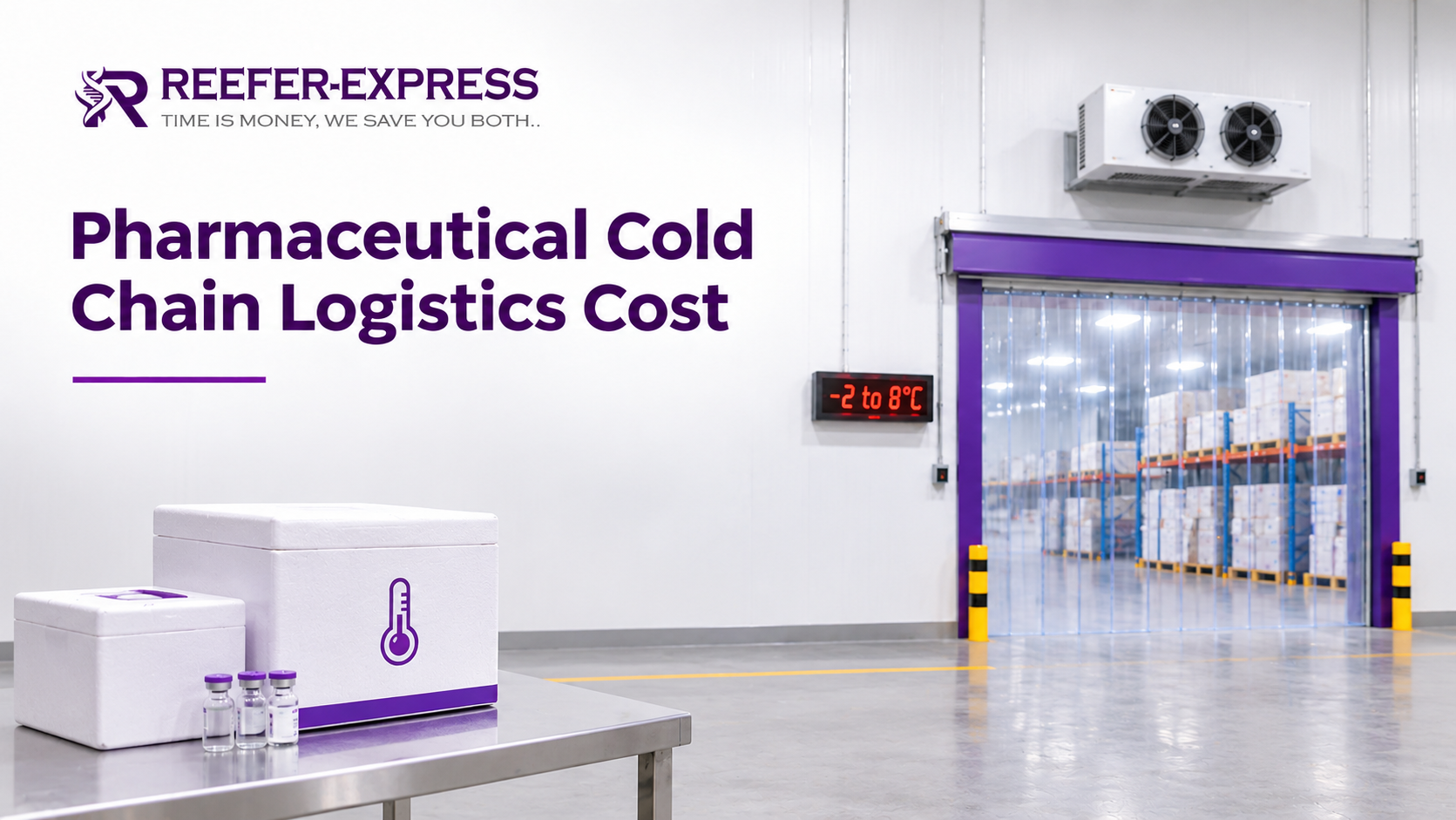
Pharmaceutical cold chain logistics involves more than transporting medicines from one location to another. It includes temperature-controlled storage, packaging, transportation, monitoring, handling, and delivery.
For pharmaceutical manufacturers, distributors, and healthcare businesses, understanding these costs is important when planning logistics budgets and selecting a service provider.
A low transportation rate does not always mean a lower total cost. Storage charges, packaging requirements, temperature monitoring, and shipment delays can increase the overall expense.
This guide explains how to calculate the total cost of pharmaceutical cold chain logistics, the factors that affect pricing, and how businesses can manage their logistics expenses without compromising product quality.
What Is the Total Cost of Pharmaceutical Cold Chain Logistics?
The total cost of pharmaceutical cold chain logistics is the combined expense of storing, handling, packaging, transporting, and monitoring temperature-sensitive pharmaceutical products.
These costs depend on the product’s temperature requirements, shipment size, transportation distance, storage duration, and handling requirements.
For example, a shipment of vaccines requiring refrigerated transportation will have different logistics costs from a shipment of biologics requiring frozen storage and specialized packaging.
The total cost should include every service required to move the pharmaceutical product safely from the point of origin to its final destination.
1. Identify the Temperature Requirements
The first step in calculating pharmaceutical cold chain logistics costs is to identify the temperature range required for the products.
Different pharmaceutical products require different storage and transportation conditions.
Common temperature requirements include:
| Temperature range | Typical storage requirement |
|---|---|
| 2°C to 8°C | Refrigerated storage |
| -20°C | Frozen storage |
| -80°C | Ultra-low temperature storage |
The exact requirements depend on the product and its approved storage conditions.
Products requiring lower temperatures may need specialized refrigeration equipment, insulated packaging, and additional monitoring.
These requirements can increase the cost of storage and transportation.
Before requesting a quotation, pharmaceutical businesses should identify the required temperature range, shipment quantity, storage duration, and any special handling instructions.
2. Calculate Pharmaceutical Cold Storage Costs
Cold storage is one of the main expenses in pharmaceutical cold chain logistics.
The cost depends on the amount of storage space required, the temperature range, and the duration of storage.
Pharmaceutical cold storage providers may charge based on pallet positions, storage volume, or the number of days the products remain in the facility.
The following formula can help estimate storage expenses.
Cold storage cost = Number of pallets × Cost per pallet per day × Number of storage days
For example, a pharmaceutical company storing 20 pallets for 30 days would calculate its storage expense using the applicable daily pallet rate.
If the provider charges ₹100 per pallet per day, the estimated storage cost would be:
20 × ₹100 × 30 = ₹60,000
This is an illustrative calculation. Actual rates depend on the storage temperature, facility, location, and service requirements.
Businesses should also confirm whether the quotation includes loading, unloading, handling, and inventory management.
3. Calculate Temperature-Controlled Transportation Costs
Transportation costs depend on the distance between the origin and destination, the type of vehicle required, shipment volume, and the temperature conditions.
Pharmaceutical shipments may require refrigerated vehicles, frozen transportation, or specialized vehicles with temperature monitoring systems.
Common transportation cost factors include:
Distance: Longer routes generally require higher transportation expenditure because of fuel, driver time, and vehicle operating costs.
Vehicle type: Refrigerated trucks and specialized vehicles have higher operating costs than standard transportation vehicles.
Shipment volume: The amount of space required in the vehicle affects the transportation rate.
Route requirements: Difficult routes, delivery restrictions, and multiple delivery locations can increase transportation costs.
Return transportation: If a vehicle must return without a suitable shipment, the business may need to account for the additional transportation expense.
A basic transportation cost calculation is:
Transportation cost = Quoted transportation rate for the shipment
For example, if a logistics provider quotes ₹25,000 for transporting a shipment between two locations, that amount can be included in the logistics budget.
However, businesses should confirm whether the quotation includes fuel charges, tolls, loading, unloading, and other applicable expenses.
4. Include Cold Chain Packaging Costs
Packaging is an important part of pharmaceutical cold chain logistics because it helps maintain the required temperature during transportation.
The packaging requirements depend on the product, shipment duration, and expected environmental conditions.
Common packaging options include insulated boxes, gel packs, dry ice, and specialized temperature-controlled packaging systems.
The cost of packaging depends on the following factors:
- Type of insulation required
- Size and quantity of the shipment
- Required temperature range
- Expected transportation duration
- Packaging validation and testing requirements
For example, a shipment requiring refrigerated packaging may have different packaging costs from a shipment requiring frozen or ultra-low temperature conditions.
Businesses should also consider whether the packaging is reusable or designed for single use.
Packaging cost = Cost of packaging materials and services required for the shipment
When comparing logistics quotations, confirm whether packaging is included in the transportation rate or charged separately.
5. Account for Temperature Monitoring and Data Logging
Temperature monitoring helps businesses verify that pharmaceutical products remain within their required temperature range during storage and transportation.
Depending on the shipment requirements, monitoring may involve temperature data loggers, sensors, or continuous monitoring systems.
The cost may include:
- Temperature monitoring devices
- Data logger installation and configuration
- Temperature records and reports
- Monitoring services
- Calibration and maintenance
Some logistics providers include temperature monitoring in their service charges, while others charge separately.
For shipments requiring detailed temperature records, businesses should confirm that the provider can supply the required documentation.
This helps pharmaceutical companies maintain visibility into shipment conditions and identify potential temperature excursions.
6. Include Handling and Distribution Charges
Pharmaceutical products may require additional handling during storage, transportation, and distribution.
These activities can include receiving, inventory checks, order preparation, loading, unloading, and dispatch.
The cost depends on the number of handling activities and the complexity of the shipment.
For example, a shipment delivered directly from a warehouse to one destination may require fewer handling activities than a shipment distributed to multiple locations.
Businesses should confirm whether the logistics quotation includes handling charges or whether they are billed separately.
7. Calculate Compliance and Quality Assurance Costs
Pharmaceutical cold chain logistics requires careful management of product quality and storage conditions.
Depending on the product and applicable regulations, businesses may need documentation, temperature records, equipment qualification, and quality assurance procedures.
These requirements may involve costs related to:
- Temperature mapping and monitoring
- Equipment qualification
- Packaging qualification
- Quality documentation
- Audit and inspection support
- Staff training
The applicable requirements depend on the pharmaceutical product, the supply chain, and the relevant regulations.
Businesses should confirm which quality and compliance services are included in the logistics provider’s quotation.
8. Account for Additional and Unexpected Costs
The total logistics cost may increase when shipments require additional services or encounter unexpected delays.
Common additional expenses include:
Emergency transportation: Urgent shipments may require dedicated vehicles or faster transportation arrangements.
Additional storage: Delays in collection or delivery can increase the number of storage days.
Delivery changes: Changes in delivery locations or schedules may result in additional transportation charges.
Temperature excursions: A temperature excursion may require investigation, product assessment, and additional quality checks. Product loss should be considered separately from routine logistics expenses.
Shipment insurance: Businesses may need additional insurance coverage depending on the value of the products and the terms of the logistics contract.
These expenses should be considered when preparing a logistics budget.
How to Calculate the Total Cost of Pharmaceutical Cold Chain Logistics
Once all cost components have been identified, businesses can calculate the total logistics cost using the following formula.
Total logistics cost = Storage + Transportation + Packaging + Monitoring + Handling + Compliance + Additional charges
For example, consider a pharmaceutical shipment with the following illustrative costs:
| Cost component | Estimated cost |
|---|---|
| Cold storage | ₹60,000 |
| Transportation | ₹25,000 |
| Packaging | ₹10,000 |
| Temperature monitoring | ₹3,000 |
| Handling | ₹5,000 |
| Compliance and documentation | ₹2,000 |
| Additional charges | ₹5,000 |
| Total logistics cost | ₹1,10,000 |
The total estimated logistics cost for this shipment would be ₹1,10,000.
These figures are examples only. Actual costs will vary based on the product, shipment requirements, service provider, and contract terms.
Businesses can also calculate the cost per shipment or cost per unit to compare logistics expenses across different providers.
Cost per shipment = Total logistics cost ÷ Number of shipments
Cost per unit = Total logistics cost ÷ Number of units transported
These calculations help businesses understand their logistics expenditure and evaluate different service options.
How to Reduce Pharmaceutical Cold Chain Logistics Costs
Reducing logistics costs requires a balance between operational efficiency and product safety.
Businesses should focus on improving storage utilization, planning transportation, and selecting services that match their requirements.
Optimize Storage Capacity
Review storage requirements and avoid paying for unused warehouse space.
Businesses with regular storage requirements may benefit from negotiating long-term storage agreements with a logistics provider.
Consolidate Shipments
Combining shipments can reduce transportation costs when the products have compatible temperature requirements and delivery schedules.
Shipment consolidation should not compromise product quality or delivery timelines.
Plan Transportation Routes
Efficient route planning can reduce transportation distance, fuel consumption, and delivery delays.
Businesses should also consider the location of warehouses and distribution centers when planning their supply chains.
Compare Complete Service Quotations
When evaluating logistics providers, compare the total cost of storage, transportation, packaging, monitoring, and handling.
A lower transportation rate may not result in a lower total logistics cost if additional services are charged separately.
Choose the Right Logistics Partner
A reliable pharmaceutical cold chain logistics partner should understand the product’s temperature requirements and provide suitable storage, transportation, monitoring, and documentation services.
Businesses should evaluate the provider’s infrastructure, operating procedures, service coverage, and ability to meet delivery requirements.
How Reefer Express Can Support Your Pharmaceutical Cold Chain Requirements
Reefer Express provides pharmaceutical cold chain storage and transportation solutions for businesses that require temperature-controlled logistics.
Its services include pharmaceutical cold storage, temperature-controlled transportation, healthcare logistics, packaging and distribution, and pharmaceutical supply chain solutions.
Businesses can discuss their storage and transportation requirements with Reefer Express to understand the services needed for their supply chain.
When requesting a quotation, provide the product’s temperature requirements, shipment volume, storage duration, pickup and delivery locations, and any special handling or monitoring requirements.
This information helps the logistics provider assess the shipment and prepare a quotation based on the required services.
Frequently Asked Questions
What factors affect pharmaceutical cold chain logistics costs?
The main factors include storage temperature, shipment volume, transportation distance, packaging requirements, monitoring services, handling charges, and storage duration.
How is pharmaceutical cold storage priced?
Cold storage may be priced per pallet, per unit of storage space, or per day. The rate depends on the temperature requirements, facility, storage duration, and services included.
Is temperature monitoring included in pharmaceutical transportation costs?
It depends on the logistics provider and the service agreement. Some providers include temperature monitoring in their transportation charges, while others charge separately.
How can pharmaceutical companies reduce cold chain logistics expenses?
Companies can reduce expenses through efficient storage planning, shipment consolidation, route optimization, and comparing complete logistics quotations.
What information is required to get a pharmaceutical cold chain logistics quotation?
Businesses should provide the product type, required temperature range, shipment volume, storage duration, pickup and delivery locations, delivery schedule, and any special handling or monitoring requirements.
Conclusion
Calculating the total cost of pharmaceutical cold chain logistics requires more than comparing transportation rates.
Businesses need to account for storage, transportation, packaging, temperature monitoring, handling, compliance, and additional charges to understand their actual logistics expenditure.
A detailed cost calculation helps pharmaceutical companies plan budgets, compare logistics providers, and identify opportunities to improve supply chain efficiency.
For businesses looking for pharmaceutical cold chain storage and transportation services in India, Reefer Express can help assess their requirements and provide suitable logistics solutions.
Contact Reefer Express to discuss your pharmaceutical cold chain storage and transportation requirements.
Website: https://reefer-ex.com/
Email: contact@reefer-ex.com
Phone: +91 8555971022