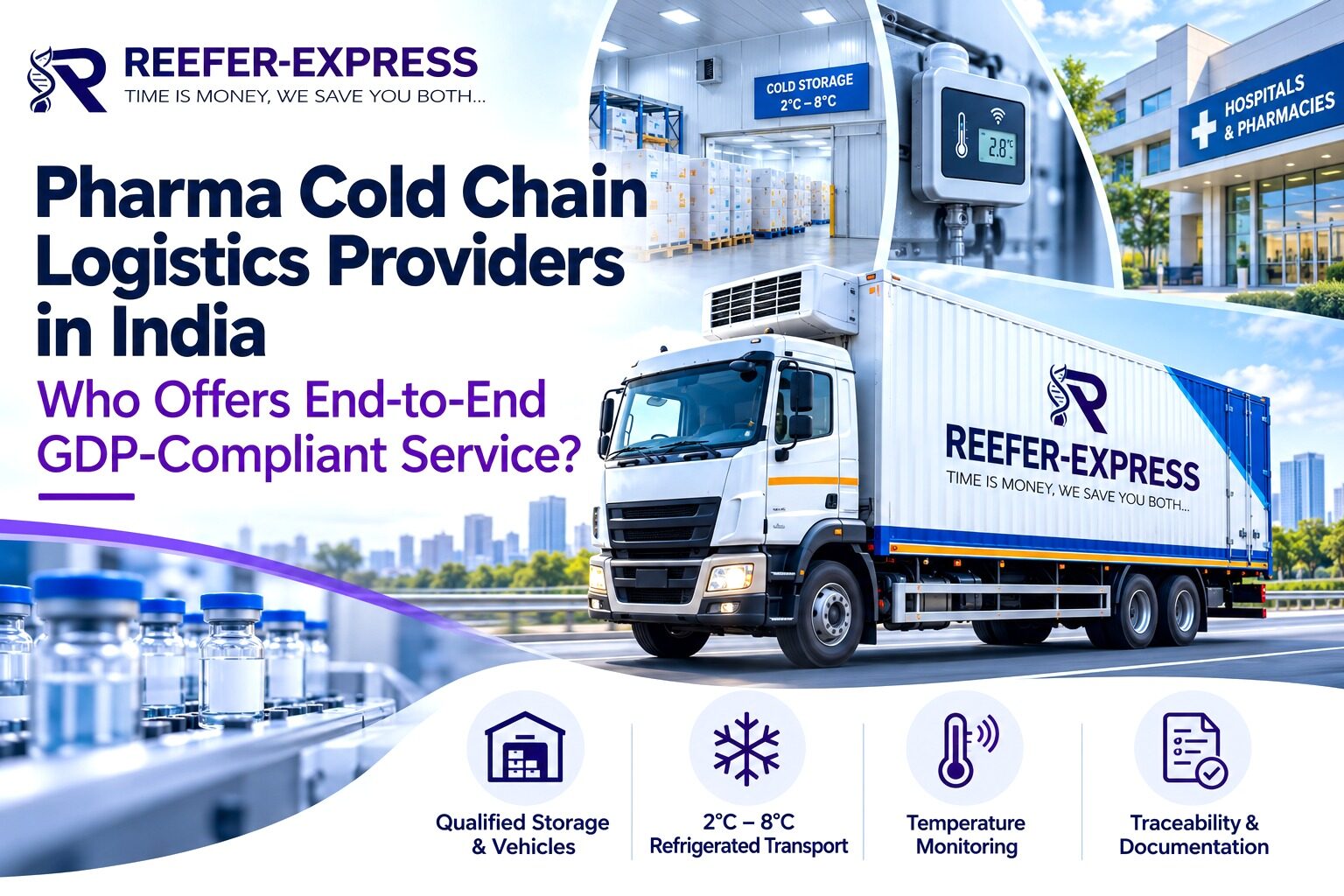


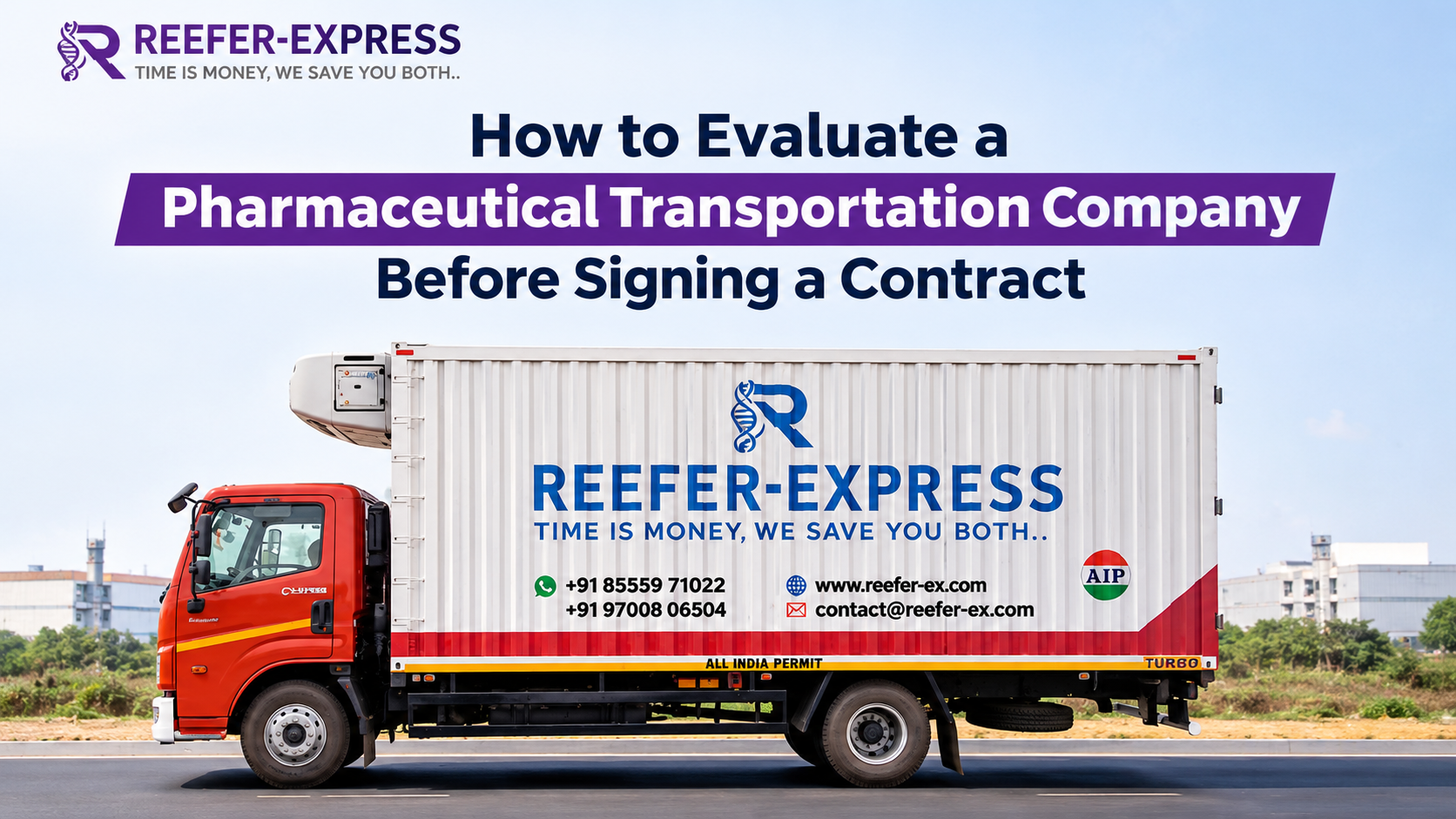
Choosing a pharmaceutical transportation company is an important decision for any pharmaceutical manufacturer, distributor or healthcare business. Unlike regular transportation, pharmaceutical logistics requires proper temperature control, careful handling, continuous monitoring and timely delivery. Even a small mistake during transportation can affect product quality, safety and usability.
Before signing a contract with a logistics provider, businesses need to understand how their transportation operations work, what facilities they offer and how they manage temperature-sensitive shipments.
A reliable pharmaceutical transportation company should offer more than vehicles and delivery services. It should have the right infrastructure, trained staff, temperature-monitoring systems and clear operating procedures to handle pharmaceutical products throughout the supply chain.
This guide explains the key factors businesses should evaluate before selecting a pharmaceutical transportation partner and entering into a long-term agreement.
1. Check Their Experience in Pharmaceutical Transportation
Not every logistics company has the experience required to transport pharmaceutical products. Medicines, vaccines, biologics and other healthcare products often require specific handling and storage conditions.
Before choosing a transportation partner, check their experience in handling pharmaceutical shipments. Ask about the types of products they transport, the industries they serve and the transportation requirements they can support.
A company with relevant pharmaceutical logistics experience is more likely to understand the challenges involved in maintaining product quality during transportation.
Consider asking the following questions:
- How many years of experience do you have in pharmaceutical transportation?
- Do you regularly handle medicines, vaccines, biologics or other temperature-sensitive products?
- Have you worked with pharmaceutical manufacturers and distributors?
- Can you manage both short-distance and long-distance transportation?
- What processes do you follow when handling sensitive pharmaceutical shipments?
Reviewing their previous work and service capabilities can help you understand whether they can meet your transportation requirements.
2. Understand Their Temperature-Controlled Transportation Capabilities
Temperature management is one of the most important factors in pharmaceutical transportation. Different pharmaceutical products require different temperature conditions during storage and transit.
For example, some products require controlled room-temperature conditions, while others need refrigerated or frozen transportation. The exact requirements depend on the manufacturer’s product specifications.
A transportation company should have suitable vehicles, equipment and monitoring systems to maintain the required temperature throughout the journey.
Before signing a contract, understand the following:
- What temperature ranges can their vehicles maintain?
- Do they provide refrigerated and frozen transportation?
- Are temperature conditions monitored throughout the journey?
- Can they provide temperature records after delivery?
- How do they manage temperature variations during loading and unloading?
Also, ask whether their vehicles undergo regular maintenance and temperature-control system checks.
For pharmaceutical shipments, maintaining the required temperature throughout transportation is essential. A provider should be able to explain how it maintains and documents these conditions at every stage.
3. Evaluate Their Temperature Monitoring and Tracking Systems
Temperature monitoring and shipment visibility are essential for managing pharmaceutical transportation. Without proper monitoring, businesses may not know whether their products have remained within the required temperature range during transit.
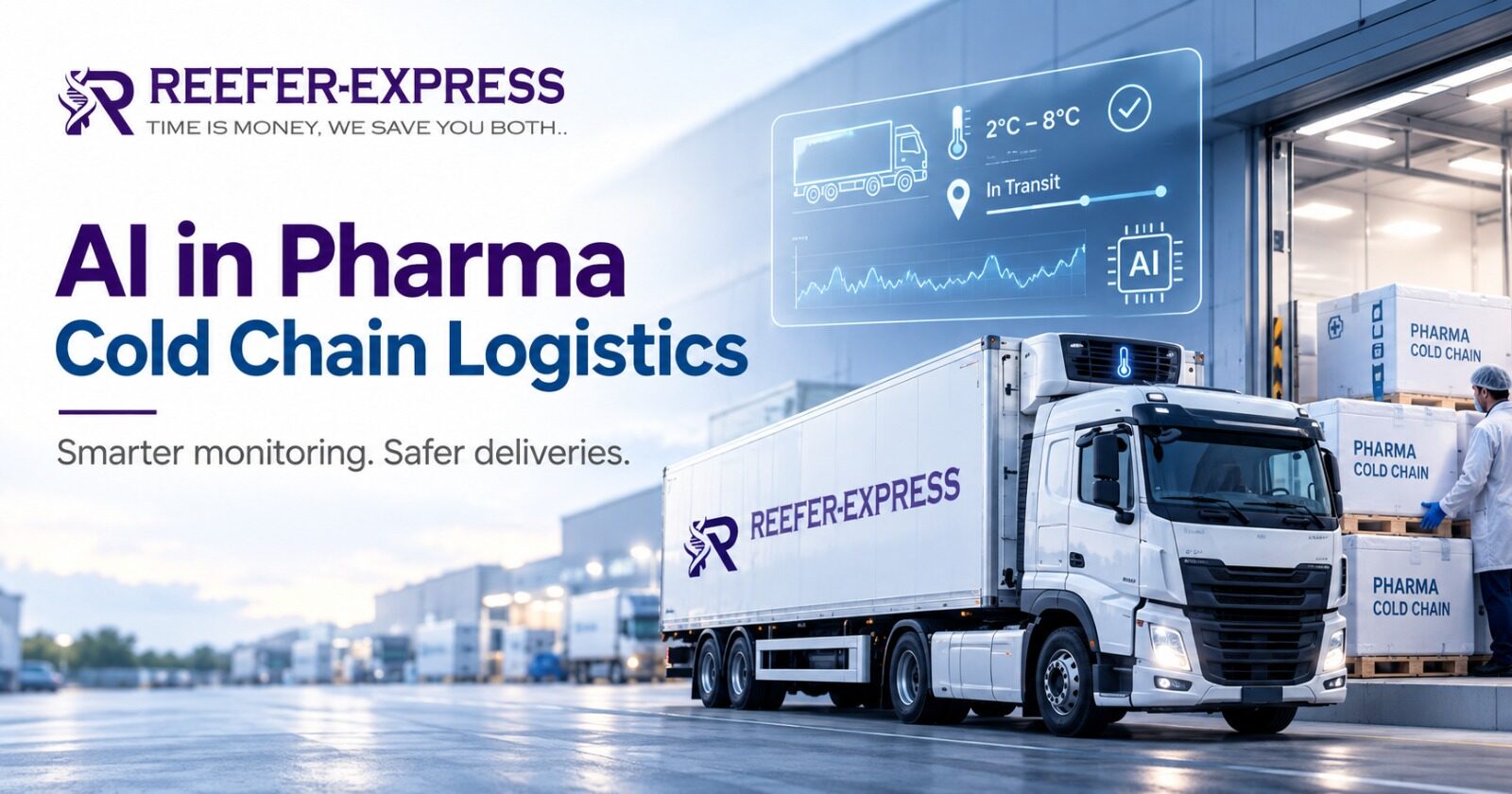
A professional pharmaceutical transportation company should use temperature-monitoring equipment and vehicle tracking systems to provide visibility into shipment conditions and movement.
Reefer Express uses technology such as real-time vehicle tracking and GPS monitoring to support transportation visibility.
When evaluating a logistics provider, check whether they offer:
Real-time temperature monitoring: The ability to monitor shipment temperature during transportation.
GPS vehicle tracking: Visibility into vehicle location and movement throughout the journey.
Temperature data loggers: Devices that record temperature readings at defined intervals.
Shipment reports: Records that help businesses review temperature conditions and transportation details after delivery.
Alert systems: Notifications when monitored conditions move outside predefined limits, where supported by the monitoring system.
Ask the provider whether temperature reports can be shared with your quality assurance team and whether shipment records are available for future reference.
These systems help businesses maintain better control over pharmaceutical shipments and identify transportation issues more quickly.
4. Verify Their Pharmaceutical Compliance and Documentation
Pharmaceutical transportation involves specific quality and regulatory requirements. A logistics provider should understand the applicable requirements for handling, storing and transporting pharmaceutical products.
Depending on the product and type of service, businesses may need to consider Good Distribution Practice (GDP) requirements, applicable regulatory guidelines and their own internal quality standards.
Before signing a contract, ask the provider to share relevant documentation and explain its quality management processes.
Important documents to review include:
- Applicable licences and certifications.
- Standard Operating Procedures (SOPs) for pharmaceutical transportation.
- Vehicle temperature-mapping and qualification records, where applicable.
- Temperature monitoring and shipment records.
- Equipment maintenance and calibration records.
- Staff training records.
- Deviation reporting and corrective action procedures.
Do not rely only on verbal assurances. Ask for supporting documents and have your quality or compliance team review them before finalising the agreement.
The provider should also be able to explain how it manages documentation, shipment traceability and quality-related incidents.
5. Review Their Vehicle Fleet and Transportation Infrastructure
The transportation infrastructure of a logistics company directly affects its ability to handle pharmaceutical shipments.
A provider may offer refrigerated vehicles, but businesses should also check whether the fleet is suitable for their shipment volume, product requirements and delivery locations.
Evaluate the following aspects of their transportation infrastructure:
Vehicle availability: Check whether the company has enough vehicles to manage your regular shipment requirements.
Refrigeration equipment: Understand the type of refrigeration systems installed in the vehicles and how they are maintained.
Vehicle condition: Ask about preventive maintenance schedules and inspection procedures.
Loading and unloading facilities: Check whether the company has suitable arrangements to minimise unnecessary exposure to external temperatures.
Backup arrangements: Understand what happens if a vehicle breaks down or refrigeration equipment stops working during transit.
You should also check whether the provider can manage urgent shipments, scheduled deliveries and changes in transportation requirements.
A suitable fleet and reliable operational support can help reduce delays and maintain product quality during transportation.
6. Understand Their Route Planning and Delivery Network
Pharmaceutical products often need to reach multiple locations, including warehouses, hospitals, distributors, pharmacies and healthcare facilities.
An experienced transportation partner should understand how to plan routes based on delivery locations, shipment requirements and transportation timelines.
Poor route planning can increase transit time, fuel costs and the risk of temperature-related issues.
Before choosing a provider, evaluate its delivery network and operational capabilities.
Ask these questions:
- Which cities and regions do you currently serve?
- Can you manage transportation across multiple states?
- Do you provide scheduled and urgent deliveries?
- How do you plan routes for temperature-sensitive shipments?
- Can you provide estimated delivery timelines?
- How do you manage delays caused by traffic, weather or vehicle breakdowns?
Also, understand whether the company has experience managing transportation between manufacturing facilities, distribution centres and final delivery locations.
A well-planned transportation network helps businesses improve delivery coordination and manage their pharmaceutical supply chain more effectively.
7. Check Their Process for Handling Temperature Excursions
A temperature excursion occurs when a pharmaceutical shipment moves outside its specified temperature range during storage or transportation.
This can happen because of refrigeration equipment failure, improper loading, vehicle delays, door openings or other operational issues.
Before signing a contract, understand how the transportation company identifies, reports and manages such situations.
A reliable provider should have a documented process for handling temperature excursions.
This process should explain:
Identification: How temperature deviations are detected through monitoring equipment.
Notification: How quickly the customer is informed about a potential temperature excursion.
Documentation: How temperature records, incident details and shipment information are maintained.
Investigation: How the company identifies the possible cause of the incident.
Corrective action: What steps are taken to address the issue and prevent similar incidents.
It is also important to clarify who has the authority to decide whether an affected shipment can be released, quarantined or requires further assessment. Such decisions should follow the manufacturer’s quality procedures and applicable regulatory requirements.
Do not assume that a transportation company can automatically determine whether a product remains suitable for use after a temperature excursion.
8. Evaluate Their Packaging and Shipment Handling Capabilities
Temperature-controlled vehicles are not the only requirement for pharmaceutical transportation. Packaging also plays an important role in maintaining product conditions during transit.
Depending on the shipment, businesses may require insulated packaging, gel packs, phase-change materials or other qualified packaging solutions.
Before selecting a transportation partner, understand whether it can support your packaging requirements.
Consider the following:
- Does the company offer pharmaceutical cold chain packaging?
- Can it support single-use packaging systems?
- Are packaging solutions suitable for the required temperature range?
- How does it handle packaging during loading and unloading?
- Can temperature data loggers be provided for individual shipments?
- Does it have procedures for handling damaged or compromised packaging?
For sensitive pharmaceutical products, packaging and transportation should work together to maintain the required conditions throughout the shipment.
Discuss your product specifications with the logistics provider before finalising the packaging and transportation arrangements.
9. Review Their Service Capacity and Scalability
Your pharmaceutical transportation requirements may change as your business grows. A provider that can manage your current shipment volume should also be able to support future requirements.
Before signing a contract, evaluate whether the company has sufficient fleet capacity, operational resources and geographical coverage to support your business.
For example, a pharmaceutical manufacturer may initially require transportation for a limited number of shipments each month. As distribution expands, the company may need more vehicles, additional delivery locations and higher transportation frequency.
Discuss the following with your potential logistics partner:
- What is your current transportation capacity?
- How many vehicles are available for pharmaceutical shipments?
- Can you handle higher shipment volumes during peak periods?
- Can you support new delivery locations?
- Do you provide dedicated transportation arrangements?
- Can your services be adjusted as our business requirements change?
A scalable logistics partner can help businesses manage changing transportation requirements without frequently switching service providers.
10. Compare Transportation Costs and Pricing Transparency
Cost is another important factor when selecting a pharmaceutical transportation company. However, choosing a provider based only on the lowest quotation may create problems later.
Pharmaceutical transportation involves specialised vehicles, temperature-monitoring equipment, packaging, operational support and shipment documentation. These requirements can affect the overall transportation cost.
Ask each provider for a detailed quotation that explains the services included in the proposed price.
Compare the following cost components:
| Cost component | What to check |
|---|---|
| Transportation charges | Cost based on distance, route or shipment |
| Refrigerated vehicle charges | Additional charges for temperature-controlled vehicles |
| Packaging costs | Insulated packaging and other materials |
| Monitoring charges | Temperature loggers and monitoring services |
| Storage charges | Temporary or additional cold storage requirements |
| Waiting charges | Costs associated with loading and unloading delays |
| Additional services | Special handling and urgent delivery charges |
Also, clarify whether the quotation includes taxes, fuel adjustments, tolls and other applicable expenses.
Ask about payment terms, minimum shipment commitments, annual price revisions and additional charges before signing the agreement.
A transparent pricing structure helps businesses plan their logistics budgets and avoid unexpected expenses.
11. Check Their Customer Support and Communication Process
Communication is important when transporting pharmaceutical products. Businesses should know who to contact when they need shipment updates, delivery confirmation or support during an operational issue.
Before signing a contract, understand how the logistics company manages customer communication.
Check whether it provides:
- A dedicated account manager or operational contact.
- Regular shipment status updates.
- 24/7 support for urgent transportation issues, if included in the service agreement.
- Timely notification of delivery delays.
- Access to temperature and shipment reports.
- A defined escalation process for operational issues.
You should also understand how quickly the company responds to customer queries and how it communicates during unexpected situations.
Clear communication helps businesses coordinate deliveries, manage operational changes and maintain better control over their pharmaceutical supply chain.
12. Review the Contract, Service Level Agreement and Liability Terms
Once you have evaluated the company’s experience, infrastructure and service capabilities, the next step is reviewing the contract.
A pharmaceutical transportation agreement should clearly define the responsibilities of both parties.
Pay particular attention to the Service Level Agreement (SLA), which explains the expected service standards and operational commitments.
Before signing, review these important areas:
Delivery timelines: The agreed pickup and delivery schedules, including how delays are communicated.
Temperature requirements: The temperature range applicable to each product or shipment and how compliance is monitored.
Monitoring responsibilities: Who provides monitoring equipment, reviews temperature data and maintains shipment records.
Incident management: How temperature excursions, vehicle breakdowns and shipment delays are reported and investigated.
Product liability: Who is responsible for loss, damage or deterioration during transportation, subject to the agreed terms and applicable law.
Insurance coverage: Whether the provider has suitable insurance and what losses are covered or excluded.
Documentation: What shipment records, delivery confirmations and temperature reports will be provided.
Payment terms: Agreed rates, billing cycles, additional charges and payment deadlines.
Contract termination: Notice periods, renewal conditions and circumstances under which either party can terminate the agreement.
Do not overlook liability limitations, exclusions, indemnity clauses and dispute resolution terms. Have the agreement reviewed by your legal and quality teams before signing.
13. Conduct a Trial Shipment Before Finalising a Long-Term Agreement
Even if a pharmaceutical transportation company meets your initial requirements, it is important to evaluate its actual performance.
A trial shipment can help you understand how the provider manages transportation under real operating conditions.
Start with a suitable shipment and monitor the complete process, from pickup to final delivery.
During the trial, evaluate:
- Whether the shipment is picked up on time.
- Whether the required temperature conditions are maintained.
- Whether vehicle tracking is available.
- Whether temperature records are accurate and accessible.
- Whether the delivery is completed within the agreed timeline.
- Whether the company communicates properly throughout the process.
- Whether the final documentation is complete.
Discuss the results with your internal operations and quality teams.
A trial shipment gives your business an opportunity to identify operational gaps before committing to a long-term transportation agreement.
Key Questions to Ask Before Hiring a Pharmaceutical Transportation Company
Before finalising your logistics partner, use this checklist to compare potential providers.
| Evaluation area | Questions to ask |
|---|---|
| Industry experience | Do you have experience handling pharmaceutical products? |
| Temperature control | Which temperature ranges can you support? |
| Monitoring | Do you provide real-time temperature monitoring and data loggers? |
| GPS tracking | Can we track our shipments during transit? |
| Compliance | Can you provide relevant quality and compliance documentation? |
| Fleet | How many suitable temperature-controlled vehicles do you operate? |
| Coverage | Which cities and regions do you serve? |
| Incident management | How do you handle temperature excursions and vehicle breakdowns? |
| Packaging | Can you support our pharmaceutical packaging requirements? |
| Pricing | Are all transportation and additional charges clearly mentioned? |
| Support | Is operational support available when required? |
| Contract | Are service levels, responsibilities and liability terms clearly defined? |
Comparing these areas will help your business make a more informed decision and select a transportation partner that matches its operational requirements.
Why Choosing the Right Pharmaceutical Transportation Partner Matters
Pharmaceutical transportation is an important part of the healthcare supply chain. Businesses need a logistics partner that understands the importance of temperature management, product handling, shipment visibility and timely delivery.
An unsuitable transportation provider can create operational challenges, including delivery delays, inadequate monitoring, documentation gaps and temperature excursions.
On the other hand, a capable logistics partner can help businesses improve transportation coordination, maintain shipment visibility and manage temperature-sensitive products more effectively.
The right provider should offer suitable transportation infrastructure, trained personnel, temperature-monitoring capabilities and clear communication throughout the delivery process.
Taking the time to evaluate these factors before signing a contract can help businesses build a more reliable pharmaceutical supply chain.
Choose Reefer Express for Your Pharmaceutical Cold Chain Transportation Requirements
Reefer Express provides integrated cold chain storage and transportation solutions for pharmaceutical, healthcare and other temperature-sensitive supply chains across India.
With over 6 years of industry experience, 12 warehouses, a reported pallet capacity of over 130,000, a fleet of more than 50 vehicles and coverage across 100+ cities, Reefer Express supports businesses with their cold chain logistics requirements.
Our services include:
- Pharmaceutical cold chain solutions.
- Temperature-controlled transportation.
- Pharmaceutical packaging and distribution.
- Healthcare logistics solutions.
- Pharma supply chain solutions.
- Cell and gene supply chain services.
We combine temperature-controlled transportation, real-time vehicle tracking and GPS monitoring to support shipment visibility and delivery coordination.
Whether you require pharmaceutical transportation, cold storage or integrated cold chain logistics, our team can help you understand the available solutions based on your business requirements.
Looking for a reliable pharmaceutical transportation partner in India?
Contact Reefer Express to discuss your pharmaceutical transportation and cold chain logistics requirements.
Website: https://reefer-ex.com/
Email: contact@Reefer-ex.com
Phone: +91 8555971022