



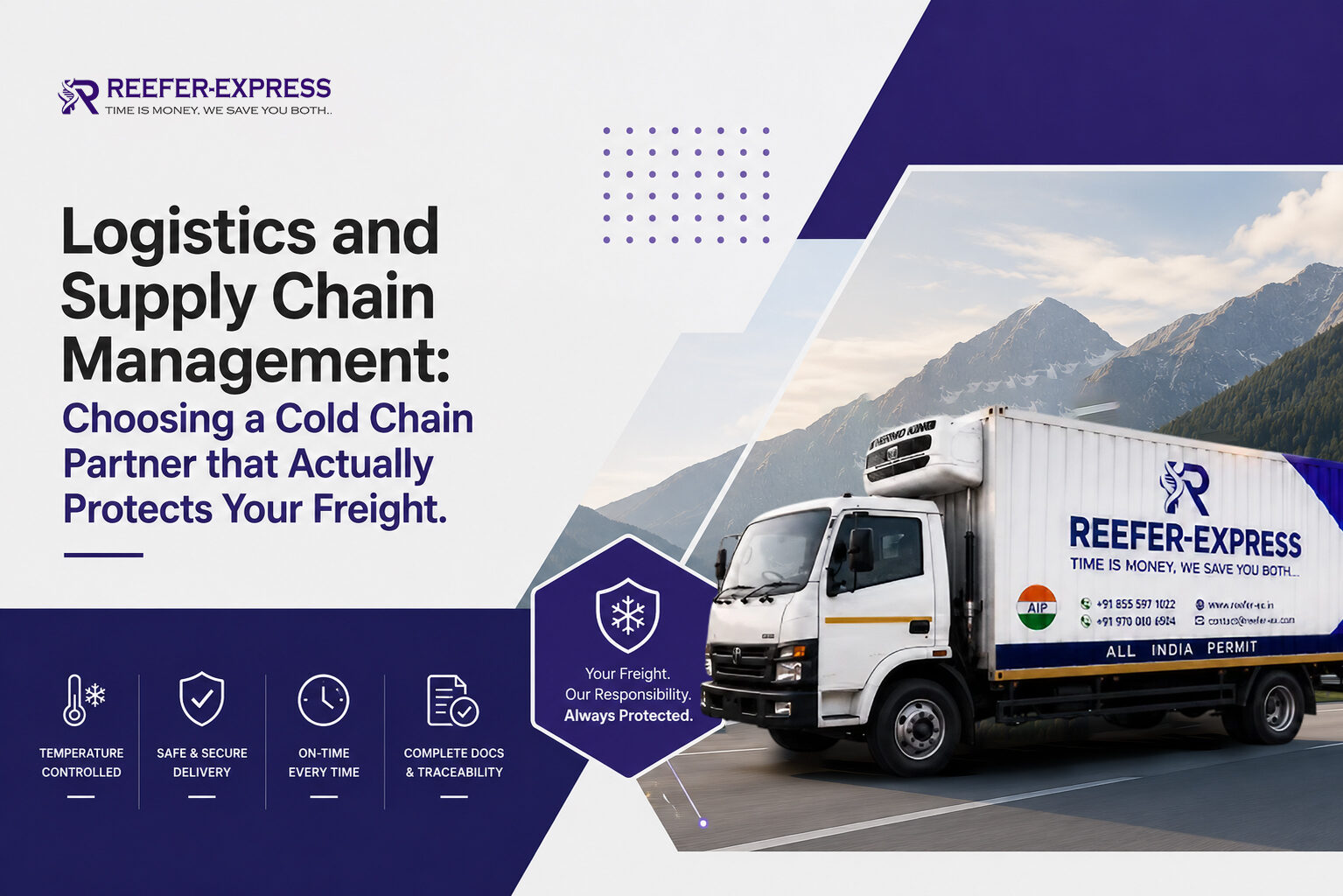
Every shipper handling perishable or temperature-sensitive goods reaches the same point eventually. The spreadsheets stop being enough. A missed pickup, a spoiled pallet, or a client complaint about inconsistent delivery windows forces a hard question. Is the current provider actually built for this, or just handling it by accident?
Logistics and supply chain management for temperature-sensitive freight is not the same discipline as moving dry goods. A single equipment failure can turn a full truckload into a total loss. So can a delayed transfer at a cross-dock, or a poorly insulated trailer. Shippers moving frozen food, dairy, produce, pharmaceuticals, or chemicals need more than a carrier with a working refrigeration unit. They need a partner who treats temperature control as the core of the operation, not an add-on service.
This guide breaks down what separates dependable cold chain management from providers who simply advertise it. It covers what cold storage logistics should look like on paper and in practice, and how a service model like Reefer Express fits into a shipper’s decision when speed and temperature integrity both matter. If you are evaluating providers right now, this is written for that decision.
What Logistics and Supply Chain Management Means for Temperature-Sensitive Freight
Standard supply chain management asks three questions. Can the product get there, on time, at the right cost? Temperature-sensitive logistics adds a fourth question that overrides the other three: will the product still be usable when it arrives?
A pallet of frozen shrimp that arrives an hour late but at the correct temperature is a manageable inconvenience. A pallet that arrives on time but spent forty minutes on an unrefrigerated dock is a write-off. It is also a client relationship problem, and potentially a regulatory issue. Logistics and supply chain management in this category has to be built around temperature continuity first and transit speed second, even though most shippers want both.
The market reflects how central this has become. The global cold chain logistics sector reached roughly USD 383 billion in 2026, and it is projected to keep growing at a compound annual rate above 6 percent through 2031, according to Mordor Intelligence’s cold chain logistics market outlook. Growth is not coming from one segment. Grocery e-commerce, frozen food demand, and pharmaceutical distribution, including biologics that require ultra-low temperatures, are all pulling the industry forward at the same time. A provider that only understands one of those categories cannot handle the complexity most shippers now deal with across a single distribution network.
Why This Matters More Than It Did Five Years Ago
Regulatory pressure has tightened alongside consumer demand. The FDA’s Food Traceability Rule, issued under Section 204 of the Food Safety Modernization Act, requires businesses that manufacture, process, pack, or hold high-risk foods to maintain detailed tracking records at critical points in the supply chain, according to the FDA’s official rule summary. The compliance deadline has shifted to July 2028. Major retailers and distributors are already building these requirements into supplier contracts well ahead of that date. A cold storage logistics provider that cannot produce clean, timestamped temperature and handling records is a liability under this framework, not just an inconvenience.
Pharmaceutical shippers face an even narrower margin for error. Vaccines and many biologics must stay within a 2°C to 8°C range from the moment they leave the manufacturer to the moment they are administered. Even brief excursions outside that band can destroy potency, as documented in cold chain research published through the National Center for Biotechnology Information. For shippers in this category, a provider’s temperature monitoring practices are not a nice-to-have. They are the entire point of the contract.
The Real Cost of Choosing the Wrong Cold Storage Logistics Provider
Shippers rarely calculate the full cost of a cold chain failure until after it happens. It is never just the value of the ruined product. The real bill includes the emergency reorder, the client’s lost shelf space while a replacement ships, and the internal time spent investigating what went wrong. In regulated industries, it can also include a recall or an audit finding tied to inadequate transportation controls.
The United States Department of Agriculture’s Agricultural Marketing Service has published detailed guidance on protecting perishable freight during truck transport for decades. The failure points stay consistent year after year: poor trailer insulation, overloaded units that block airflow, inconsistent pre-cooling, and gaps during transfer between modes, as outlined in the USDA’s transportation guidance. None of these are exotic problems. They are operational basics that a properly run cold storage logistics provider should have solved years ago.
A provider cutting corners on any of these basics is not saving you money. It is only deferring the cost until the moment a shipment fails, and that moment always costs more than the investment would have.
Signs a Current Provider Is Not Built for Cold Chain Work
Shippers considering a switch usually recognize a pattern before they can articulate it. Delivery windows quietly widen. Temperature logs arrive late or incomplete. Claims for damaged product take weeks to resolve instead of days. Customer service treats a spoiled shipment as a routine exception rather than an operational failure worth investigating.
None of these issues show up in a rate sheet. They show up in the freight itself. By the time they are obvious, the relationship has usually already cost more than it should have.
There is also a compounding cost that most shippers underestimate: reputational damage with their own customers. A retailer or distributor that receives a spoiled or late shipment does not typically ask who the upstream carrier was. Instead, they hold the shipper accountable directly, and repeated failures push buyers toward competitors who can guarantee consistency. In categories like fresh produce, seafood, and specialty pharmaceuticals, buyers usually have several qualified suppliers to choose from. A shaky cold chain reputation can cost far more in lost contracts than any single spoiled load ever would on its own.
What Separates a Reliable Cold Chain Management Partner From the Rest
The providers worth signing with share a few operational traits, and each one is easy to verify before committing to a contract.
Continuous, Verifiable Temperature Monitoring
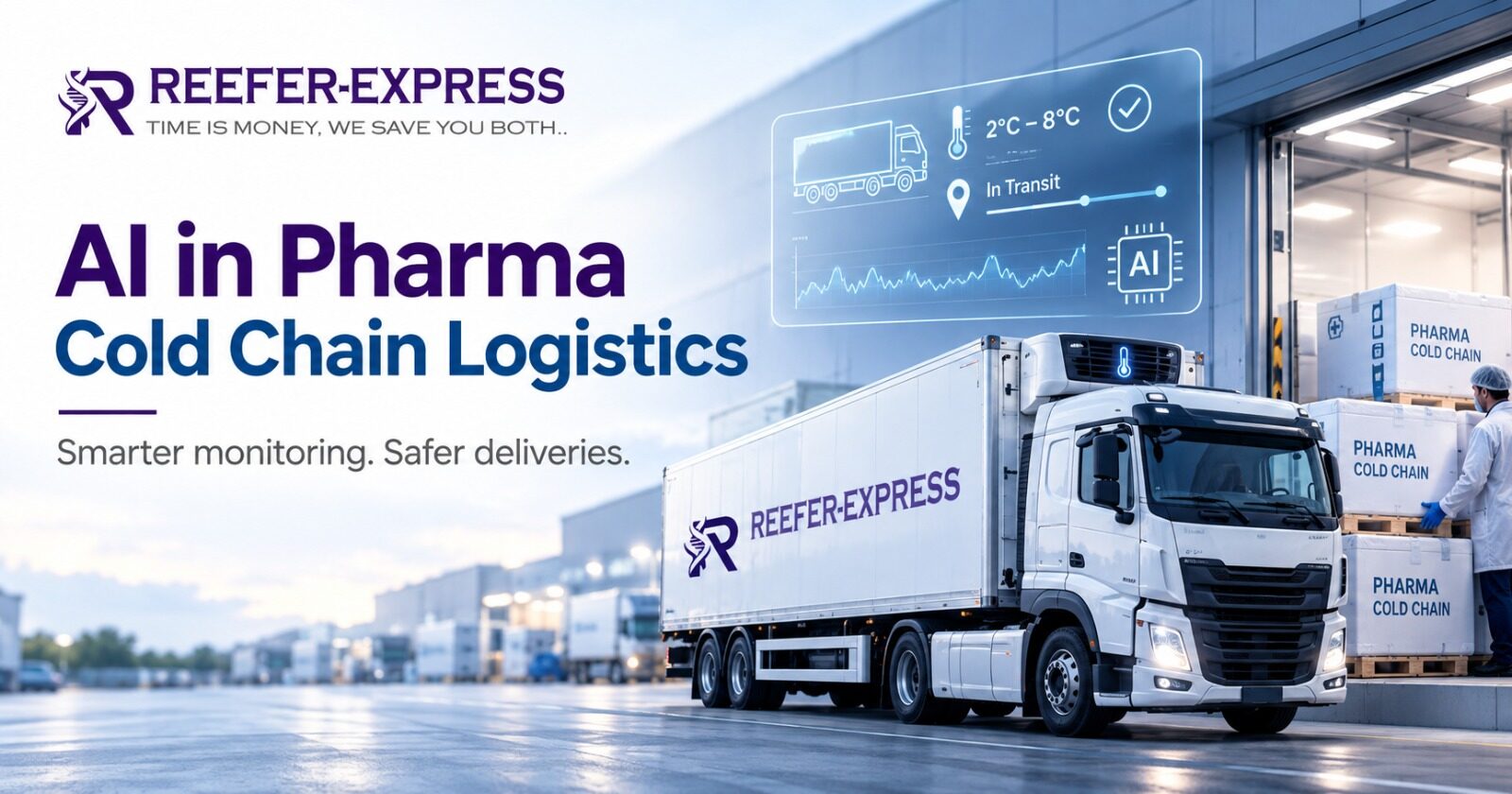
Modern cold chain logistics depends on sensors that report location, temperature, and humidity at short intervals rather than at pickup and delivery alone. When a reading drifts outside the set range, the system should trigger an alert immediately, not surface the problem in a report days later. This is now standard practice across the industry. Any provider still relying on manual spot checks is operating a decade behind the equipment their competitors use.
Real Infrastructure, Not Just Refrigerated Trailers
A trailer with a working compressor is not the same as a cold chain network. The stronger providers operate their own temperature-controlled warehousing and maintain redundant refrigeration at transfer points, so they can hold product safely if a delivery window slips. Shippers should ask directly where product sits during any transfer between legs of a journey, and what temperature control exists at that exact location, not just during transit.
Documentation That Holds Up Under Audit
Given the direction of FDA and USDA enforcement, a provider needs to produce clean temperature and handling records on demand, not reconstruct them after the fact. If a sales representative cannot describe exactly how records are captured and stored, treat that as a warning sign before signing a contract.
Transparent Claims and Incident Handling
Ask how the provider has handled a temperature excursion in the past twelve months. A provider with nothing to describe is either new to this type of freight, or it is not tracking incidents closely enough to know about them. Neither answer should be reassuring.
Multi-Modal Consistency
Many shippers only scrutinize the trucking leg of their supply chain and overlook what happens when freight moves between truck, rail, air, or ocean container. A reefer container waiting at a port terminal or a rail yard is just as vulnerable to temperature drift as a trailer sitting at a loading dock. The strongest cold chain partners hold the same monitoring standard and the same documentation practice across every mode a shipment touches. They do not treat the trucking segment as the only part worth managing closely. If your freight ever crosses an international border or moves through more than one mode, ask specifically how the provider maintains temperature continuity during the handoff. This is one of the most common points where cold chain integrity quietly breaks down.
Where Reefer Express Fits Into the Decision
Shippers usually frame speed and temperature control as competing priorities, but for time-critical perishable freight, they are the same requirement. A shipment of fresh seafood or a short-shelf-life pharmaceutical gains nothing from perfect temperature control if it takes three days longer than the product’s usable window allows.
This is the gap that Reefer Express service models close. Rather than routing temperature-sensitive freight through the same general network used for standard freight, an expedited reefer service prioritizes direct routing, minimal cross-dock handling, and dedicated equipment that stays within a tighter temperature tolerance from pickup to delivery. For shippers moving high-value perishables, fresh produce with a narrow harvest-to-shelf window, or pharmaceutical shipments on a strict timeline, this model reduces the number of points where something can go wrong simply by cutting the number of touchpoints altogether.
The practical test for any provider offering an expedited reefer option is whether they can explain their actual routing model, not just quote a transit time. A provider that can walk through exactly how a shipment moves from pickup to delivery, including every transfer point and every piece of equipment involved, is demonstrating real operational control. A provider that only offers a delivery date without that detail is asking for trust it has not earned yet.
If your current freight strategy already includes a mix of standard and expedited cold chain needs, review our cold storage warehousing solutions alongside your temperature-controlled trucking options. Consolidating providers often reduces the number of handoffs your product goes through.
Questions to Ask Before Signing With a Cold Chain Provider
Shippers ready to switch providers or sign a new contract should treat the sales conversation as a technical interview, not a pricing negotiation. A few direct questions separate providers who can perform from providers who can only talk.
Start with the equipment. What temperature range does it maintain under full load, not just at the manufacturer’s rated capacity? Move to the monitoring system next. How often do sensors report data, and what happens operationally the moment a reading crosses the threshold? Then ask to see a sample of the temperature and chain-of-custody documentation a client actually receives after a shipment, not just a description of what the system can theoretically produce. Finally, find out how the provider’s network handles a breakdown or delay mid-route, since this is where most cold chain failures actually happen.
A provider confident in its own operation will answer all of these without hesitation, and usually without needing to check with someone else first.
How to Switch Cold Chain Providers Without Disrupting Your Supply Chain
Shippers often delay switching providers because they assume the transition itself carries more risk than staying with an underperforming partner. In practice, a well-planned transition is far less disruptive than continuing to absorb losses from unreliable service.
Start by running a short overlap period where the new provider handles a limited lane or a single product category, while the existing provider continues normal operations elsewhere. This limits exposure while giving the new partner a real chance to demonstrate consistency under your actual shipping conditions rather than in a sales pitch. Review temperature logs and delivery performance from that trial period against your own historical data, not against generic industry benchmarks, since your product’s tolerance and your lanes’ specific challenges are what matter most.
Once the trial period confirms performance, expand the relationship in stages rather than moving the entire network at once. This approach protects continuity for your customers. It also gives your team time to build the operational relationship, including direct contacts for exception handling, that any long-term cold chain partnership depends on.
If you are ready to start that evaluation, our team can walk through a lane-by-lane request a quote for cold chain logistics and show exactly how our monitoring, documentation, and Reefer Express routing would apply to your specific freight before you commit to anything.
Frequently Asked Questions
What is the difference between cold chain management and cold storage logistics?
Cold chain management covers the entire process of keeping a product within a required temperature range from origin to final delivery, including transportation, handling, and documentation. Cold storage logistics refers specifically to the warehousing component: how a product is held, organized, and protected while it sits at a facility between transportation legs. A strong provider needs to perform well at both, since a gap at either point breaks the chain.
How do I know if a provider’s temperature monitoring is actually reliable?
Ask for a live example of a temperature report from an actual past shipment, not a demo screen. A reliable system shows continuous data points at short intervals, clear timestamps, and a documented response any time a reading moved outside the acceptable range. If a provider can only describe the system rather than show a real report, treat that as incomplete evidence.
Is expedited reefer service worth the added cost compared to standard refrigerated freight?
It depends entirely on the product’s shelf life and the cost of a delay. For freight with a narrow usable window, such as fresh seafood, certain produce, or time-sensitive pharmaceuticals, the added cost of an expedited service usually runs smaller than the cost of even one spoiled shipment. For freight with more flexibility in its shelf life, standard refrigerated service with strong monitoring is often the more cost-effective choice.
What records should a cold chain provider be able to produce if asked?
At minimum, a provider should produce continuous temperature logs for the full duration of transport and storage, records of any temperature excursions and the corrective action taken, and clear documentation tying a specific shipment to the equipment and personnel handling it at each stage. This becomes especially important as FDA traceability requirements move toward enforcement.
How often should cold storage equipment be inspected and calibrated?
Industry guidance generally recommends daily temperature checks, weekly inspection of doors and seals, monthly alarm testing, and quarterly sensor calibration for equipment used in regulated cold chain operations. Providers handling pharmaceutical or vaccine freight should confirm this schedule without hesitation, since it directly affects product integrity.
What should I do immediately if I suspect a shipment has been exposed to a temperature excursion?
Document the temperature reading and note the time you recorded it. Quarantine the affected product rather than distributing it, and contact the provider immediately to request the full monitoring log for that shipment. Do not rely on visual inspection alone. Many temperature-sensitive products show no outward sign of spoilage even after they lose potency or safety.
If your current freight strategy still relies on manual checks and end-of-week reporting, compare that against a dedicated cold chain monitoring program before your next contract renewal. The freight you are shipping right now is the only test that actually matters.
Comments6
Just what I was looking for. Easy navigation and very responsive on all my devices. I'll be coming back to bd7c7775 for sure
This platform has everything I was looking for. The layout is user-friendly and the features are top-notch. Definitely spending more time on 777ggplataforma from now on.
I appreciate the clean layout and the fact that it does not lag. It is very user friendly even for beginners. 80wimapp is doing things right.
Really impressed with the resources available here. It is clear that the team knows what they are doing. I'm learning a lot thanks to phearnphp.
Hands down one of the most stable platforms I have used recently. The variety of games is impressive and the loading speed is great on vnshetbet.
Great customer support and very easy registration. I feel safe playing here because everything is transparent. Love vnsv168.