



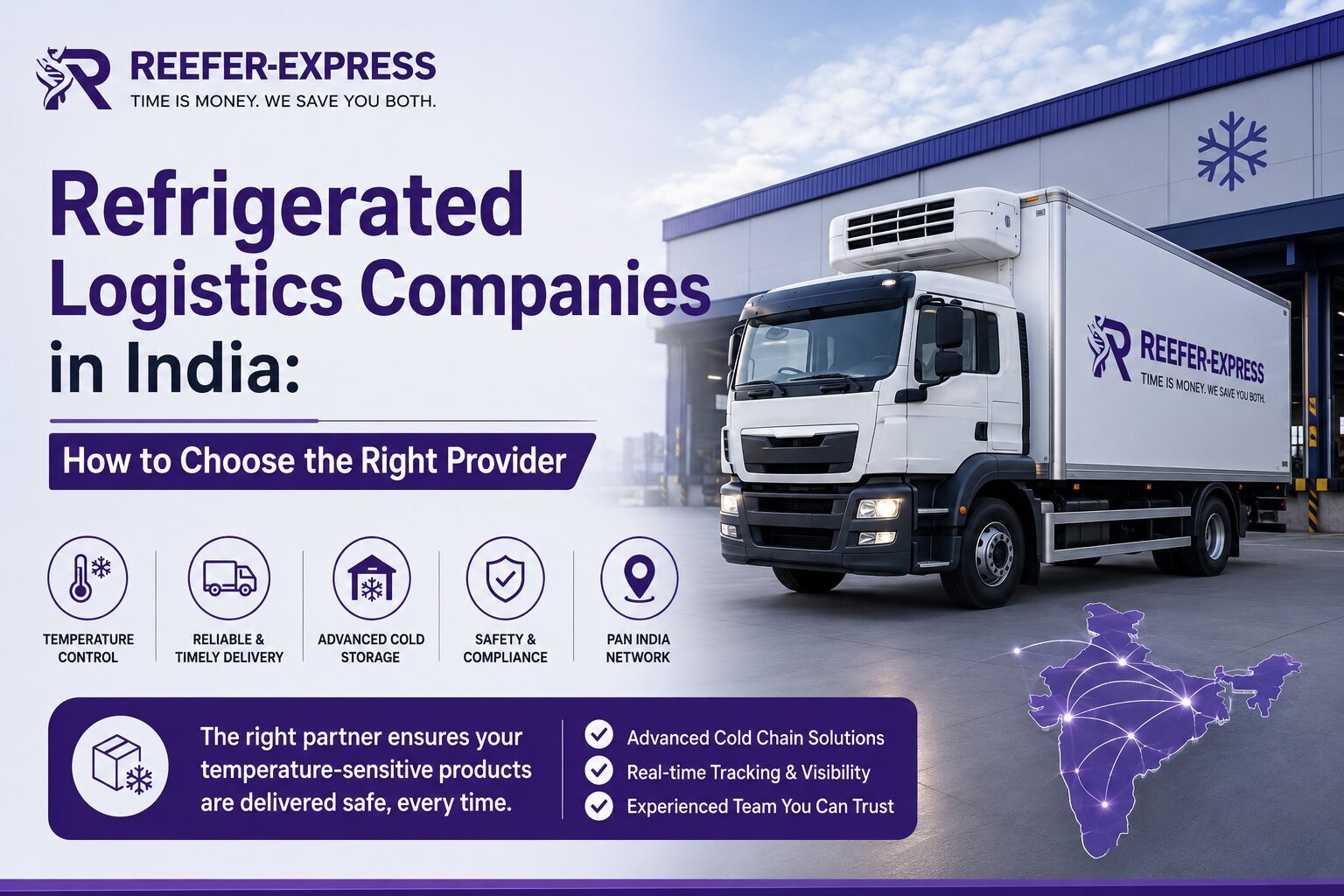
If you are shortlisting refrigerated logistics companies in India, you are likely past the point of needing an explanation of what cold chain means. You need to know which provider will actually hold the temperature window when your shipment leaves a controlled facility and enters the real world of Indian roads, summer heat, and last-mile handoffs. This guide breaks down what to check before you sign, and why that checklist matters more than the price on the quote.
What Refrigerated Logistics Companies in India Are Actually Selling You
Every provider on your shortlist will use the same words. Temperature controlled. Validated. Compliant. Real-time monitoring. Almost none of them mean the same thing when you dig into what is behind them.
A refrigerated truck with a working compressor is not a cold chain solution. It is one component of one. The India cold chain logistics market crossed roughly USD 23 billion in 2025 and is on track to pass USD 33 billion by 2031, according to Mordor Intelligence, and that growth has pulled a wide range of operators into the space, from dedicated pharma carriers to general logistics companies that added a reefer fleet as a side offering. Both call themselves refrigerated logistics companies. Only one of them has built the operation around what temperature-sensitive cargo actually requires.
What you are really buying is a system: a fleet that holds temperature end to end, packaging matched to your product’s stability profile, monitoring that flags a breach before it becomes a loss, and documentation that proves all of it happened. If a provider cannot walk you through each of those four pieces separately, with specifics, they are selling you the truck and hoping the rest works out.
Why Pharma Cold Chain Logistics Companies in India Are a Different Category
Pharma shipments carry a burden that food and FMCG cold chain does not. A missed window on a dairy shipment is a financial loss. A missed window on a biologic or vaccine consignment can mean the product is no longer safe to administer, and that decision has to be documented and defended to a regulator.
This is why pharma cold chain logistics companies in India need to be evaluated on a separate standard from general refrigerated freight. The pharmaceutical logistics segment in India is growing faster within cold chain than the broader market, driven by the shift toward biologics, biosimilars, and temperature-sensitive vaccines. That growth is exactly why the gap between a general carrier and a specialist is widening rather than closing. General carriers are optimizing for volume and route density. Pharma-focused providers are optimizing for chain of custody, excursion response, and audit readiness, because that is what their customers are actually being evaluated on.
If your shipments fall under Schedule H, require cold chain qualification under GMP, or involve clinical trial material, the provider you choose needs to understand those obligations natively, not learn them on your account.
Temperature Controlled Logistics India: The Compliance Bar Just Moved
Anyone shipping pharmaceutical product in India in 2026 is operating under a materially different compliance environment than they were three years ago. The revised Schedule M, notified by CDSCO and aligned with WHO Good Manufacturing Practice guidance, brought Indian pharmaceutical manufacturing standards closer to WHO and EU GMP norms, and storage and distribution requirements were part of that overhaul. Manufacturers now need documented installation, operational, and performance qualification for temperature-controlled infrastructure, and that expectation extends down the supply chain to how product is transported and handled after it leaves the facility.
What this means for you as a buyer of temperature controlled logistics in India is straightforward. A provider that cannot produce validation data tied to a defined temperature profile, or that treats monitoring as an optional add-on rather than a built-in feature, is a liability under the current regulatory framework, not just an operational risk. Ask directly whether their qualification documentation would hold up in a CDSCO inspection of your own facility, because if your logistics partner’s records are thin, that gap becomes your gap during an audit.
This is also where WHO guidance is worth knowing. WHO Technical Report Series 986 sets out the reference framework most Indian GMP revisions are being benchmarked against, and it treats storage and transport conditions as part of the same continuous quality system as manufacturing, not a separate handoff. A provider who understands this distinction will talk about your shipment as part of one unbroken chain of custody. A provider who does not will talk about pickup and delivery as two separate events with a black box in between.
The Fleet Question: Reefer Continuity, Not Just Reefer Trucks
When you tour a provider’s facility or ask for fleet specifications, the number of reefer vehicles they operate tells you very little on its own. What matters is continuity. Does the vehicle maintain the set point from the moment product is loaded until the moment it is handed off, including during loading and unloading windows when doors are open and ambient air enters the cargo space? Does the fleet have redundancy for mechanical failure on long routes, or does a single compressor issue on a Delhi-to-Bengaluru run become your problem?
Ask for the fleet’s actual performance data on routes similar to yours, not a generic spec sheet. India’s climate variation is significant enough that a reefer fleet validated for a Mumbai-Pune corridor cannot be assumed to perform identically on a route through Rajasthan in May or a mountain route into the Northeast during monsoon. A provider serious about temperature controlled logistics in India will have route-specific data, not a single blanket claim that their trucks maintain 2 to 8 degrees.
You should also ask what happens between vehicles. Many shipments involve a transfer between a long-haul reefer and a regional distribution vehicle. That transfer point is where a surprising number of failures happen, because it is the one leg of the journey most providers do not actively monitor. If you want a deeper look at how packaging and route validation interact on the vehicle side, our breakdown of cold chain packaging in India covers what route-specific qualification should actually look like on paper.
Packaging and Monitoring: What to Verify Before You Commit
Packaging and vehicle temperature control are not substitutes for each other. They are two separate layers of protection, and a provider that only invests in one is leaving a gap that shows up exactly when you cannot afford it, during a vehicle breakdown, a customs delay, or an unplanned last-mile detour.
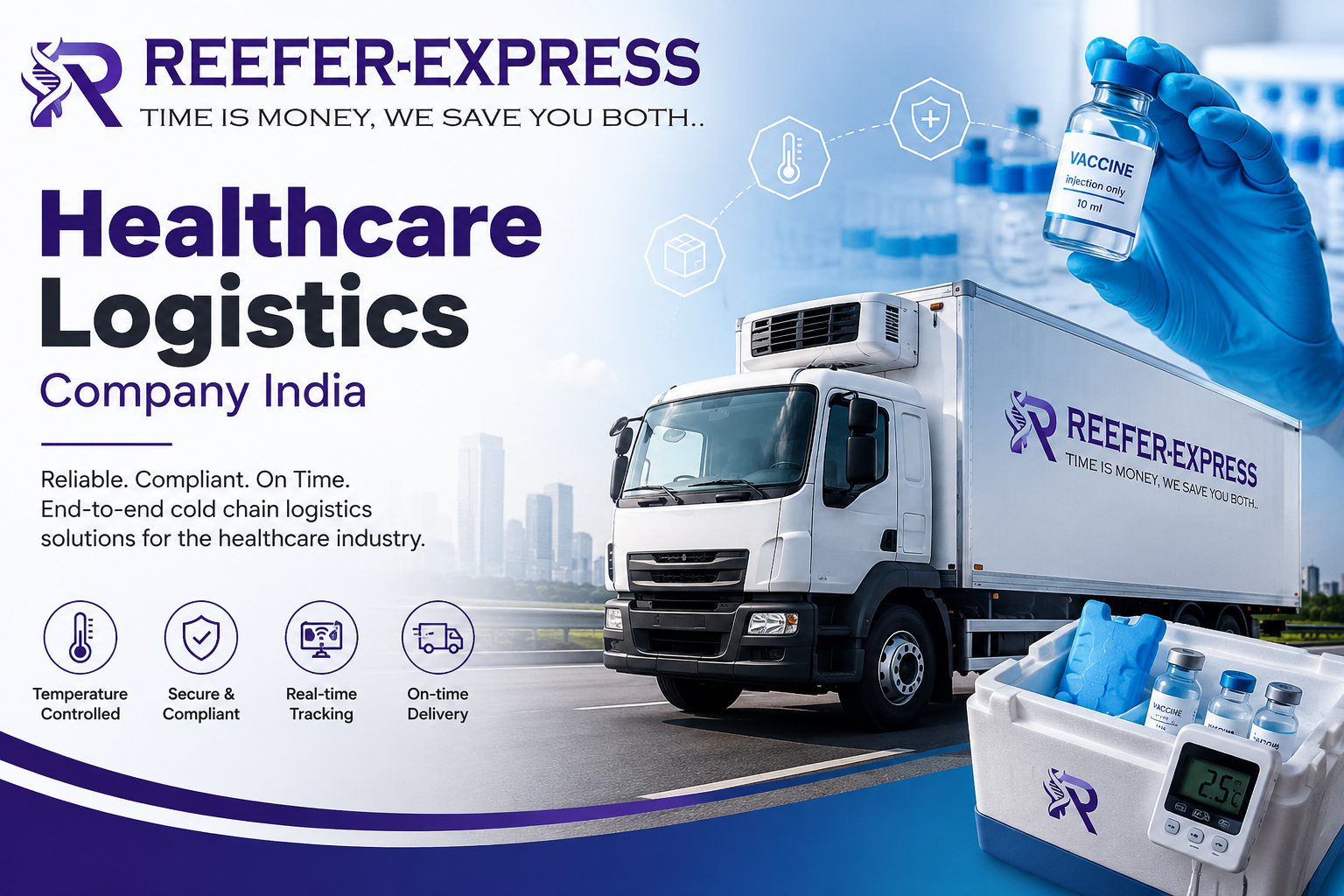
On packaging, ask what materials the provider uses for your specific product category and why. Expanded polystyrene, vacuum-insulated panels, and phase-change material systems each hold temperature differently and for different durations, and a provider offering the same box for a 2 to 8 degree vaccine shipment and a frozen biologic is not matching packaging to product, they are standardizing for their own convenience. This matters even more for our pharma-specific cold chain services, where hold-time requirements can vary significantly between a same-day regional delivery and a multi-day interstate shipment.
On monitoring, the bar has moved past GPS. Location without temperature tells you where your shipment is, not whether it is still viable when it arrives. Ask whether monitoring is built into every shipment as standard, or offered as a premium add-on. Ask how quickly an excursion alert reaches a human who can act on it, and what that action actually is. A data logger that produces a report after the fact is useful for your records. A monitoring system that flags a breach in transit is what actually prevents the loss.
The Last-Mile Gap Most Refrigerated Logistics Providers Never Close
This is the part of the evaluation that gets skipped most often, and it is usually where the failure happens. The reefer vehicle holds temperature. The packaging is validated. And then the shipment sits on a delivery agent’s two-wheeler in direct sun for forty minutes while another drop gets completed first.
Most refrigerated logistics companies in India have solved the middle of the journey and have not solved the ends of it. First-mile pickup and last-mile delivery are where controlled environments break down, because that is where the shipment leaves dedicated cold chain infrastructure and enters general delivery operations. If a provider cannot describe, specifically, how product moves from vehicle to recipient, what the maximum allowable exposure window is, and how that window is monitored, they have not actually thought through the full chain. They have thought through the parts that were easy to control.
Ask this question directly in every vendor conversation: what happens in the last fifteen minutes before delivery. The answer will tell you more about a provider’s actual capability than any brochure will.
Documentation: The Difference Between a Vendor and a Compliance Partner
When something goes wrong in a pharma shipment, and eventually something will, the question that determines what happens next is whether there is a clean documentation trail. Temperature logs. Chain of custody records. An excursion report with a timestamp and a decision trail showing who was notified and what action was taken.
A provider that gives you this documentation by default, attached to every shipment, is operating as a compliance partner. A provider that gives it to you only when you ask, days after the fact, is operating as a vendor, and vendors do not carry your regulatory risk with you when an inspector asks for records. This distinction sounds procedural until the day it is not, and by then it is too late to fix.
Ask to see a sample excursion report before you sign anything. Ask what the standard operating procedure is when a temperature deviation is detected mid-transit, specifically who is notified, how fast, and what the default disposition decision is for the product. If the answer is vague, that vagueness will show up again exactly when you need clarity most.
Why Reefer Express for Refrigerated Logistics in India
Reefer Express was built around pharma supply chain requirements, not adapted from a general freight model with a reefer fleet bolted on. That distinction runs through every part of how the operation is structured.
The fleet maintains temperature continuity across the full route, including loading and transfer points, and route qualification reflects the actual ambient conditions on the corridors we run, not a single generic test result. Packaging is matched to product category and hold-time requirement rather than standardized for operational convenience. Monitoring covers temperature and location together on every shipment as a default, not an optional upgrade, and documentation, including excursion reports and chain of custody records, is generated automatically rather than produced on request.
On last-mile, which is where most competitors’ coverage genuinely ends, we run defined handling protocols specifically for the final leg between vehicle and recipient, because that is the leg most likely to break a compliant shipment before it reaches the person who needs it. You can see how our fleet and packaging approach come together on our reefer fleet page.
The honest way to describe the difference between a logistics company that added cold chain as a service line and a provider built around it is that the second one has already worked through the failure modes before you ever ship with them.
Questions to Ask Before You Sign
Before committing to any provider on your shortlist, run through a direct conversation covering the following. Can they produce validation data specific to your route and your product’s temperature range, rather than a generic certificate? What is their documented procedure for a temperature excursion during transit, and who actually gets notified when one happens? Do temperature logs and chain of custody records come with every shipment by default, or only when you request them? How, specifically, is last-mile delivery handled for temperature-sensitive product, and what is the maximum allowable exposure window between vehicle and recipient? Have they shipped your specific product category before, and can they share reference data from a comparable client?
A provider who answers all of this clearly and backs it with documentation is one worth taking seriously. Hesitation or vague answers on any single point tells you exactly where the operational gap sits, and that gap becomes your liability the moment something goes wrong in transit.
Where Price Fits Into the Decision
Price will always be part of the conversation, and it should be. But price comparisons across refrigerated logistics companies in India only mean something once you have confirmed the providers on your list are actually comparable. A quote from a general carrier running a reefer fleet as a side offering will almost always come in lower than a quote from a pharma-focused specialist, because the specialist is pricing in route validation, dedicated monitoring, documentation overhead, and last-mile protocols that the generalist simply is not building into their cost structure.
That gap in price usually reflects a gap in what you are actually buying, not inefficiency on the specialist’s side. The real comparison to make is not cost per shipment in isolation, it is cost per shipment against the cost of a single compromised batch, a failed audit, or a regulatory action tied to a documented excursion that nobody caught in time. For most pharma shippers, that math resolves quickly once it is laid out directly, and it is worth asking any provider quoting below the market range what, specifically, they are not including that a specialist would.
This is also where reference checks matter more than they do in general logistics procurement. Ask a shortlisted provider for a client in a comparable product category, ideally one shipping similar temperature ranges on similar routes, and ask that client directly about excursion history and how it was handled. A provider confident in their process will make that introduction without friction. One that hesitates is telling you something worth paying attention to.
Frequently Asked Questions
What is the difference between general refrigerated transport and pharma cold chain logistics in India?
General refrigerated transport is built for volume and route efficiency, typically for food and FMCG. Pharma cold chain logistics companies in India are built around regulatory compliance, documented chain of custody, and excursion response, because pharmaceutical shipments carry regulatory consequences that a missed grocery delivery does not.
How do I verify a provider’s temperature validation claims?
Ask for validation data tied to a specific route, product category, and ambient temperature profile, not a generic lab certificate. A provider with genuine route-specific qualification will have this documentation ready without hesitation, since it should already exist as part of their standard operating process.
What should a temperature excursion protocol include?
It should specify who gets notified immediately when a deviation is detected, the timeframe for that notification, the decision tree for whether product is quarantined or released, and how the incident is documented for your own compliance records. If a provider cannot describe this clearly in a sales conversation, it likely does not exist as a formal process.
Why does last-mile delivery matter so much for cold chain compliance?
Most temperature excursions in India’s cold chain happen at the edges of the journey rather than during the main transit leg, specifically at pickup and during final delivery, where product moves outside dedicated cold chain infrastructure. A provider that cannot describe their last-mile handling protocol in detail has usually not solved for this risk.
Does the revised Schedule M affect logistics providers directly?
Schedule M governs manufacturing GMP, but its emphasis on validated, documented, temperature-controlled processes has raised expectations across the entire supply chain, including transport and storage. A logistics partner whose documentation and qualification standards lag behind your own facility’s compliance level becomes a weak link during an inspection.
Bottom Line
Choosing among refrigerated logistics companies in India is not a price-first decision when the product moving through that chain is temperature-sensitive pharmaceutical product. The provider you choose determines whether a shipment arrives usable, whether your documentation holds up under regulatory review, and who carries the liability when something goes wrong in transit.
Evaluate on validated route data, packaging matched to product, monitoring that covers the full journey including last-mile, and documentation that comes standard rather than on request. If you are ready to talk specifics, including your routes, product categories, and current pain points with your existing provider, get in touch with Reefer Express for a route-specific assessment.
Comment1
Best experience so far! The bonuses are actually fair and the payout process is way faster than other sites I've tried. Cheers to phjlpgcasino!