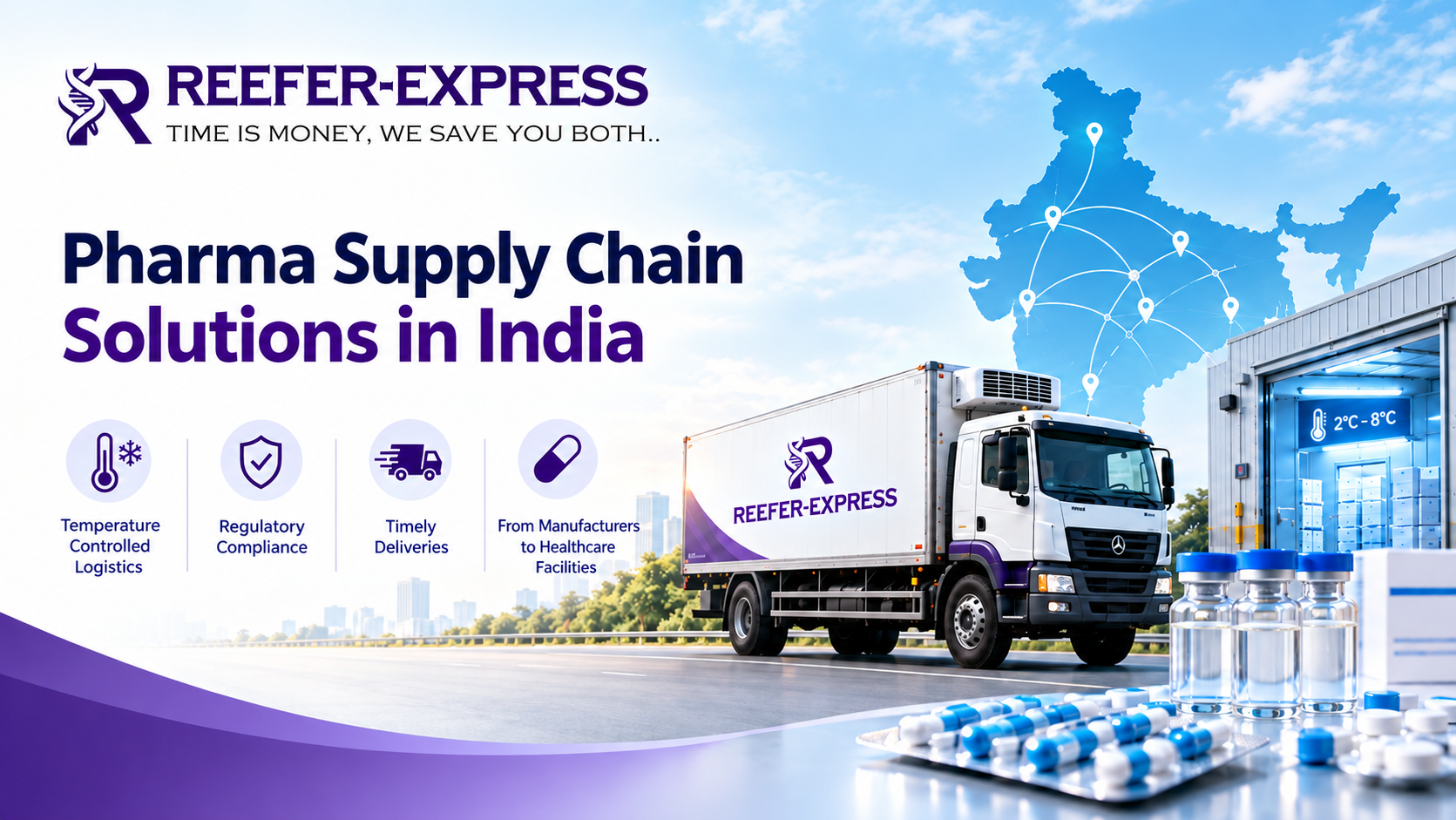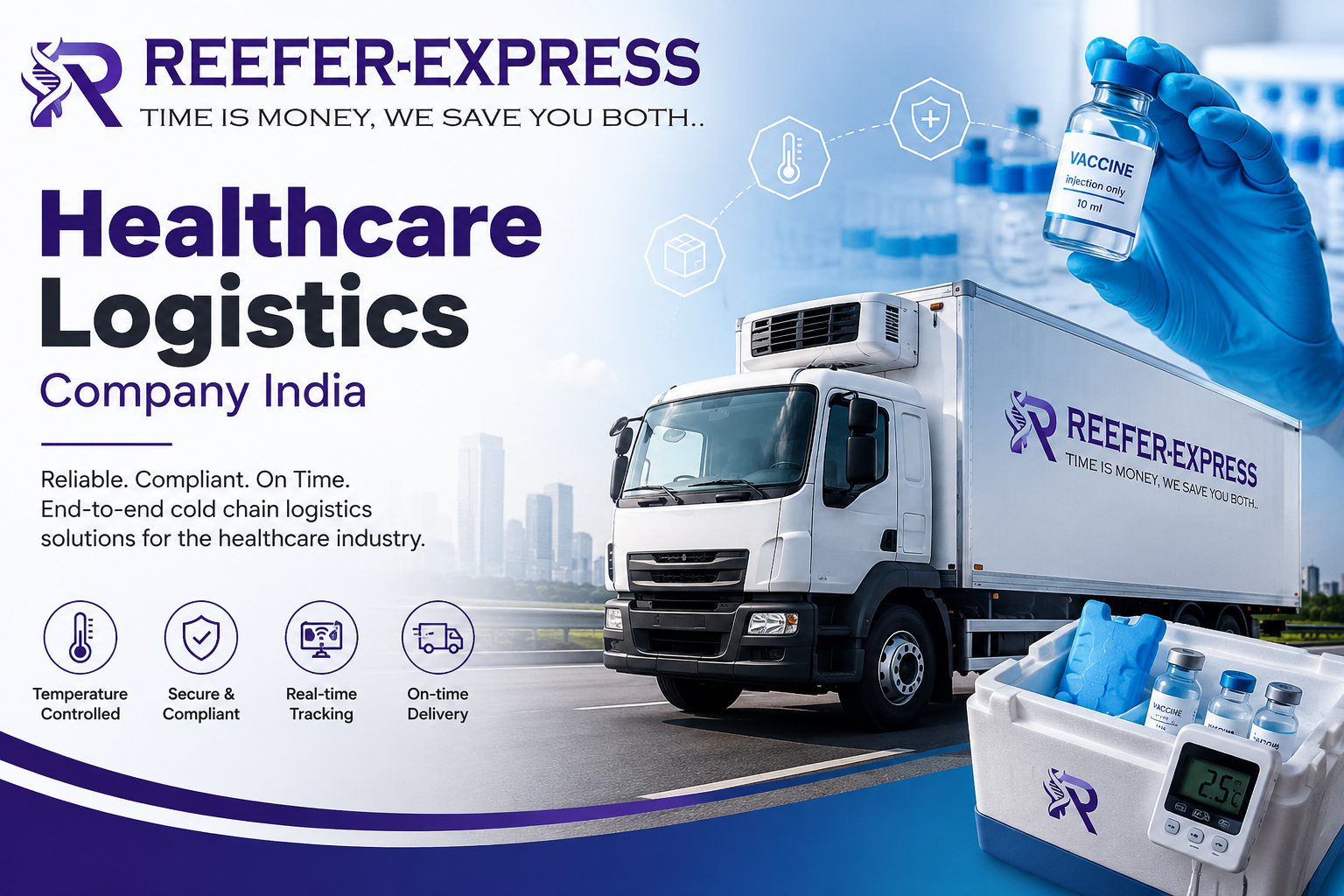


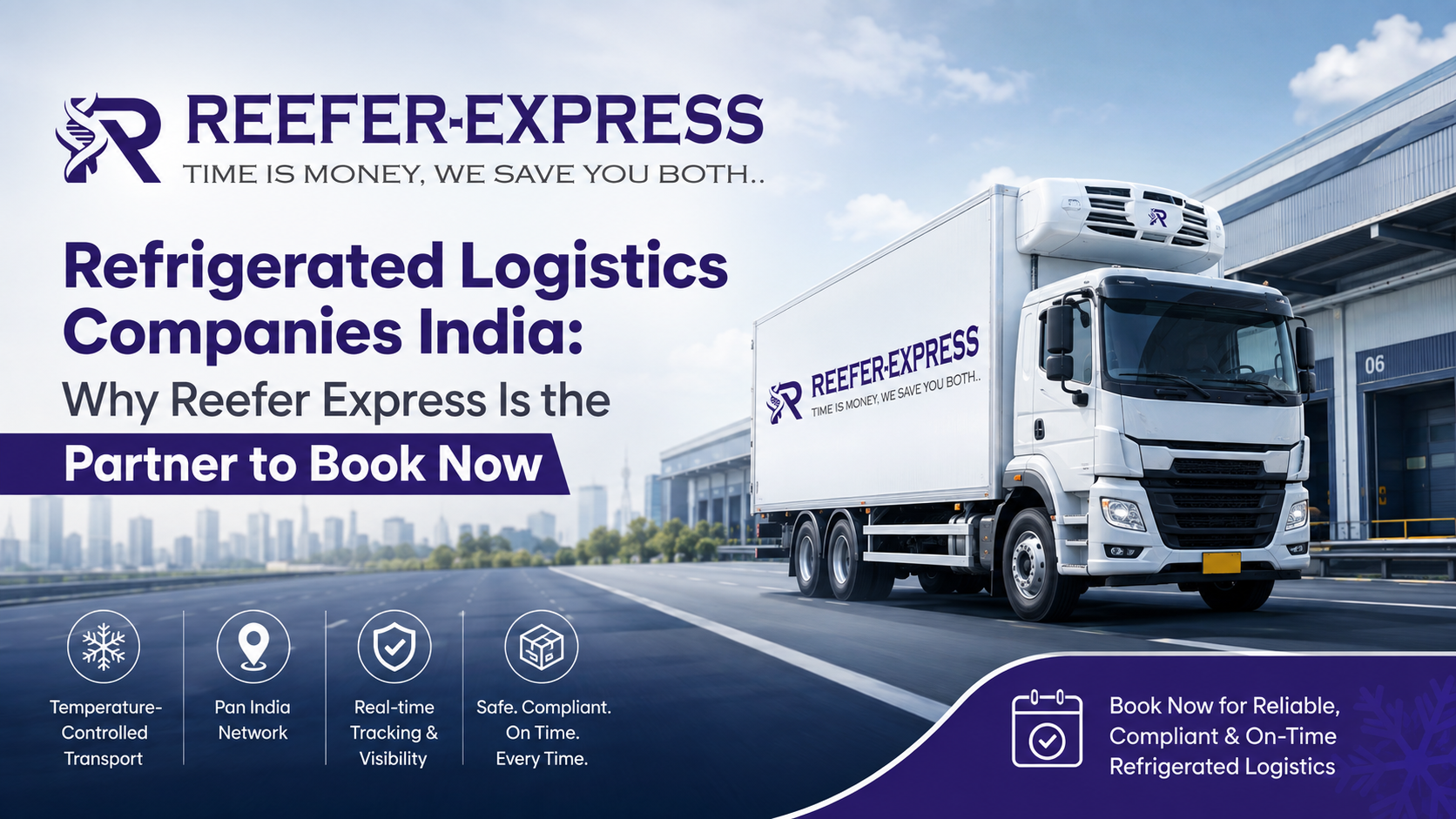
If you are searching for refrigerated logistics companies India businesses actually trust with pharmaceuticals, dairy, seafood, or fresh produce, you already know the stakes. One temperature excursion during transit can wipe out an entire shipment, break a client relationship, or trigger a regulatory notice. This is not a category where you experiment with the cheapest quote on a spreadsheet. This is a category where you pick a partner with a fleet, a process, and a track record built specifically for cold chain, and you pick them before your next shipment leaves the dock.
Reefer Express has built its entire business around that single requirement: move temperature sensitive cargo across India without breaking the chain of custody or the chain of cold. This article walks through what separates a serious refrigerated logistics operator from a generic transport vendor, what the Indian cold chain market looks like right now, and why businesses shipping perishables, pharma, or frozen goods are choosing Reefer Express over larger, slower incumbents.
Why Refrigerated Logistics Has Become a Boardroom Priority in India
Cold chain used to sit quietly inside the operations budget. That has changed. India’s cold chain market was valued at roughly INR 2,535.87 billion in 2025 and is projected to climb to INR 6,190.91 billion by 2034, growing at a compound annual rate above 10 percent, according to industry market research, largely because organized food retail, pharmaceutical logistics, and government-backed infrastructure programs are pulling more volume into temperature-controlled networks. Within that market, cold chain transportation specifically is the fastest expanding segment, with growth pushed by online grocery delivery and the rapid rollout of last-mile reefer fleets as dairy and frozen desserts alone accounted for nearly a quarter of the logistics market in 2025, while pharmaceuticals and biologics are growing even faster.
That growth is not evenly distributed. A large share of India’s cold storage capacity is still concentrated in a handful of states, and the transportation layer connecting farms, factories, ports, and retail shelves remains the weakest link in the chain. India currently has close to 8,700 cold storage units with a combined capacity of about 395 lakh metric tonnes, but storage capacity alone does not move a shipment from Nashik to Guwahati at the right temperature. That is a transportation problem, and it is the exact problem Reefer Express was built to solve.
For a company evaluating refrigerated logistics companies India wide, the market data points to one conclusion: demand for reliable reefer transport is outpacing the number of operators who can actually deliver it consistently. That gap is where shipments get delayed, spoiled, or rejected at the receiving dock.
What Actually Separates Reliable Refrigerated Logistics Companies From the Rest
Anyone can paint a truck white and call it a reefer. Very few operators can guarantee that the cargo inside stays within two degrees of its target temperature from pickup to delivery, with a data log to prove it. When you are shortlisting refrigerated logistics companies India offers, these are the factors that actually matter, not the ones printed on a brochure.
Fleet Age and Refrigeration Unit Quality
A reefer truck is only as good as its compressor. Older units cycle inefficiently, struggle in extreme heat, and are far more likely to fail mid-route during India’s summer months when ambient temperatures regularly cross 45 degrees Celsius in transit corridors like Delhi to Jaipur or Nagpur to Hyderabad. Reefer Express runs a fleet with modern refrigeration units serviced on a fixed schedule, not a reactive one, which means breakdowns are the exception rather than something you plan around.
Real Time Temperature Monitoring
A shipment that was cold at pickup and cold at delivery tells you nothing about what happened in between. Serious cold chain operators use continuous temperature logging with alerts, not spot checks at checkpoints. If your current vendor cannot hand you a temperature log for a completed trip within minutes of a request, that is a warning sign worth acting on.
Route Planning Around Cold Chain Corridors
Refrigerated transport is not the same problem as dry cargo transport with a compressor bolted on. Route planning has to account for loading dock wait times, border checkpoint delays, and rest stops that do not force the driver to shut down the reefer unit for extended periods. Operators who plan routes with cold chain integrity as the primary variable, rather than fuel cost or distance alone, protect your product far more consistently.
Compliance With FSSAI and Pharma Cold Chain Standards
If you move food products, your logistics partner needs to operate within FSSAI’s temperature and hygiene requirements for transport, not just storage. The Food Safety and Standards Authority of India mandates specific temperature bands depending on product category, and receiving temperatures for high risk foods generally need to sit at or below 5 degrees Celsius, with frozen goods held at minus 18 degrees Celsius to keep products in a safe zone from raw material reception through to sale. Pharmaceutical shipments carry an even stricter compliance layer under the Central Drugs Standard Control Organization. A refrigerated logistics partner that cannot speak fluently about both frameworks is not equipped to handle regulated cargo.
Transparent, Documented Handling at Every Handoff
Every point where cargo changes hands, whether it is loading, a transfer between vehicles, or final delivery, is a point where temperature discipline can slip. Reliable operators document each handoff with time stamps and temperature readings, so if something does go wrong, you know exactly where and can hold the right party accountable.
How Reefer Express Delivers on Each of These Standards
Reefer Express was not built as a general trucking company that added refrigeration as an afterthought. The entire operating model, from driver training to route scheduling, is designed around one outcome: your temperature sensitive cargo arrives exactly as it left.
The fleet is maintained on a preventive schedule rather than a repair-when-broken model, which keeps unplanned downtime low during peak summer demand when reefer capacity across the industry gets tight. Every vehicle carries temperature monitoring equipment that logs data throughout the trip, so you get a verifiable record with every delivery rather than a verbal assurance. Drivers are trained specifically on cold chain protocols, including how to minimize door-open time during loading and unloading, which is one of the most common and most preventable causes of temperature spikes.
Reefer Express also structures its refrigerated transport services around the specific product categories that demand the most discipline: pharmaceuticals, dairy, frozen seafood, meat, and fresh produce. Each category has different tolerance windows and different regulatory requirements, and treating them identically is how shipments fail audits. If you want to see the exact temperature ranges and vehicle types matched to your product, the reefer fleet page breaks down what is available by route and capacity.
For businesses that need cold storage in addition to transport, Reefer Express also coordinates warehousing solutions so that the temperature chain does not break the moment your product sits between transport legs. This matters more than shippers often realize. A product can travel perfectly for eight hours and still be compromised by twenty minutes in an unrefrigerated holding area before the next leg begins.
Industries That Depend on Dependable Reefer Transport
Pharmaceuticals and Healthcare
Vaccines, biologics, and temperature sensitive medicines have effectively zero tolerance for excursions. A single deviation outside the approved range can render an entire batch unusable, and regulators require documentation proving the cold chain was maintained throughout transit. This is one of the fastest growing segments within India’s cold chain sector, and it is also the least forgiving when a logistics partner cuts corners.
Dairy and Frozen Foods
Dairy and frozen desserts represent one of the largest product categories moving through India’s cold chain network. Milk, paneer, ice cream, and frozen ready meals all require tight temperature control, and any delay at a transfer point can shorten shelf life even if the product technically stays within range.
Seafood and Meat
Seafood exporters and meat processors operate under some of the strictest temperature bands in the industry, often requiring frozen storage at minus 18 degrees Celsius or below with continuous HACCP-based monitoring from the point of slaughter or catch through processing, storage, and final transportation. A break anywhere in that chain is a food safety risk, not just a quality issue.
Fresh Produce and Horticulture
India loses a meaningful share of its fruit and vegetable output every year to post-harvest spoilage, much of it tied directly to gaps in cold chain transportation between farms, mandis, and retail. Reliable reefer transport during the farm-to-market leg is one of the highest impact interventions available to reduce that loss.
E-Commerce Grocery and Quick Commerce
The fastest growing demand driver in Indian cold chain right now is e-commerce grocery, where delivery windows are measured in hours rather than days as last-mile reefer fleet deployment expands to keep pace with growing online grocery delivery volumes. Any quick commerce or grocery platform relying on frozen or chilled SKUs needs a transport partner who can hit tight delivery windows without sacrificing temperature control.
Common Mistakes Businesses Make When Choosing a Refrigerated Logistics Partner
The most expensive mistake is choosing on price alone. A quote that looks 15 percent cheaper than the market rate is almost always cheaper because the fleet is older, the monitoring is inconsistent, or the driver training is minimal. That difference does not show up until a shipment fails, and by then the cost of the spoiled product, the client relationship, and potentially a regulatory issue far exceeds whatever was saved on the freight bill.
Another common mistake is assuming that a general logistics provider with a few reefer trucks in a mixed fleet can deliver the same reliability as a specialist. Cold chain is a discipline, not an accessory. Operators who split their attention between dry cargo and refrigerated cargo tend to prioritize whichever load is more urgent on a given day, and refrigerated cargo suffers when that happens.
A third mistake is not asking for proof of temperature compliance before signing a contract. Ask any shortlisted vendor to show you a sample temperature log from a recent trip on a route similar to yours. If they cannot produce one quickly, that tells you how seriously they take the monitoring process day to day.
The Regulatory and Policy Backdrop You Should Know
India’s cold chain sector operates within a policy framework that is actively tightening, not loosening. The National Centre for Cold Chain Development, an autonomous body under the Ministry of Agriculture and Farmers Welfare, is currently revising technical standards and minimum guidelines for cold chain components that will serve as a roadmap for central and state government bodies setting up cold chain facilities nationwide. Alongside this, NCCD has been engaging directly with reefer truck operators to identify operational gaps and shape policy recommendations for the sector. The broader push toward efficient, integrated cold chain networks also sits within the government’s National Logistics Policy, which targets lower logistics costs and better coordination across transport modes.
On the food safety side, FSSAI continues to reinforce shelf-life and cold chain compliance requirements for food business operators, particularly as e-commerce grocery volume grows with proper temperature control during storage and transportation treated as essential to preventing spoilage and meeting regulatory obligations. Non-compliance carries real consequences, including penalties, recalls, and reputational damage that can outlast any single shipment.
The Ministry of Food Processing Industries also continues to subsidize cold chain infrastructure investment, offering support of 35 percent of eligible project costs, rising to 50 percent in northeastern and difficult terrain states, under its cold chain scheme, with an allocation of roughly ₹6,520 crore for the 2025-26 cycle. This signals continued government commitment to closing India’s cold chain gaps, and it means the operators who invest in compliant, modern infrastructure now will be the ones positioned to handle growing volume over the next several years.
For businesses shipping perishables or pharmaceuticals, working with a refrigerated logistics partner who already operates inside this regulatory framework, rather than scrambling to catch up with it, removes a significant amount of compliance risk from your supply chain.
What to Expect When You Book With Reefer Express
Getting started with a refrigerated logistics partner should not require a lengthy procurement cycle. When you request a quote from Reefer Express, the process starts with understanding your product category, required temperature range, route, and volume. From there, you get a vehicle matched to your specific cold chain requirement, not a generic reefer pulled from a mixed fleet.
Throughout the shipment, you have visibility into temperature data rather than waiting until delivery to find out whether the chain held. If your business ships regularly rather than as a one-off, Reefer Express also works with clients to build recurring routes and dedicated capacity, which reduces per-shipment cost while improving reliability, since a driver and vehicle that run the same corridor repeatedly develop familiarity with loading docks, checkpoint timing, and traffic patterns that a one-time vendor never will.
Frequently Asked Questions
What is the difference between refrigerated logistics and standard cold storage?
Cold storage refers to holding temperature sensitive goods in a fixed facility, such as a warehouse or distribution center. Refrigerated logistics, sometimes called reefer transport, covers the movement of those goods between locations while maintaining the same temperature control. A complete cold chain needs both working together without gaps, since a product held perfectly in storage can still be compromised during transit if the transport leg is not equally disciplined.
How do refrigerated logistics companies in India maintain temperature during long routes?
Reliable operators use insulated reefer trucks with independently powered refrigeration units, continuous temperature monitoring equipment, and route planning that minimizes the number of times doors are opened or the vehicle is left idle without power. Driver training on loading procedures and minimizing door-open time also plays a significant role in preventing temperature spikes during multi-day routes.
What temperature range is required for transporting pharmaceuticals in India?
Requirements vary by product, but most biologics and vaccines require strict cold chain maintenance between 2 and 8 degrees Celsius, while some require frozen conditions well below zero. The Central Drugs Standard Control Organization sets compliance requirements for pharmaceutical cold chain, and any deviation outside the approved range for a given product can render a batch unusable, regardless of how briefly the excursion lasted.
Why does FSSAI compliance matter for food transportation specifically?
FSSAI sets binding temperature and hygiene requirements for food businesses covering the full supply chain, not just storage or retail display. A logistics provider that cannot demonstrate compliance with FSSAI’s transportation requirements puts your business at risk of regulatory action, product recalls, and loss of buyer trust, particularly for high risk food categories like dairy, meat, and ready-to-eat items.
How quickly can a business start shipping with a refrigerated logistics provider?
This depends on the provider, but a well-run cold chain operator should be able to onboard a new client and schedule a first shipment within a few days once product category, volume, route, and temperature requirements are confirmed. Businesses with recurring shipment needs can typically set up dedicated or scheduled capacity shortly after the first few trips establish route familiarity.
What should a business ask before signing with a refrigerated logistics company?
Ask for a sample temperature log from a comparable recent shipment, confirm the age and maintenance schedule of the reefer fleet, verify compliance with FSSAI or CDSCO requirements relevant to your product category, and clarify how the provider handles handoffs between transport and storage. A provider that answers these questions clearly and quickly is generally the safer choice over one that gives vague reassurances.
Ready to Move Your Next Shipment Without the Risk
Choosing among refrigerated logistics companies India has available comes down to one question: can this operator prove, shipment after shipment, that your product stays within its required temperature range from pickup to delivery. Reefer Express has built its fleet, its monitoring systems, and its driver training around answering that question with data, not promises.
If you are ready to move pharmaceuticals, dairy, seafood, frozen goods, or fresh produce with a partner built specifically for cold chain, get in touch with Reefer Express today and get a quote for your next shipment.