

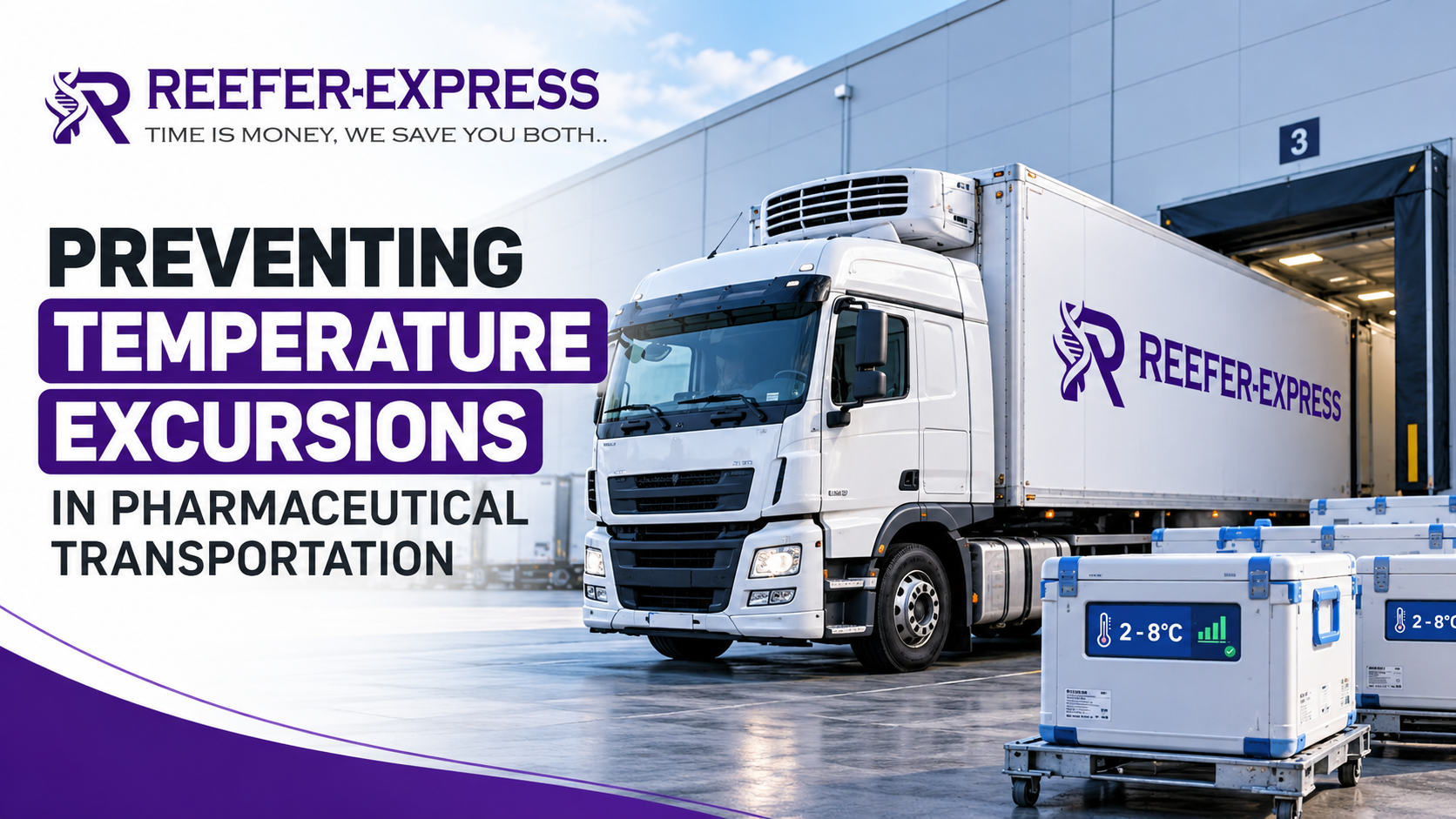
Pharmaceutical products need to remain within specific temperature ranges during storage and transportation. Even a small change in temperature can affect product quality, stability, and effectiveness. This makes temperature control one of the most important parts of pharmaceutical logistics.
Temperature excursions occur when pharmaceutical products are exposed to temperatures outside their approved storage or transportation range. These changes can happen during loading, unloading, storage, transit, or delivery.
For pharmaceutical manufacturers, distributors, hospitals, and healthcare businesses, preventing temperature excursions is essential to maintaining product quality and protecting the supply chain.
A reliable pharmaceutical logistics process combines temperature-controlled transportation, proper packaging, continuous monitoring, trained staff, and effective shipment management.
In this guide, we explain the common causes of temperature excursions and the practical steps businesses can take to prevent them during pharmaceutical transportation.
What Are Temperature Excursions in Pharmaceutical Transportation?
A temperature excursion occurs when a pharmaceutical product is exposed to a temperature outside the range specified by its manufacturer or approved product stability requirements.
Different pharmaceutical products have different temperature requirements. Some products need controlled room temperature conditions, while others require refrigerated or frozen transportation.
For example:
- Refrigerated medicines may require storage between 2°C and 8°C.
- Frozen pharmaceutical products may require temperatures below 0°C, depending on product specifications.
- Some vaccines and biologics require specific temperature conditions throughout transportation.
- Certain pharmaceutical products can be transported at controlled room temperature, depending on their approved storage requirements.
The correct temperature range depends on the individual product. Maintaining these conditions throughout the transportation process helps protect product quality and stability.
What Causes Temperature Excursions During Pharmaceutical Transportation?
Temperature excursions can occur at different stages of the pharmaceutical supply chain. Identifying these risks helps businesses take preventive measures before products are affected.
1. Improper Loading and Unloading
Loading and unloading are important stages in pharmaceutical transportation. When temperature-sensitive products remain outside controlled environments for extended periods, they may be exposed to unsuitable temperatures.
This can happen when:
- Products are left on loading docks.
- Vehicles are not ready when shipments arrive.
- Loading takes longer than planned.
- Temperature-controlled storage areas are unavailable.
Businesses should coordinate loading and unloading activities in advance. Products should move quickly between temperature-controlled environments, with exposure time managed according to approved handling procedures.
2. Poorly Maintained Refrigerated Vehicles
Refrigerated vehicles play an important role in pharmaceutical cold chain transportation. If the refrigeration system does not operate correctly, the required temperature may not be maintained throughout the journey.
Common problems include equipment failure, damaged door seals, blocked airflow, incorrect temperature settings, and inadequate vehicle maintenance.
Regular vehicle inspections and preventive maintenance help reduce these risks.
Before dispatch, logistics teams should check the refrigeration equipment, temperature settings, vehicle condition, and monitoring system.
3. Incorrect Packaging
Packaging protects pharmaceutical products from external temperature changes during transportation.
Using unsuitable packaging materials or incorrect packing methods can expose products to temperature fluctuations.
Common packaging problems include:
- Insufficient insulation.
- Incorrect use of coolants or refrigerants.
- Poor placement of temperature-sensitive products.
- Damaged packaging materials.
- Packaging that has not been validated for the required shipping conditions.
Businesses should select packaging based on product temperature requirements, shipment duration, transport conditions, and expected external temperatures.
4. Delays During Transportation
Traffic congestion, vehicle breakdowns, weather conditions, route changes, and unexpected stops can affect pharmaceutical deliveries.
Longer transit times can increase the risk of temperature excursions, especially when shipments depend on a specific packaging or refrigeration system.
Logistics providers should plan routes carefully, consider possible delays, and establish alternative arrangements for unexpected situations.
5. Lack of Temperature Monitoring
Without proper monitoring, temperature changes may go unnoticed during transportation.
A shipment may appear to be delivered successfully even when it has experienced an unacceptable temperature fluctuation.
Temperature monitoring devices help logistics teams track shipment conditions and identify problems during transit.
Businesses should use suitable monitoring equipment and maintain temperature records throughout the transportation process.
10 Ways to Prevent Temperature Excursions in Pharmaceutical Transportation
Preventing temperature excursions requires proper planning and control at every stage of the supply chain. The following practices help pharmaceutical businesses maintain the required transportation conditions.
1. Maintain the Required Temperature Range
Every pharmaceutical product has specific temperature requirements. These requirements should be clearly communicated to the logistics provider before transportation begins.
The transportation team should know:
- Required temperature range.
- Permitted temperature limits.
- Expected shipment duration.
- Product handling instructions.
- Special storage requirements.
Temperature settings should be based on product specifications rather than general assumptions.
2. Use Temperature-Controlled Vehicles
Refrigerated vehicles help maintain the required temperature during pharmaceutical transportation.
These vehicles should have suitable refrigeration equipment, proper insulation, functional door seals, and adequate airflow.
Before every shipment, the logistics team should verify that the vehicle can maintain the required conditions.
Vehicle suitability should also be assessed based on shipment size, distance, product requirements, and transportation duration.
3. Use Appropriate Cold Chain Packaging
Cold chain packaging provides additional protection against temperature fluctuations.
The right packaging depends on the pharmaceutical product and transportation conditions.
Common packaging options include:
- Insulated shipping containers.
- Refrigerated packaging systems.
- Temperature-controlled boxes.
- Validated passive packaging solutions.
- Active temperature-controlled containers.
Packaging should be tested and validated for the intended shipping conditions. Coolants and refrigerants must also be selected and positioned correctly to avoid freezing or overheating products.
4. Monitor Temperature Throughout the Journey
Continuous temperature monitoring helps identify problems before they affect the entire shipment.
Data loggers and suitable temperature monitoring devices record temperature conditions during transportation.
These records help businesses understand whether products remained within their specified temperature range.
For sensitive pharmaceutical shipments, monitoring should cover the entire transportation process, including loading, transit, temporary storage, and delivery.
5. Plan Transportation Routes in Advance
Route planning helps reduce unnecessary delays and transportation risks.
Before dispatch, logistics teams should consider traffic conditions, road quality, weather, delivery distance, and possible alternative routes.
For long-distance transportation, contingency plans should be available in case of unexpected delays or vehicle problems.
Proper planning helps maintain delivery schedules and reduces the time pharmaceutical products spend in transit.
6. Maintain Refrigeration Equipment Regularly
Refrigeration equipment needs regular inspection and maintenance to operate correctly.
A preventive maintenance schedule should include:
- Checking refrigeration units.
- Inspecting door seals and insulation.
- Testing temperature sensors.
- Checking airflow inside the vehicle.
- Inspecting electrical and backup systems.
- Reviewing equipment performance records.
Regular maintenance helps identify equipment problems before they affect pharmaceutical shipments.
7. Train Staff in Pharmaceutical Handling
Drivers, warehouse employees, loading teams, and logistics coordinators all play a role in maintaining pharmaceutical product quality.
Staff should understand the importance of temperature control and follow the correct handling procedures.
Training should cover temperature requirements, loading and unloading practices, packaging instructions, monitoring equipment, and emergency response procedures.
Proper training reduces handling errors and improves coordination across the supply chain.
8. Reduce Product Exposure During Transfers
Pharmaceutical products may pass through multiple locations before reaching their destination.
Every transfer between warehouses, vehicles, and distribution facilities creates an opportunity for temperature exposure.
To reduce this risk, businesses should:
- Coordinate transfers in advance.
- Use temperature-controlled storage areas.
- Minimise unnecessary handling.
- Maintain proper packaging during transfers.
- Record transfer times and temperature conditions.
Efficient coordination helps maintain temperature control between different stages of transportation.
9. Establish Emergency Response Procedures
Temperature excursions can still happen because of equipment failure, transportation delays, or unexpected environmental conditions.
Businesses should have clear procedures for handling these situations.
An emergency response plan should explain what to do when:
- Refrigeration equipment stops working.
- Temperature readings move outside approved limits.
- A vehicle breaks down.
- A shipment faces an unexpected delay.
- Monitoring equipment stops recording data.
If an excursion occurs, the shipment should be assessed according to the manufacturer’s stability information and applicable quality procedures. Affected products should not automatically be released for distribution.
The incident should be documented, investigated, and reviewed by the appropriate quality team.
10. Maintain Proper Documentation
Documentation is important for pharmaceutical supply chain management.
Temperature records help businesses verify shipment conditions and investigate potential problems.
Important records include:
- Shipment temperature reports.
- Vehicle inspection records.
- Equipment maintenance reports.
- Packaging validation documents.
- Loading and unloading records.
- Delivery confirmation.
- Temperature excursion reports.
Accurate documentation supports quality management, traceability, and regulatory compliance.
Why Temperature Monitoring Is Important in Pharma Cold Chain Logistics
Temperature monitoring helps pharmaceutical companies maintain control over sensitive products during transportation.
Without proper monitoring, businesses may not know whether their shipments have experienced temperature changes.
A suitable monitoring system provides information about temperature conditions at different stages of the journey.
The main benefits include:
Better shipment visibility: Temperature records help logistics teams understand the conditions in which pharmaceutical products are transported.
Early identification of problems: Monitoring can help identify temperature changes that require immediate attention.
Improved product handling: Recorded data helps businesses review handling practices and identify areas that need improvement.
Better documentation: Temperature reports support quality investigations and shipment records.
Reduced product loss: Early identification and appropriate action can help prevent further damage to temperature-sensitive shipments.
Temperature monitoring should be combined with suitable vehicles, packaging, trained staff, and established handling procedures.
How to Choose the Right Pharmaceutical Cold Chain Logistics Provider
Choosing the right logistics provider is an important decision for pharmaceutical manufacturers and distributors.
A logistics partner should understand the requirements of temperature-sensitive products and have suitable processes to manage transportation risks.
Before selecting a pharmaceutical logistics provider, consider the following factors.
Temperature-Controlled Transportation Facilities
Check whether the provider has suitable refrigerated vehicles and temperature-controlled facilities for your products.
Ask about vehicle maintenance, temperature settings, and equipment suitability.
Temperature Monitoring Capabilities
Understand how the provider monitors temperature during transportation.
Ask whether shipment temperature records are available and how temperature deviations are reported.
Staff Training and Handling Procedures
The logistics team should understand pharmaceutical handling requirements, loading procedures, and temperature control practices.
Quality Management Processes
Ask about quality procedures, documentation, incident reporting, and corrective actions.
Review the provider’s relevant certifications and registrations rather than relying on general claims.
Shipment Tracking and Communication
Shipment visibility helps businesses understand delivery progress and coordinate with logistics teams.
Check whether the provider offers shipment tracking, delivery updates, and support during unexpected delays.
Experience in Pharmaceutical Logistics
Experience in handling pharmaceuticals, biologics, medical products, and other temperature-sensitive goods can help a provider understand the operational requirements of healthcare supply chains.
Selecting a provider based on its actual capabilities helps businesses build a more reliable pharmaceutical transportation process.
How Reefer Express Supports Pharmaceutical Supply Chain Management
Reefer Express provides pharmaceutical supply chain solutions for businesses that require temperature-controlled logistics and careful product handling.
Our services include cold chain management, warehousing, and distribution for temperature-sensitive pharmaceutical products.
We focus on maintaining suitable temperature conditions and supporting the movement of pharmaceutical products across the supply chain.
Our approach includes:
- Temperature-controlled logistics solutions.
- Cold chain management.
- Pharmaceutical warehousing and distribution.
- Healthcare logistics support.
- Shipment handling and coordination.
- End-to-end consignment tracking.
We understand that pharmaceutical transportation requires attention to product requirements, handling procedures, and delivery schedules.
Whether you are a pharmaceutical manufacturer, healthcare organisation, medical products supplier, or biotechnology company, choosing the right logistics partner is important for maintaining product quality throughout transportation.
Looking for a pharmaceutical logistics partner?
Contact Reefer Express to discuss your pharmaceutical transportation, cold chain management, warehousing, and distribution requirements.
Frequently Asked Questions
1. What is a temperature excursion in pharmaceutical transportation?
A temperature excursion occurs when a pharmaceutical product is exposed to temperatures outside its approved storage or transportation range. It can affect product stability, quality, and effectiveness.
2. What temperature should pharmaceutical products be transported at?
The required temperature depends on the pharmaceutical product. Some products require refrigerated conditions between 2°C and 8°C, while others need frozen, ultra-low-temperature, or controlled room temperature conditions.
Always follow the manufacturer’s specified storage and transportation requirements.
3. How can temperature excursions be prevented during pharma transportation?
Temperature excursions can be prevented through suitable refrigerated vehicles, validated packaging, continuous temperature monitoring, proper route planning, regular equipment maintenance, and trained handling staff.
4. Why is temperature monitoring important in pharmaceutical logistics?
Temperature monitoring helps businesses track shipment conditions and identify temperature changes during transportation. It also provides records that can support quality investigations and shipment verification.
5. What happens if pharmaceutical products experience a temperature excursion?
Products exposed to temperatures outside their approved range should be assessed by the responsible quality team. Their suitability for further distribution depends on product stability information, exposure duration, temperature limits, and manufacturer guidance.
6. What is the role of cold chain logistics in pharmaceutical transportation?
Cold chain logistics helps maintain the required environmental conditions during pharmaceutical storage, handling, and transportation. It supports the safe movement of temperature-sensitive medicines, vaccines, biologics, and other healthcare products.
7. How do I choose a pharmaceutical cold chain logistics provider?
Evaluate the provider’s transportation facilities, temperature monitoring systems, packaging capabilities, staff training, quality procedures, documentation, shipment tracking, and experience in pharmaceutical logistics.
8. Can temperature excursions happen even in refrigerated vehicles?
Yes. Equipment failure, incorrect temperature settings, poor airflow, frequent door openings, and inadequate maintenance can cause temperature fluctuations even inside refrigerated vehicles.
Conclusion
Preventing temperature excursions is essential for maintaining product quality during pharmaceutical transportation. Temperature-controlled vehicles, suitable packaging, continuous monitoring, proper handling, and regular equipment maintenance all contribute to a reliable cold chain.
Pharmaceutical businesses should work with logistics providers that understand the importance of temperature management, shipment visibility, and quality procedures.
Reefer Express supports pharmaceutical supply chain requirements through cold chain management, temperature-controlled logistics, warehousing, and distribution solutions.
Contact Reefer Express today to discuss your pharmaceutical logistics requirements and find the right transportation solution for your business.