

Introduction
In the pharmaceutical industry, maintaining product quality is not just important — it is critical. Medicines, vaccines, and biologics are highly sensitive to temperature changes, and even a small deviation during transportation can impact their effectiveness.
This is where cold chain logistics plays a vital role.
Cold chain logistics for pharmaceutical products in India plays a critical role in ensuring medicines are transported safely without temperature deviations. From vaccines to biologics, maintaining controlled temperature throughout the supply chain is essential for product effectiveness and patient safety.with its diverse climate conditions and long transportation routes, ensuring safe delivery of temperature-sensitive pharmaceutical products is a major challenge. From manufacturing units to hospitals and pharmacies, maintaining the required temperature throughout the journey is essential.
Cold chain logistics for pharmaceutical products in India ensures that medicines are transported, stored, and delivered under controlled temperature conditions without any compromise in quality.
What is Cold Chain Logistics in Pharmaceuticals?
Cold chain logistics refers to a temperature-controlled transport supply chain that maintains a specific temperature range from origin to final delivery.
In pharmaceutical logistics, this includes storage, handling, and transportation systems designed to protect temperature-sensitive products.
Unlike regular logistics, cold chain systems are built to ensure continuous temperature stability. This involves the use of refrigerated transport, insulated packaging, and monitoring systems.
In simple terms, cold chain logistics ensures that pharmaceutical products remain safe, effective, and compliant throughout their journey.
Why Cold Chain Logistics is Critical for Pharmaceutical Products
Pharmaceutical products are highly sensitive to environmental conditions. Vaccines, insulin, biologics, and certain medicines require strict temperature control.
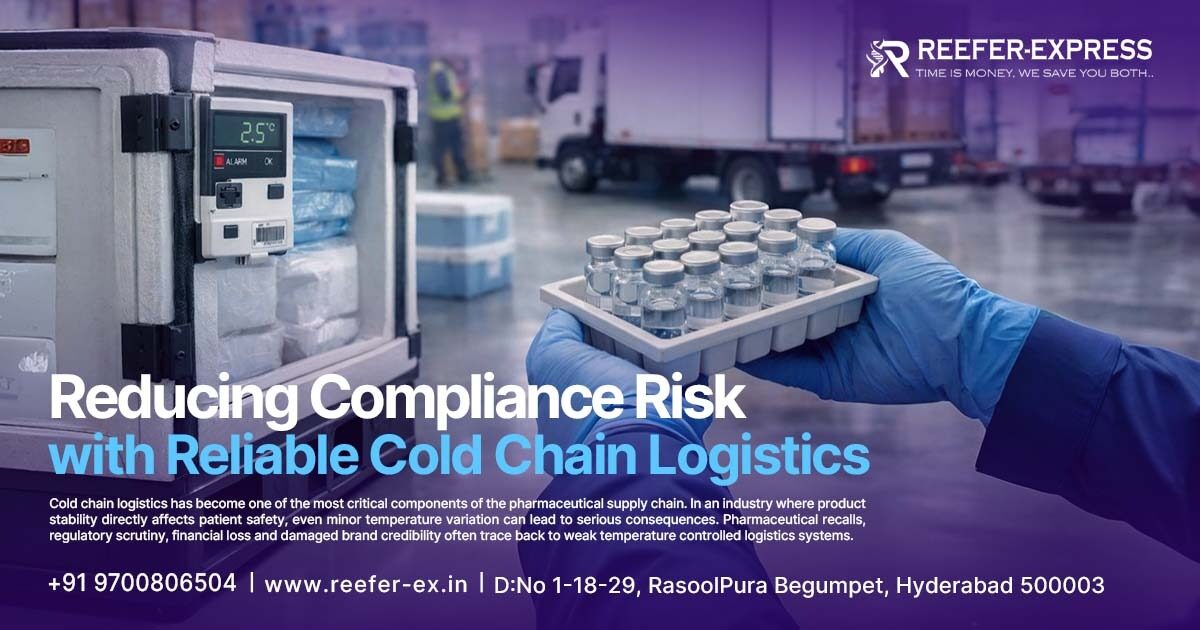
If exposed to incorrect temperatures, these products can lose their effectiveness, leading to serious health risks.
Cold chain logistics ensures that these products remain stable during transportation. It protects the integrity of medicines from the point of manufacturing to the point of consumption.
In a country like India, where temperatures can vary significantly across regions, maintaining a strong cold chain system is essential for ensuring safe healthcare delivery.
Key Components of Cold Chain Logistics in India
Cold chain logistics is not a single process. It is a combination of multiple systems working together to maintain temperature control.
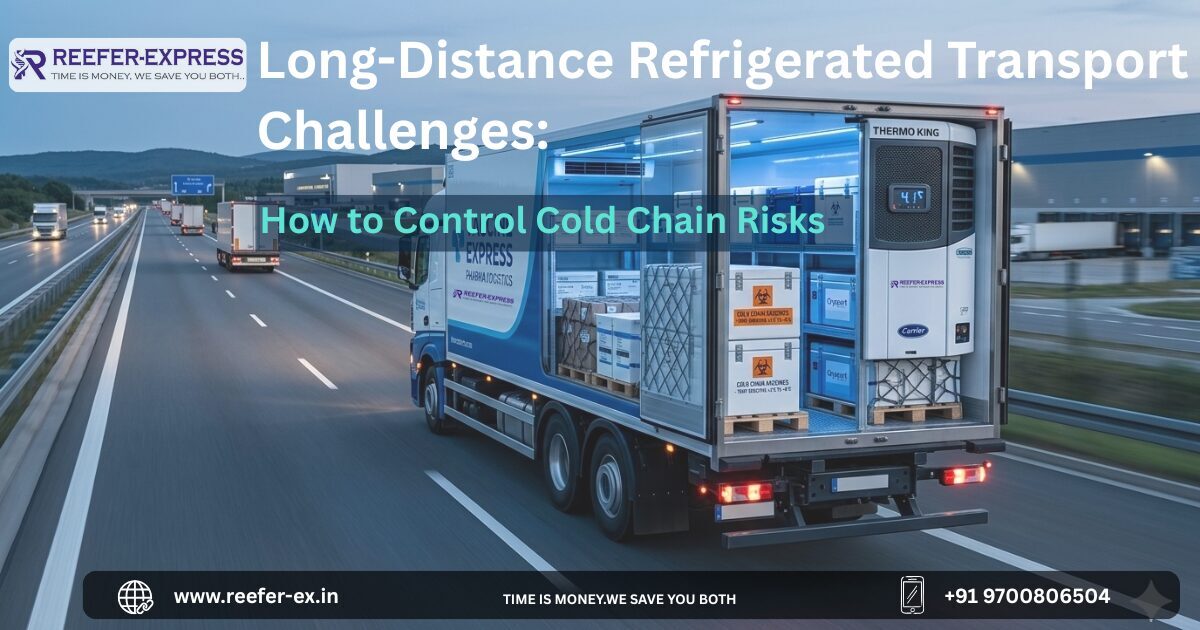
One of the most important components is refrigerated transport. Temperature-controlled vehicles ensure that medicines are transported safely over long distances.
Storage also plays a crucial role. Cold storage facilities are used to maintain required temperature conditions before and after transportation. According to World Health Organization guidelines, maintaining temperature in pharmaceutical cold chain logistics is critical.
Packaging is another critical element. Insulated packaging and cooling materials help maintain temperature stability during transit.
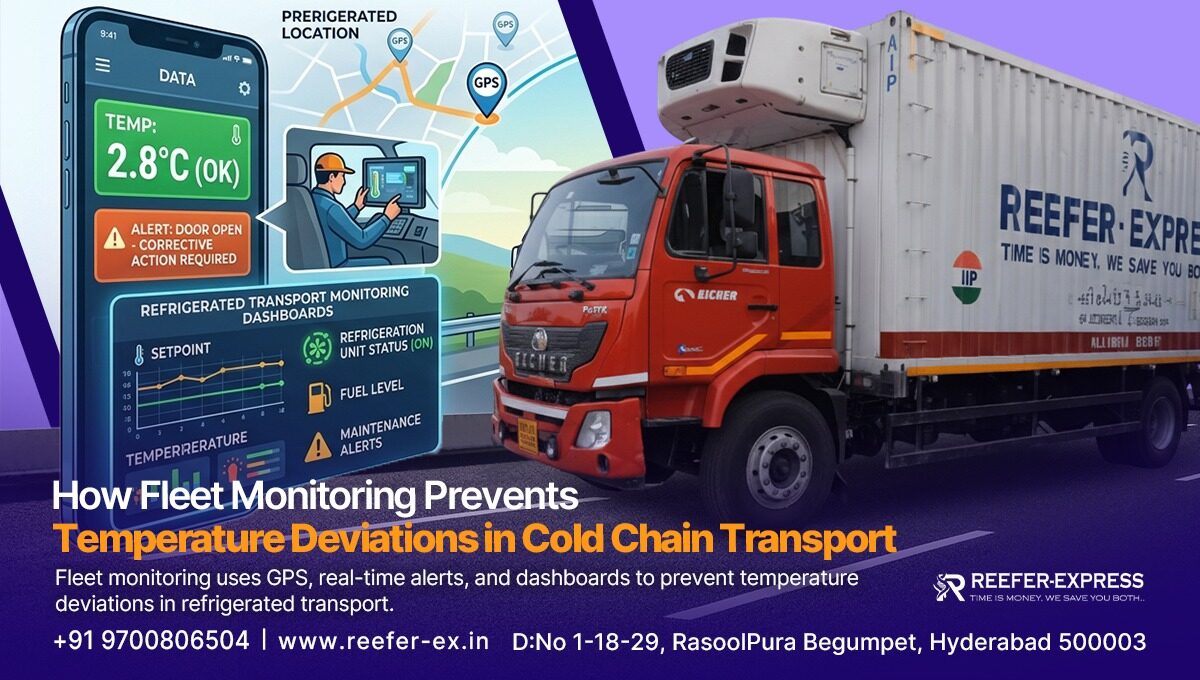
Monitoring systems add an extra layer of security by tracking temperature conditions in real time. These systems ensure that any deviation is identified and corrected immediately.
Together, these components create a reliable cold chain system that supports pharmaceutical logistics in India.
Role of Refrigerated Transport in Cold Chain Logistics
Refrigerated transport is one of the most important parts of cold chain logistics.
In refrigerated pharma transport in India, it ensures that temperature-sensitive pharmaceutical products are transported safely from one location to another. These vehicles are designed to maintain consistent temperature conditions, regardless of external weather.
In India, road-based refrigerated transport plays a crucial role in connecting major cities with smaller towns and rural areas. This makes it possible to deliver medicines across the country efficiently.
To understand how refrigerated transport supports pharmaceutical delivery, you can explore more about refrigerated pharma transport in India and its importance in maintaining temperature integrity.
Temperature Requirements in Pharmaceutical Cold Chain
Different pharmaceutical products require different temperature ranges.
Vaccines and injectable medicines are usually transported within the 2–8°C range. Certain medicines require controlled room temperature, while biologics and advanced drugs may require frozen conditions.
Maintaining these temperature ranges throughout the supply chain is essential to ensure product quality and safety.
Any temperature deviation can result in product damage, making temperature control one of the most critical aspects of pharmaceutical logistics.
Challenges in Cold Chain Logistics in India
Despite technological advancements, cold chain logistics in India faces several challenges.
One of the biggest challenges is maintaining consistent temperature during long-distance transportation. External weather conditions, especially extreme heat, can impact temperature stability.
According to World Health Organization guidelines infrastructure limitations, traffic delays, and long transit times also create challenges in maintaining a strong cold chain.
Another major issue is the lack of real-time monitoring in traditional systems. Without proper tracking, it becomes difficult to ensure that temperature conditions are maintained throughout the journey.
These challenges highlight the need for advanced systems, better planning, and reliable logistics providers.
How Technology is Improving Cold Chain Logistics
Technology is transforming cold chain logistics in India.
Modern systems now include GPS tracking and temperature monitoring devices that provide real-time updates. These systems allow logistics providers to monitor shipment conditions and take immediate action if any deviation occurs.
Data logging also helps maintain compliance with industry standards. It provides a record of temperature conditions throughout the journey, ensuring transparency and accountability.
With the integration of technology, cold chain logistics is becoming more efficient, reliable, and secure.
Importance of Last-Mile Delivery in Cold Chain
Last-mile delivery is one of the most critical stages in pharmaceutical logistics.
Even if temperature is maintained throughout transportation, failure at the final stage can compromise the entire shipment.
Refrigerated transport ensures that medicines are delivered safely to hospitals, clinics, and pharmacies. It plays a key role in maintaining temperature conditions until the product reaches the end user.
This makes last-mile delivery an essential part of the cold chain system in India.
How Reefer Express Supports Cold Chain Logistics
At Reefer Express, the focus is on delivering reliable and efficient cold chain solutions for pharmaceutical products.
With advanced refrigerated vehicles and temperature monitoring systems, every shipment is handled with precision. The goal is to maintain temperature integrity throughout the journey and ensure safe delivery.
By combining technology, planning, and operational expertise, Reefer Express supports pharmaceutical companies in maintaining a strong and dependable cold chain system.
Conclusion
Cold chain logistics is the backbone of pharmaceutical transportation in India.
It ensures that temperature-sensitive medicines are delivered safely, maintaining their effectiveness and quality. As the demand for pharmaceutical products continues to grow, the importance of reliable cold chain systems becomes even more significant.
With the right combination of technology, infrastructure, and logistics expertise, pharmaceutical companies can ensure safe and efficient delivery across the country.
Frequently Asked Questions (FAQs)
It ensures that temperature-sensitive medicines remain effective despite varying climate conditions.
It ensures temperature-sensitive medicines remain effective and safe throughout the supply chain.
Common ranges include 2–8°C, controlled room temperature, and frozen conditions depending on the product.
Refrigerated transport, cold storage, packaging, and temperature monitoring systems.
It maintains consistent temperature conditions during transportation, ensuring product safety.