



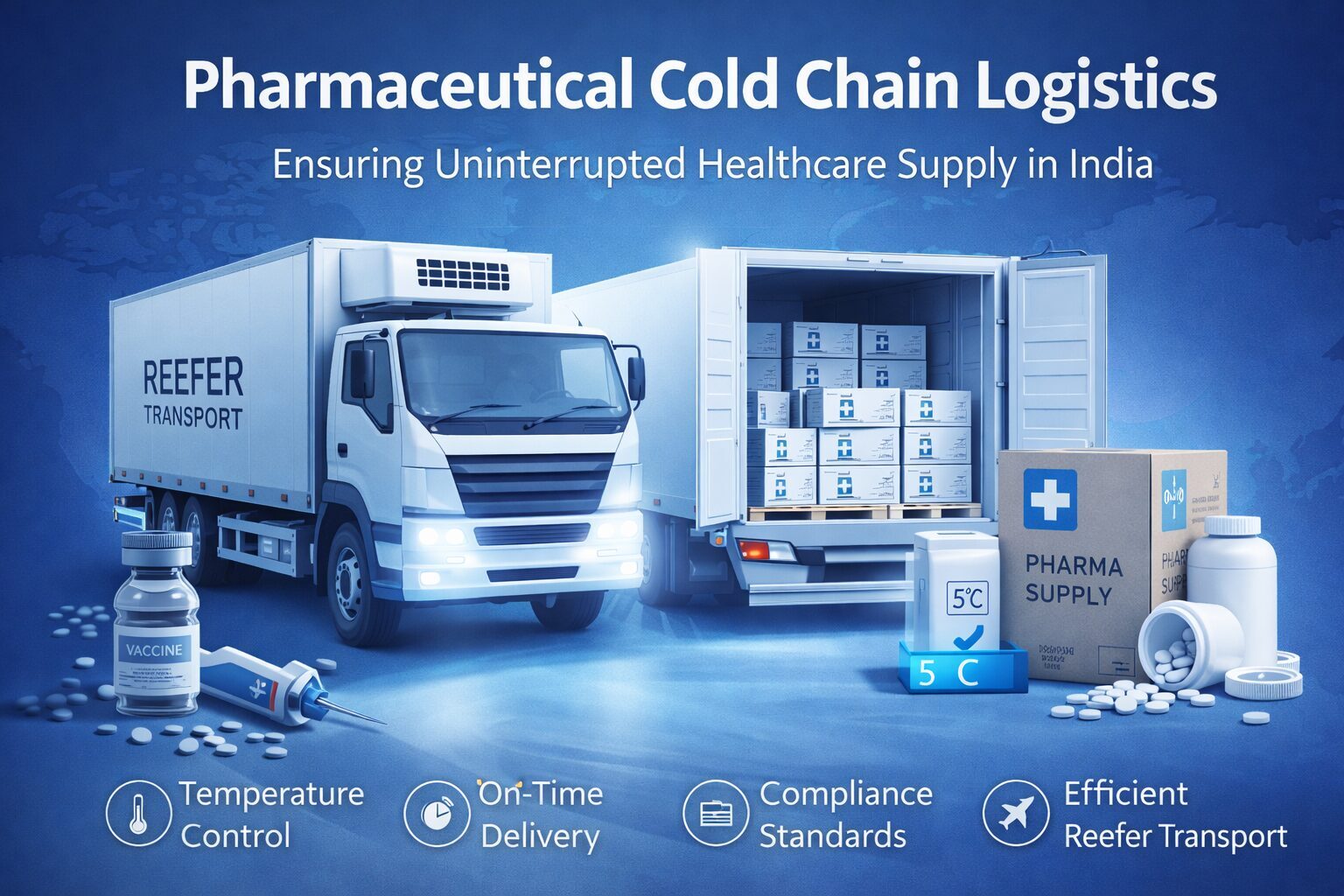
In healthcare, continuity is not a business goal. It is a responsibility. Every hospital shelf stocked with life-saving medicines, every vaccination center administering doses, and every pharmacy dispensing critical drugs depends on something most people never see pharmaceutical cold chain logistics. Behind the scenes, reefer logistics in India works tirelessly to ensure that temperature-sensitive medicines move safely, consistently, and without interruption.
Healthcare supply chains cannot afford uncertainty. A few degrees of temperature deviation during transport can compromise a vaccine. A delayed refrigerated truck can disrupt hospital inventory. A compliance gap can expose pharmaceutical companies to regulatory penalties. This is why refrigerated transport for medicines has become the backbone of continuous healthcare supply.
Pharmaceutical cold chain logistics is not simply about moving cargo from one location to another. It is about preserving efficacy, maintaining compliance, and protecting patient safety at every stage of transportation.
The Growing Importance of Reefer Logistics in India
India’s pharmaceutical sector is expanding rapidly, serving both domestic healthcare needs and global markets. As production increases, so does the need for reliable temperature controlled road transport. Medicines, biologics, insulin, oncology drugs, and vaccines require strict thermal stability. Without a dependable cold chain transport system, product integrity cannot be guaranteed.
Reefer logistics in India supports this growing ecosystem by ensuring that pharmaceutical products remain within validated temperature ranges from manufacturing plants to hospitals, clinics, distribution hubs, and pharmacies. It connects urban centers to remote regions, ensuring that even rural healthcare facilities receive safe and effective supplies.
In a country where healthcare demand is rising year after year, uninterrupted pharmaceutical cold chain logistics is no longer optional. It is foundational.
Why Uninterrupted Refrigerated Transport Matters
Healthcare does not operate on flexible timelines. Emergency rooms function around the clock. Vaccination campaigns follow strict schedules. Chronic disease treatments require consistent medication availability. Any disruption in the healthcare supply chain in India can have serious consequences.
Refrigerated transport for medicines ensures that products remain stable during long-distance transit. Modern pharma reefer transport vehicles are designed with insulated bodies, advanced cooling systems, and temperature recording devices that maintain the required thermal conditions throughout the journey.
Uninterrupted transport means that hospitals do not experience stockouts. It means vaccines maintain potency. It means pharmacies can confidently dispense medicines without questioning their stability. This consistency builds trust across the healthcare ecosystem.
The Role of Temperature Controlled Road Transport
While air logistics supports rapid intercity movement, temperature controlled road transport forms the operational backbone of last-mile pharmaceutical distribution. Once cargo lands or leaves manufacturing units, reefer trucks ensure it reaches its final destination safely.
From controlled room temperature drugs to 2°C to 8°C vaccine shipments, refrigerated truck logistics provides a stable mobile storage environment. In pharmaceutical cold chain logistics, stability is everything. Even minor fluctuations can alter chemical composition and reduce therapeutic effectiveness.
Road-based cold chain transport services allow flexibility, scalability, and real-time routing adjustments. This adaptability strengthens healthcare supply chain India and ensures that medicines are delivered where and when they are needed most.
Real-Time Monitoring and Compliance Discipline
Modern reefer logistics is powered by technology. Real-time temperature monitoring and digital tracking systems provide transparency and accountability. Pharmaceutical companies today expect complete documentation of transit conditions, especially under GDP compliant logistics India standards.
Continuous monitoring allows logistics teams to detect deviations instantly and take corrective action before damage occurs. Detailed temperature logs create audit-ready documentation that protects manufacturers and distributors from compliance risks.
In pharmaceutical cold chain logistics, documentation is as important as refrigeration. Regulatory authorities require evidence that products were transported within validated conditions. Reefer logistics companies that integrate monitoring systems into their operations strengthen trust and reduce risk for healthcare partners.
Vaccine Cold Chain Logistics and Public Health
Few sectors highlight the importance of reefer logistics more than vaccine distribution. Vaccine cold chain logistics demands strict temperature control from storage facilities to administration centers. If temperature integrity is compromised, vaccine potency may decline, affecting public health outcomes.
India’s large-scale immunization programs rely heavily on refrigerated transport for medicines. Reefer vehicles act as moving cold rooms, ensuring vaccines remain within safe temperature ranges throughout transit.
Continuous healthcare supply during vaccination drives depends entirely on stable pharmaceutical cold chain logistics. Without reliable reefer infrastructure, nationwide distribution would become vulnerable to temperature breaches and supply interruptions.
Preventing Medicine Spoilage and Financial Loss
Medicine spoilage does not only affect patient health. It also leads to significant financial loss for pharmaceutical companies and healthcare institutions. Spoiled products must be discarded, replaced, and reported, creating operational disruptions.
Reefer logistics India minimizes these risks by combining thermal insulation, advanced cooling systems, and disciplined handling processes. Backup power systems in refrigerated trucks further reduce the likelihood of temperature deviations during transit delays.
When pharmaceutical cold chain logistics functions effectively, product wastage decreases, compliance improves, and healthcare providers receive dependable supplies.
Strengthening the Healthcare Supply Chain in India
India’s healthcare infrastructure is evolving rapidly. New hospitals, specialty clinics, diagnostic centers, and pharmaceutical distribution hubs are expanding across the country. As this network grows, the importance of reefer logistics grows with it.
Healthcare supply chain India depends on consistency. Manufacturers depend on transport partners who understand temperature sensitivity. Hospitals depend on timely delivery. Patients depend on medicine availability.
Reefer logistics supports all three layers of this ecosystem. It maintains temperature integrity, ensures continuous movement, and reinforces compliance standards. In doing so, it strengthens the entire healthcare distribution framework.
Why Reefer Logistics Is Truly the Backbone
When healthcare supply runs smoothly, reefer logistics remains invisible. When it fails, the consequences are immediate and serious. That is why refrigerated transport for medicines is often described as the backbone of continuous healthcare supply.
It protects product efficacy. It ensures uninterrupted availability. It supports regulatory compliance. It reduces wastage. It safeguards patient safety.
Pharmaceutical cold chain logistics is not a support function operating on the margins. It is a critical infrastructure layer that keeps the healthcare system functioning without disruption.
As India’s pharmaceutical industry continues to expand, the demand for reliable, GDP compliant, temperature controlled road transport will only increase. Healthcare continuity depends on it.
Reefer logistics is not just transportation. It is preservation, protection, and precision in motion.
Conclusion
In healthcare logistics, reliability is not a competitive advantage, it is a necessity.
Pharmaceutical cold chain logistics ensures that medicines, vaccines, and temperature-sensitive healthcare products reach their destination without compromise. From manufacturing facilities to hospitals and pharmacies, refrigerated transport for medicines plays a decisive role in maintaining therapeutic effectiveness and regulatory compliance.
As India’s healthcare supply chain continues to expand, the demand for dependable reefer logistics in India will only grow stronger. Temperature controlled road transport supports uninterrupted distribution, prevents product spoilage, and protects public health outcomes. Without structured cold chain transport services, healthcare continuity would be at constant risk.
Reefer logistics is not simply a transportation function operating in the background. It is the foundation that enables continuous healthcare supply, strengthens compliance discipline, and ensures patients receive safe and effective medicines on time.
In a system where even minor temperature deviations can have serious consequences, pharmaceutical cold chain logistics remains the backbone that keeps healthcare moving forward — consistently, safely, and without interruption.
Frequently Asked Questions About Pharmaceutical Cold Chain Logistics
What is pharmaceutical cold chain logistics?
Pharmaceutical cold chain logistics refers to the temperature controlled storage and transportation of medicines, vaccines, biologics, and healthcare products to maintain their safety, stability, and effectiveness throughout the supply chain
Why is reefer transport important in healthcare logistics?
Reefer transport ensures that temperature sensitive medicines are delivered without exposure to heat or cold fluctuations. In pharmaceutical cold chain logistics, uninterrupted refrigeration prevents spoilage and maintains regulatory compliance.
What temperature range is maintained in pharmaceutical cold chain transport?
Most pharmaceutical cold chain logistics operations maintain ranges such as 2°C to 8°C for vaccines and biologics, while certain products may require controlled ambient or frozen conditions depending on regulatory guidelines.
How does pharmaceutical cold chain logistics ensure compliance in India?
GDP compliant pharmaceutical cold chain logistics includes real time temperature monitoring, validated reefer vehicles, documented SOPs, trained staff, and complete audit trails to meet Indian healthcare transport standards
What happens if the cold chain is broken during transport?
If the cold chain is compromised, medicines can lose potency and become unsafe for patient use. That is why reliable reefer logistics and continuous temperature monitoring are critical in healthcare supply chains.
Comments4
[7621]fun88thai Login Oficial | Slots en Vivo y Depósitos Instantáneos,Accede a fun88thai y disfruta de las mejores slots en vivo. Descarga la apk oficial y domina las reglas de blackjack online. ¡Regístrate y comienza a jugar hoy! visit: fun88thai
[9957]Mawarslot Login | Trusted Online Slot with Touch n Go,mawarslot offers a seamless login and easy mawarslot download APK for mobile play. Enjoy fast casino payout via Touch n Go. Join the action today! visit: mawarslot
Finally found a place that doesn't lag during the big wins. The login process is quick and the support team is actually helpful. Give jb777login a try
Finally found a place where downloads actually work without any hassle. Super easy to navigate and very efficient. Cheers! j555gamedownload