



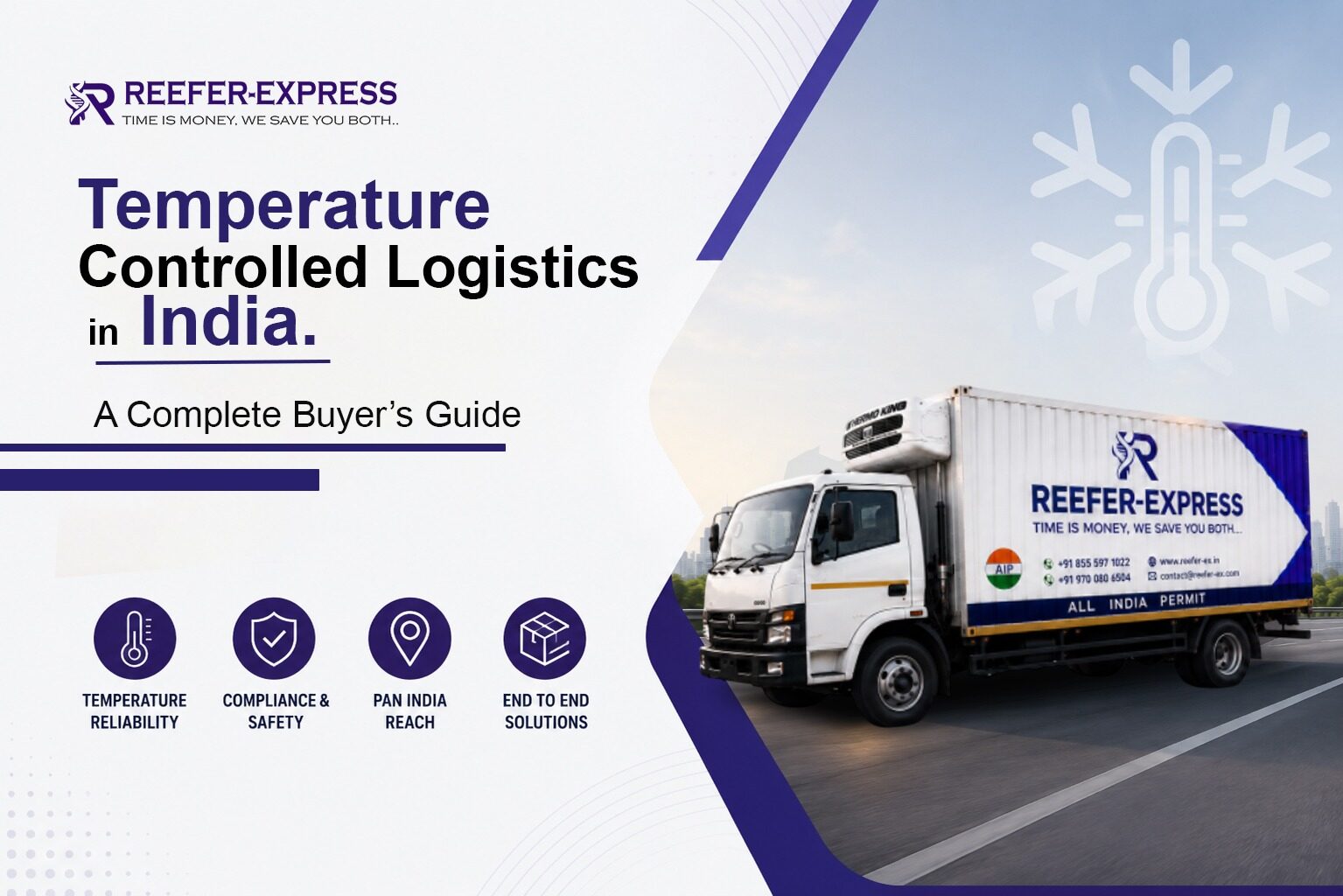
Are you evaluating temperature controlled logistics in India right now? Then you already know what a reefer truck does and why the cold chain matters. You need something more specific than a general introduction. You need a clear way to separate the providers who protect a shipment from the ones who just own a refrigerated vehicle. Owning a truck is not the same as running a solution. This guide breaks down exactly what to check before you sign a contract. It also covers why refrigerated logistics companies in India differ more than their pitch decks suggest. And it covers what pharma cold chain logistics companies in India must get right when the cargo cannot afford a mistake.
What Temperature Controlled Logistics in India Actually Requires
Temperature controlled logistics in India means holding a specified temperature range for a shipment from pickup to final delivery. It has to work across a country with extreme climate variation, patchy last mile infrastructure, and long transit distances. Owning a reefer fleet is not the same thing. A provider needs validated packaging or vehicles, continuous monitoring, documented handling protocols, and a clear plan for what happens when something goes wrong mid transit.
India’s geography makes this job genuinely harder than in most markets. A route can hold temperature perfectly in Bangalore’s mild climate. The same vehicle and packaging combination can still fail once it runs through a Rajasthan summer or a Mumbai monsoon. Some providers test their process in one region, then expand nationwide without revalidating for other climate zones. That gap only shows up once your shipment happens to travel the wrong corridor at the wrong time of year.
Why Refrigerated Logistics Companies in India Are Not All Built the Same
Most refrigerated logistics companies in India will tell you they can handle temperature sensitive cargo. Owning the equipment is not the real question. The real question is whether the entire operation, from driver training to documentation to last mile handoff, was actually designed around temperature control. Or whether cold chain is just one service line sitting on top of a general freight business.
A general logistics company usually adds a cold chain offering once demand picks up, not because it rebuilt the business around it. The reefer trucks exist, but the protocols around them often lag behind the sales conversation. Excursion response, pre-cooling procedures, and route specific validation tend to be thinner than they sound in a pitch. This weakness is not always obvious upfront, since a generic reefer fleet looks identical to a purpose built one from the outside. The real difference shows up in details a sales pitch tends to skip. How often does the fleet get requalified? Does documentation arrive automatically, or do you have to chase it? What actually happens during the final handoff to the recipient?
A specialist provider builds in the opposite order. Vehicle qualification, staff training, and compliance documentation get designed for temperature sensitive cargo first. Other cargo types then fit into that structure, rather than the other way around. If you ship temperature sensitive product occasionally and in small volumes, a large general logistics provider’s existing cold chain network might work well enough. If you ship it regularly across multiple Indian climate zones, a specialist typically delivers steadier results. Accountability and process depth run deeper across the whole organization instead of sitting in one department.
What Pharma Cold Chain Logistics Companies in India Must Get Right
Pharma cold chain logistics companies in India face a different level of scrutiny than general refrigerated freight, for good reason. The Central Drugs Standard Control Organisation enforces the Drugs and Cosmetics Rules, which govern India’s pharmaceutical distribution and set clear expectations around storage, transport, and documentation. Many companies shipping across India also follow the World Health Organization’s good distribution practice guidelines voluntarily. Those guidelines call for selecting transport methods based on local climate and seasonal variation, not assuming one setup works everywhere.
This regulatory weight exists for a real reason. Failure here is not just financial. A temperature excursion on a vaccine shipment or a biologic does not just mean a delayed delivery. It can mean the product is no longer safe to administer at all. A pharma cold chain logistics company in India needs documentation and process discipline that a general logistics company was never built to handle. The cost of a single failed shipment reaches past the product’s value into regulatory exposure and, in the worst cases, patient safety.
Air cargo has its own benchmark for this. The IATA CEIV Pharma certification sets out what rigorous temperature controlled handling looks like, and the same expectations apply just as directly to road transport within India. Press a provider on this specifically. If they cannot produce interval based temperature logs with that same level of rigor, that gap matters before you commit to anything.
The Real Cost of Choosing the Wrong Provider
Choosing the wrong temperature controlled logistics provider in India rarely fails in a dramatic way. It fails quietly. A shipment arrives a little late. A temperature log has a gap nobody can explain. A delivery agent cannot account for where the product sat for half an hour during a handoff. No single event here sinks a business relationship. Together, they compound into product loss, regulatory exposure, and a batch release decision your quality team cannot confidently make.
Buyers frequently underweight the financial dimension of this choice. A rejected batch does not just cost the value of the product. It costs the manufacturing time behind it. It costs the regulatory scrutiny that follows a documented excursion. Sometimes it costs the relationship with the buyer or hospital network waiting on that delivery. Weigh that against the marginal savings of a cheaper provider without proper credentials, and the math rarely favors the discount option. Price still matters in this decision. It should sit alongside these risks, not replace them as the deciding factor.
A slower cost is easy to miss until it actually happens. A provider who cannot produce clean documentation on demand puts you in a weak position during a regulatory audit, even before any shipment fails. Auditors expect temperature logs, chain of custody records, and excursion reports as standard practice. They should never have to wait while your logistics partner assembles that evidence under pressure. Choose a provider who treats documentation as a core deliverable rather than an optional extra, and you protect yourself well before anything goes wrong.
How to Evaluate a Temperature Controlled Logistics Provider in India
Five areas consistently separate a genuine provider from one that only looks the part on a sales call. Go through each of these directly with a prospective partner. The answers will tell you more than any brochure ever will.
Route Specific Validation
Ask for validation data tied to your actual route and product category, not a generic lab certificate. A packaging or vehicle setup validated at a standard ambient temperature tells you almost nothing about real performance. A Delhi to Mumbai run in January behaves nothing like a Chennai to Hyderabad run in May. A provider who can show route specific data, including duration windows and real ambient conditions, has done work that most competitors skip entirely.
Fleet Qualification and Vehicle Standards
Not every reefer vehicle is qualified for pharma or high value perishable cargo. Real qualification means the vehicle has been mapped for hot and cold spots. It means the refrigeration unit carries documented calibration records, and a defined pre-cooling protocol runs before product ever gets loaded. Ask how often the fleet gets requalified. Ask whether you can actually see that record as the shipper, not just a summary kept for internal audits. Reefer Express covers this directly in its breakdown of what a genuine temperature controlled reefer fleet actually needs. Real thermal stability has to hold across the full route, not just at two endpoints.
Documentation and Real Time Visibility
Location tracking alone tells you where a shipment sits, not whether it remains usable. A provider handling temperature sensitive cargo should give continuous temperature visibility during transit, not a report you have to request afterward. When that report arrives, it needs interval based readings throughout the journey. A single reading at pickup and another at delivery tells you almost nothing about what happened in between.
Last Mile Handling
Most cold chain failures in India do not happen on the highway. They happen at the handoff. A reefer vehicle arrives at a delivery point. The product then sits on a bike or in a van for thirty or forty minutes before the final drop. The National Centre for Cold-chain Development has repeatedly flagged infrastructure gaps at this exact stage. It calls this one of the weakest links in India’s broader cold chain network. That is exactly why it deserves specific questions rather than a general reassurance. Ask what the maximum allowable exposure time is between vehicle and recipient. Ask whether that window is actually monitored, or simply assumed to be fine.
Regulatory Alignment
For pharma and healthcare shipments specifically, confirm that a provider’s processes genuinely align with CDSCO requirements and the international frameworks covered earlier. A provider who can speak specifically about how these standards show up in daily operations has usually built compliance into the actual workflow. A provider who deflects into general assurances usually has not.
India’s Cold Chain Infrastructure Is Improving, But Providers Have Not All Caught Up
India has made real progress on the infrastructure side of logistics more broadly. The country climbed to 38th out of 139 countries on the World Bank’s Logistics Performance Index. Infrastructure investment and digitisation efforts, including the National Logistics Policy, drove that rise. This marks a genuine improvement in what Indian logistics can achieve broadly.
This national improvement does not mean every provider offering temperature controlled logistics in India has caught up. A national ranking reflects infrastructure and policy direction. It says nothing about the operational maturity of the specific company handling your specific route. A real gap exists between what Indian cold chain logistics can achieve today and what a given provider actually delivers on your shipment. The five evaluation points above are built to test exactly that gap.
Why Reefer Express Is the Provider Businesses Choose for Temperature Controlled Logistics in India
Reefer Express built its operation around temperature sensitive cargo requirements from day one. We never adapted a general freight model after demand picked up. Our fleet holds qualification against India’s actual climate zones rather than a single controlled test environment. That means our validation data reflects real road conditions on the specific corridors our customers actually ship on.
Documentation gets generated automatically with every shipment. Temperature logs, chain of custody records, and excursion reports arrive as standard, not as something a customer has to request after delivery. This matters most during the moments a general logistics provider tends to underdeliver. Think of a regulatory audit, a customer dispute over a delayed shipment, or a quality team trying to make a fast, confident batch release decision.
Reefer Express separates most clearly from general refrigerated logistics companies in India at the last mile. Our handling protocols maintain cold chain integrity through the vehicle to recipient handoff, exactly the stage where most competitors’ coverage quietly ends. For pharmaceutical shippers specifically, our pharma supply chain solutions target this exact gap. Documented handling procedures run from pickup through final delivery, rather than stopping once the vehicle arrives.
Packaging matters just as much here. Our detailed guide to cold chain packaging in India covers how different materials and formats perform across India’s climate extremes. Packaging validated for one region rarely holds up the same way everywhere else. You can also explore our full range of services on our homepage. It shows how packaging, fleet, documentation, and last mile handling connect into one operation instead of separate offerings stitched together.
What to Ask Before You Sign With Any Provider
Before committing to a temperature controlled logistics provider in India, have a direct conversation. Cover a short set of questions, and pay attention to how specific the answers are, not how confident they sound. Can the provider produce validation data tied to your exact route and product temperature range, rather than a generic certificate from a controlled environment? What is their written protocol for a temperature excursion during transit, including who gets notified and what happens to the product while a decision gets made? Do temperature logs get generated automatically with every shipment, or only on request? How exactly do they manage the handoff between vehicle and final recipient, and what is the maximum allowable exposure time during that stage? Have they shipped your specific product category before, and can they share relevant case history rather than a general sales pitch?
A provider who answers all of this clearly, backed by documentation rather than assurance, has thought through their operation past the marketing material. Vague responses on even one of these points tell you exactly where the risk in that partnership sits.
Frequently Asked Questions
What is the difference between temperature controlled logistics and regular refrigerated transport in India?
Temperature controlled logistics covers the full chain: validated packaging or vehicles, continuous monitoring, documentation, and last mile handling. Regular refrigerated transport might simply mean a cold vehicle is on hand, without the validation, monitoring, or documentation that makes the cold chain reliable end to end.
How do I know if a refrigerated logistics company in India is actually qualified for pharma shipments?
Ask for fleet qualification records, route specific validation data, and a documented temperature excursion protocol. A provider aligned with CDSCO and WHO good distribution practice guidelines can speak specifically about how these standards apply to daily operations. They will not just offer a general reassurance.
Why does last mile handling matter so much in Indian cold chain logistics?
Most cold chain failures in India happen at the handoff point, not during the main transport leg. A vehicle can hold perfect temperature control for hours, then the product sits unmonitored during final delivery. That gap alone is often enough to compromise a temperature sensitive shipment.
How much does temperature controlled logistics in India typically cost?
Cost depends on product category, route distance, required temperature range, and whether the shipment needs active or passive temperature control. Comparing price per shipment in isolation tells you less than you think. Weigh a provider’s full documented process against the cost of a single failed shipment instead, since that cost usually runs far higher than the price difference between providers.
Can a general logistics company handle pharma cold chain shipments reliably?
It depends on shipment volume and frequency. A company shipping temperature sensitive product occasionally may find a large general provider’s existing cold chain network sufficient. A company shipping it regularly across multiple climate zones typically gets steadier outcomes from a specialist provider built specifically around pharma cold chain requirements.
The Bottom Line
Temperature controlled logistics in India is not a commodity purchase. Treat it like one, and you risk something specific. You end up with a provider who can move a reefer truck but cannot actually protect a compliance sensitive shipment from pickup to final delivery. Look for route specific validation, qualified fleet standards, documentation that arrives automatically, and a provider who has genuinely solved last mile handling rather than just the middle of the journey.
Are you shipping temperature sensitive or regulated product across India? Contact Reefer Express for a direct conversation about what your cold chain actually needs
Comments2
The interface is so smooth and I had no trouble accessing my account. Definitely the best way to play! Check it out at jilibossloginapp
[6220]mxcwin Casino Online México | Registro, Login, APK y Tragamonedas,Únete a mxcwin Casino Online México. Regístrate, haz login y descarga la APK para disfrutar las mejores tragamonedas. ¡Gana grandes premios y juega seguro hoy! visit: mxcwin