

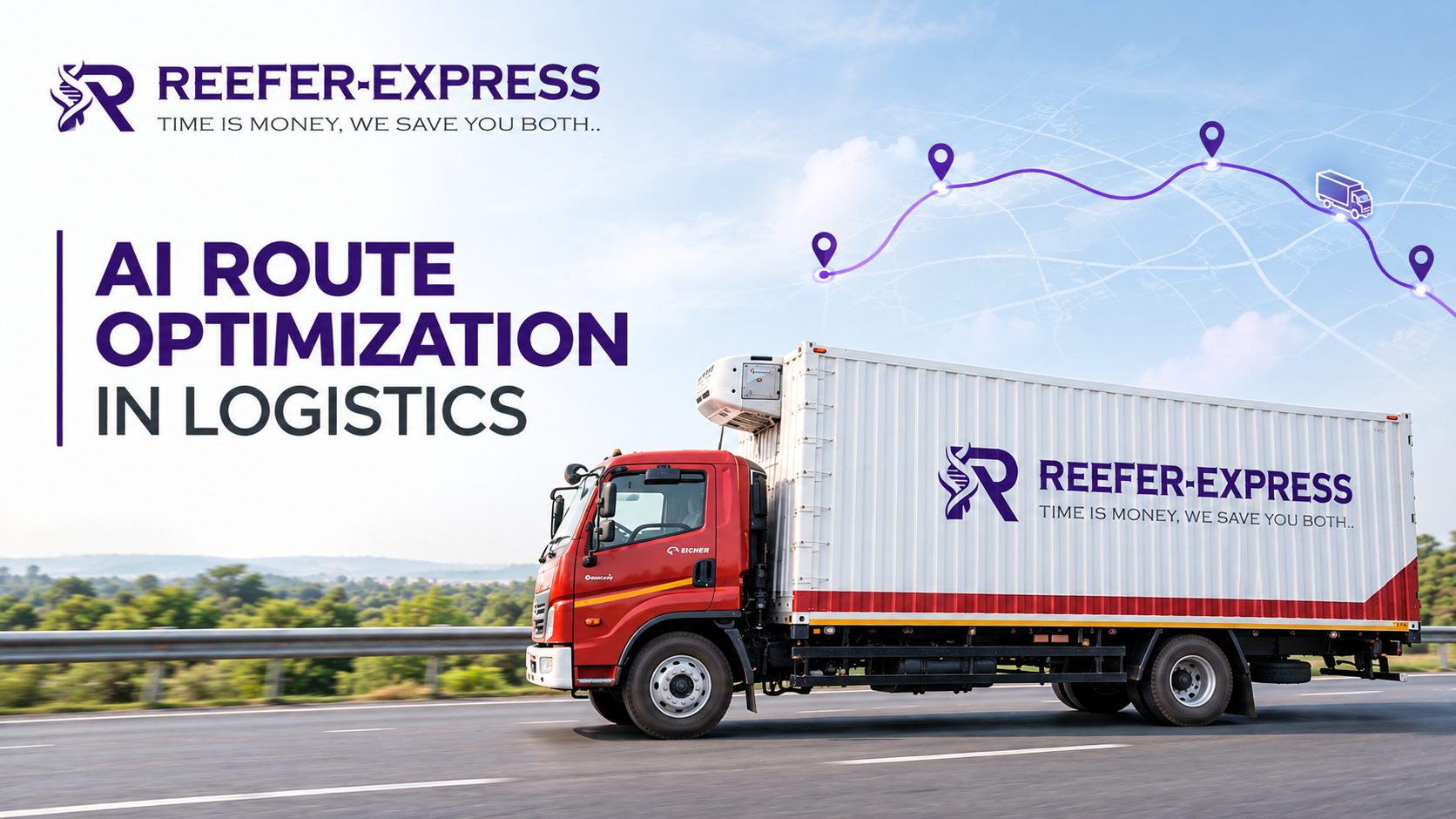
Artificial intelligence (AI) is changing how logistics companies plan deliveries, manage vehicles, and move shipments. It helps businesses make better routing decisions, reduce delays, and control transportation costs.
For companies handling temperature-sensitive goods, route planning is especially important. Delays can affect delivery schedules and, in some cases, put products at risk if the required temperature conditions are not maintained.
For Reefer Express, efficient route planning is an important part of cold chain logistics. Here are 10 ways AI can help improve route optimization and delivery operations.
1. Real-Time Traffic Analysis
Traffic congestion, accidents, and road closures can delay shipments. AI-powered systems can analyse live traffic data and help drivers choose alternative routes when needed.
For temperature-sensitive shipments, avoiding unnecessary delays can help maintain delivery schedules and reduce the risk of temperature control issues during transportation.
2. Dynamic Route Planning
Fixed routes do not always work when traffic or delivery conditions change. AI can adjust routes based on current road conditions, delivery locations, and shipment priorities.
This helps logistics teams respond to unexpected changes and choose more efficient routes for transporting goods.
3. Predictive Delivery Scheduling
AI can analyse past delivery records, seasonal demand, and shipment volumes to estimate when and where transportation demand may increase.
Logistics teams can use these insights to plan vehicle availability, schedule deliveries, and allocate resources more effectively. Better planning is particularly useful when handling temperature-sensitive goods that require timely transportation.
4. Fuel Consumption Optimization
Longer routes, traffic congestion, and excessive idling can increase fuel consumption. AI can identify more efficient routes and help reduce unnecessary driving.
For refrigerated vehicles, fuel planning is especially important because transportation and refrigeration both contribute to operating costs. Better route planning can help control these expenses while maintaining the required conditions for the cargo.
5. Improved Fleet Utilization
AI can help logistics companies assign shipments based on vehicle capacity, location, delivery schedules, and transportation requirements.
This makes it easier to use available vehicles efficiently and avoid unnecessary trips. For refrigerated transport, vehicle assignments must also consider the required temperature range and the type of goods being carried.
6. Better Last-Mile Delivery Planning
The final stage of delivery can be challenging because of traffic, multiple delivery locations, and limited delivery windows.
AI can help organise delivery stops in a more efficient order and select routes that reduce unnecessary travel. This can improve delivery planning for businesses transporting food, pharmaceuticals, and other temperature-sensitive products.
7. Integration with Shipment Tracking Systems
Combining route optimization with shipment tracking gives logistics teams better visibility into delivery progress.
When tracking systems provide location, estimated arrival time, and temperature information, teams can identify potential problems earlier and respond when action is needed.
For cold chain logistics, this visibility can help businesses monitor shipments and manage delivery exceptions more effectively.
8. Reduced Delivery Delays
AI can use traffic patterns, weather forecasts, historical delivery data, and road conditions to identify possible disruptions.
Logistics teams can use these insights to plan alternative routes and adjust delivery schedules before delays become more serious.
For temperature-controlled transportation, reducing delays can also help limit the time goods spend in transit and support better shipment management.
9. Data-Driven Logistics Decisions
AI can analyse delivery times, fuel usage, route performance, vehicle utilisation, and other operational data.
These insights help logistics managers identify inefficient routes, understand recurring delays, and improve future transportation plans.
Over time, using reliable operational data can help businesses make better decisions about routes, fleet capacity, and delivery schedules.
10. Scalable Logistics Operations
As shipment volumes increase, manually planning every route becomes more difficult. AI can help automate route planning and manage a larger number of deliveries.
This allows logistics teams to coordinate multiple vehicles, delivery locations, and shipment priorities more efficiently. For growing cold chain operations, scalable route planning can support business expansion without relying entirely on manual processes.
Conclusion
AI is helping logistics companies improve route planning, manage fleets, reduce unnecessary travel, and respond to delivery disruptions. These improvements can support more efficient transportation and better shipment visibility.
For cold chain logistics, route optimization must also account for cargo temperature requirements, vehicle suitability, and delivery schedules. Combining effective route planning with appropriate temperature monitoring can help protect sensitive goods throughout transportation.
At Reefer Express, efficient logistics starts with reliable planning and careful shipment management. As AI technology develops, it will continue to create new opportunities to improve cold chain transportation and delivery performance.