



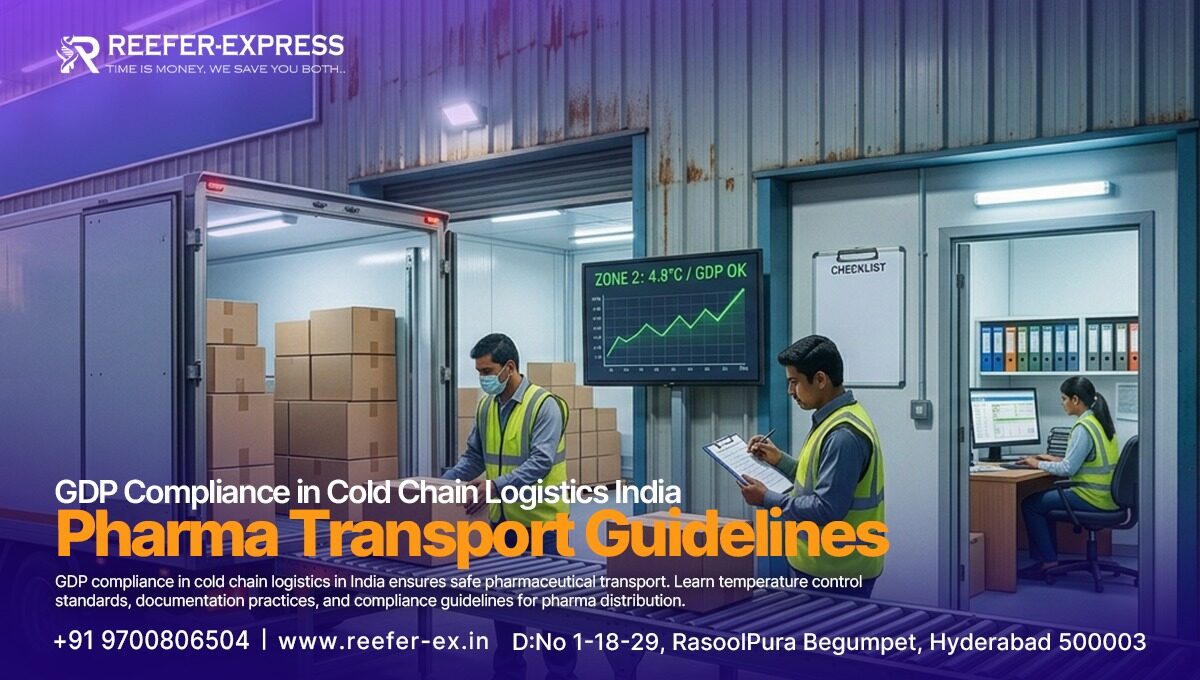
GDP compliance in cold chain logistics plays a critical role in maintaining the safety and effectiveness of pharmaceutical transport across India. GDP compliance in cold chain logistics plays a critical role in maintaining the safety, quality, and effectiveness of pharmaceutical products during transportation. In an industry where vaccines, biologics, clinical samples, and specialty medicines are highly sensitive to temperature, even a minor deviation can impact product stability and patient outcomes. This makes compliance not just a regulatory requirement, but a core operational necessity in pharmaceutical logistics.
In India, the complexity of pharmaceutical distribution increases significantly due to long travel distances, varying climatic conditions, and multi-point delivery systems. Medicines often move across states under high ambient temperatures and unpredictable transit conditions. Without structured cold chain logistics and adherence to Good Distribution Practice guidelines, the risk of temperature excursions, product degradation, and compliance failure becomes significantly higher.
GDP compliance ensures that pharmaceutical products are transported under controlled conditions from the point of origin to final delivery. It establishes a framework that includes temperature monitoring, documentation, traceability, and proper handling practices. Companies that integrate GDP principles into their cold chain logistics operations are better positioned to maintain product integrity and meet regulatory expectations consistently.
Understanding GDP Compliance in Pharmaceutical Logistics
Good Distribution Practice, commonly referred to as GDP, defines the standards required to ensure that pharmaceutical products are stored, handled, and transported under suitable conditions. GDP compliance in cold chain logistics focuses on maintaining validated temperature ranges, ensuring proper documentation, and providing complete traceability across the supply chain.
Pharmaceutical products require strict environmental control. Many medicines must be transported within a temperature range of 2°C to 8°C, while others require controlled room temperature conditions. Any variation outside these limits can affect the chemical stability of the product and reduce its effectiveness. This is why temperature monitoring systems in cold chain logistics are essential, as they provide continuous visibility and help prevent deviations during transit.
Beyond temperature control, GDP compliance also requires clear documentation at every stage. Temperature logs, handling records, and delivery confirmations ensure that the entire journey is traceable. This not only supports regulatory audits but also builds confidence among pharmaceutical companies and healthcare providers.
Why GDP Compliance Is Critical in India’s Cold Chain Logistics
India presents unique challenges for pharmaceutical transport. The combination of high temperatures, long-distance logistics, and infrastructure variability makes it difficult to maintain consistent temperature conditions without a structured approach. In such an environment, GDP compliance becomes a key factor in ensuring supply chain reliability.
One of the primary challenges in pharmaceutical logistics is maintaining temperature stability over long distances. External weather conditions, traffic delays, and operational disruptions can affect the performance of refrigerated systems. Managing long-distance refrigerated transport challenges is therefore essential for maintaining compliance and preventing temperature excursions during transit.
In addition to environmental challenges, pharmaceutical logistics in India also requires strict adherence to regulatory standards. Authorities expect complete traceability and proper documentation for all temperature-sensitive shipments. Failure to meet these requirements can result in product recalls, financial losses, and damage to brand credibility.
GDP compliance helps mitigate these risks by ensuring that all aspects of transport, including temperature control, handling procedures, and documentation, are aligned with regulatory expectations. This creates a more reliable and transparent supply chain.
GDP Compliance in Cold Chain Logistics in India: Key Requirements and Guidelines
GDP compliance in cold chain logistics in India requires a structured approach that combines temperature control, documentation, and operational discipline. Pharmaceutical products are transported across long distances and diverse climatic conditions, making it essential to maintain validated temperature ranges throughout the journey. Without consistent monitoring and controlled handling, the risk of temperature deviation increases significantly, especially during interstate distribution.
One of the key requirements of GDP compliance is maintaining continuous temperature stability during transport. Medicines such as vaccines and biologics often require storage between 2°C to 8°C, and even minor fluctuations can impact their effectiveness. This is where temperature monitoring systems in cold chain logistics play a critical role, providing real-time visibility and helping logistics teams take immediate corrective action when needed.
Transport reliability is another essential factor. Refrigerated vehicles, insulation systems, and packaging solutions must be validated to perform under real-world conditions. Managing long-distance refrigerated transport challenges becomes especially important in maintaining compliance, as delays, traffic conditions, and environmental exposure can all affect temperature stability during transit.
Finally, trained personnel and standardized handling procedures ensure that pharmaceutical products are managed correctly at every stage. GDP compliance in cold chain logistics is not achieved through equipment alone, but through a combination of technology, processes, and skilled operations that work together to maintain product integrity and regulatory compliance.
Key Elements of GDP-Compliant Cold Chain Transport
Maintaining GDP compliance in cold chain logistics involves a combination of systems, processes, and operational discipline. Temperature control remains the most critical element. Refrigerated transport systems must be capable of maintaining consistent temperature conditions throughout the journey, regardless of external factors.
Equally important is the validation of transport equipment. Refrigerated vehicles, insulation systems, and packaging solutions must be tested under real-world conditions to ensure they can perform reliably during long-distance transportation. Without proper validation, the risk of temperature fluctuation increases significantly.
Handling practices also play a vital role. Improper loading can restrict airflow within the cargo space, leading to uneven temperature distribution. This can create localized temperature deviations that affect sensitive pharmaceutical products. Trained personnel and standardized handling procedures are essential to maintain stability during transport.
Technology has become a key enabler in modern cold chain logistics. Real-time monitoring systems, GPS tracking, and digital temperature sensors provide continuous visibility into shipment conditions. These tools allow logistics teams to identify potential issues early and take corrective action before product integrity is compromised.
Role of Cold Chain Logistics in Strengthening Pharmaceutical Supply Chains
Cold chain logistics forms the backbone of pharmaceutical distribution by ensuring that temperature-sensitive products are transported under controlled conditions. In India, road-based refrigerated transport plays a critical role in maintaining continuity across the supply chain, especially for interstate distribution.
By reducing unnecessary handling and maintaining direct delivery routes, cold chain logistics minimizes the risk of temperature fluctuations. This is particularly important for products such as vaccines and biologics, where even minor deviations can impact effectiveness.
A well-structured cold chain logistics system also improves supply chain efficiency. Reliable transport ensures timely delivery, reduces product loss, and enhances trust among stakeholders. Pharmaceutical companies can operate with greater confidence when they know their products are being transported under compliant conditions.
How Reefer Express Ensures GDP-Compliant Pharmaceutical Transport
Reefer Express operates with a strong focus on GDP compliance in cold chain logistics across India. By combining temperature-controlled transport systems, real-time monitoring technology, and structured route planning, Reefer Express ensures that pharmaceutical shipments are handled with precision and care.
The company maintains well-equipped refrigerated fleets that are regularly inspected and validated for performance. Real-time temperature monitoring provides continuous visibility, allowing logistics teams to respond quickly to any deviation. Efficient route planning further reduces transit risks and ensures timely delivery across long distances.
With trained personnel and compliance-focused processes, Reefer Express supports pharmaceutical companies in maintaining product integrity and meeting regulatory requirements. This approach not only reduces operational risk but also strengthens trust across the supply chain.
Conclusion
GDP compliance in cold chain logistics is essential for ensuring the safe and reliable transport of pharmaceutical products across India. In an environment where temperature stability directly impacts product quality and patient safety, maintaining compliance is a critical responsibility for logistics providers.
By integrating temperature control, proper documentation, trained handling, and real-time monitoring, companies can significantly reduce the risk of product degradation and regulatory failure. As pharmaceutical distribution continues to expand, the importance of structured and compliant cold chain logistics will only grow.
Businesses that prioritize GDP compliance today are better positioned to build resilient, efficient, and trustworthy supply chains for the future.
Looking for GDP-compliant cold chain logistics across India?
Reefer Express provides temperature-controlled, reliable, and compliance-focused pharmaceutical transport solutions.
Call : +91 9700806504 Visit : https://www.reefer-ex.in
Frequently Asked Questions (FAQs)
GDP compliance ensures pharmaceutical products are stored and transported under controlled conditions to maintain safety and quality.
GDP ensures temperature control, traceability, and compliance with regulatory standards, reducing risk in pharmaceutical transport.
Most medicines require 2°C to 8°C or controlled room temperature conditions depending on product type
Cold chain logistics maintains stable temperature conditions and ensures proper handling and monitoring throughout transport.
Non-compliance can lead to product degradation, recalls, financial loss, and regulatory penalties.
Comments3
Really liking the rewards system on this app. It keeps things exciting and the prizes are actually attainable. bdbb444app is my new favorite.
Easy navigation and very fast loading times. I can play on my phone while commuting without any issues. I am really happy with a444casino.
Super easy to navigate and the deposit options are very flexible. It's refreshing to find a site that focuses on the player experience. br56b