



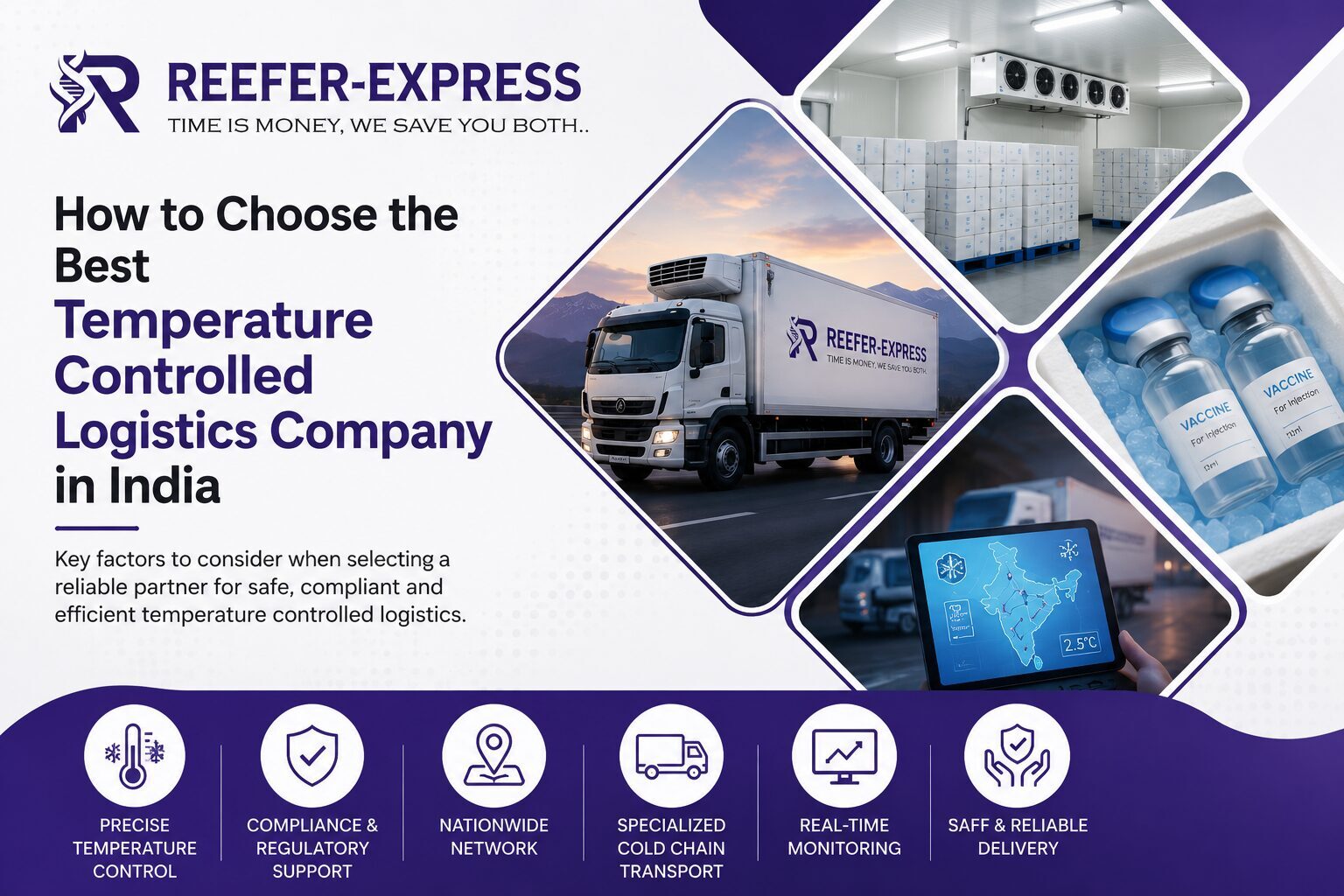
A temperature-controlled logistics company should provide validated cold chain infrastructure, real-time temperature monitoring, route-specific qualification, compliance documentation, and reliable last-mile delivery. These capabilities help pharmaceutical companies maintain product integrity and regulatory compliance throughout transportation.
If you are evaluating temperature controlled logistics in India for your pharma shipments, you already know the basics. You know what cold chain means. What you are trying to figure out now is which provider will not cost you a batch when temperatures hit 44°C in May, when your reefer breaks down mid-route, or when last-mile delivery depends on a delivery agent with no monitoring equipment. That is the only question that matters at this stage.
This blog answers it directly.
Why Most Cold Chain Transportation India Solutions Look Similar But Are Not
India’s cold chain infrastructure has expanded fast over the last decade. But infrastructure growth and operational standards are two different things. A lot of what gets called pharmaceutical cold chain logistics in India is passive insulated packaging with no route validation, no real-time temperature monitoring, and no documented excursion protocol. It meets the surface requirement. It does not hold under pressure.
The pharma supply chain adds another layer of complexity. You have climate variation across zones, tightening regulatory requirements under Schedule M and GDP guidelines, and a last-mile delivery environment where the final 30 minutes of a shipment can undo everything that came before. Choosing a provider who has optimised the warehouse-to-truck leg but left the truck-to-recipient leg unaddressed is choosing a provider who will let you down eventually.
According to the
According to the Indian Pharmaceutical Alliance, temperature excursions during transit remain one of the leading causes of batch rejections in Indian pharma logistics. The risk is not theoretical. It is operational, and it sits disproportionately in the last-mile leg that most providers treat as someone else’s problem.
What Distinguishes a Serious Pharmaceutical Cold Chain Logistics India Provider
Route-Specific Validation
A generic test certificate tells you almost nothing useful. India’s climate variation, from coastal humidity in Chennai to dry heat in Rajasthan to cold winters in Delhi, means that validation done in a controlled chamber does not map onto real-world route performance. A provider worth considering can show you validation data tied to specific corridors, specific ambient temperature profiles, and specific hold times. If they hand you a certificate without route context, treat that as a gap.
The
The WHO’s good distribution practices guidelines are explicit on this: qualification of transportation lanes is not optional for temperature-sensitive products. It is a documentation requirement. Ask your provider if their validation aligns with these standards.
Temperature and Location Visibility Together
Real-time tracking that shows you location but not temperature is not cold chain monitoring. It is package tracking. These are not the same thing. When a shipment arrives, the release decision depends on knowing whether the product was within its temperature window throughout transit, not just whether the truck reached the destination. Good providers give you temperature and GPS data together, continuously, in a format you can use for documentation, not a spreadsheet you have to request two days later.
The
The Central Drugs Standard Control Organisation (CDSCO) has tightened documentation expectations under revised Schedule M. Temperature logs are not a courtesy from your logistics provider. They are a compliance requirement. A provider who treats them as optional is exposing your batch to regulatory risk.
A Written Excursion Protocol
Ask any provider what happens when a temperature deviation occurs during transit. A good provider has a written SOP: who gets notified, what the decision tree looks like, how the product is quarantined, and what documentation gets generated. A provider who answers vaguely is telling you they have not thought through failure scenarios. This is not a sign that things will go wrong. It is a sign that when they do, you will be dealing with it alone.
The Last-Mile Gap in Cold Chain Transportation India
Most cold chain failures in India happen at the handoff. The reefer vehicle is compliant. The packaging is validated. And then the shipment sits outside while a delivery agent completes another drop. This is not a packaging problem. It is a process problem that most cold chain transportation India providers have not addressed because solving the middle leg is easier and looks better in a sales conversation.
When evaluating any provider, ask specifically how they handle the handoff from reefer to recipient. How long is the allowable exposure window? Is that monitored? What happens if it is exceeded? These questions will tell you more about a provider’s operational maturity than any brochure. The
When evaluating any provider, ask specifically how they handle the handoff from reefer to recipient. How long is the allowable exposure window? Is that monitored? What happens if it is exceeded? These questions will tell you more about a provider’s operational maturity than any brochure. The Pharmaceutical Logistics Council of India has noted that last-mile cold chain integrity is the single largest unresolved gap in India’s pharmaceutical distribution infrastructure. Providers who have built SOPs around it are the exception, not the norm.
Why Reefer Express for Pharmaceutical Cold Chain Logistics in India
Reefer Express is built around pharma supply chain requirements, not adapted from a general logistics model. The difference matters because pharma cold chain has compliance requirements, documentation standards, and failure consequences that general logistics companies are not designed to handle.
The reefer fleet maintains temperature continuity across the full route, not just at pickup and delivery. Packaging is qualified for India’s actual climate zones, which means the validation data reflects the ambient conditions your product faces on the road. Documentation, including temperature logs, excursion reports, and chain of custody records, is built into every shipment by default.
On last-mile, Reefer Express has specific handling protocols to maintain cold chain integrity through final delivery. That is the leg where most competitors’ coverage ends. If you need to understand how these protocols work for your product category and your routes, the right step is a direct conversation.
You can explore more about Reefer Express’s pharma cold chain services at reeferexpress.com. For deeper context on India’s cold chain compliance landscape, the Ministry of Health and Family Welfare’s Schedule M guidance provides useful reference material.
Questions to Ask Any Provider Before You Sign
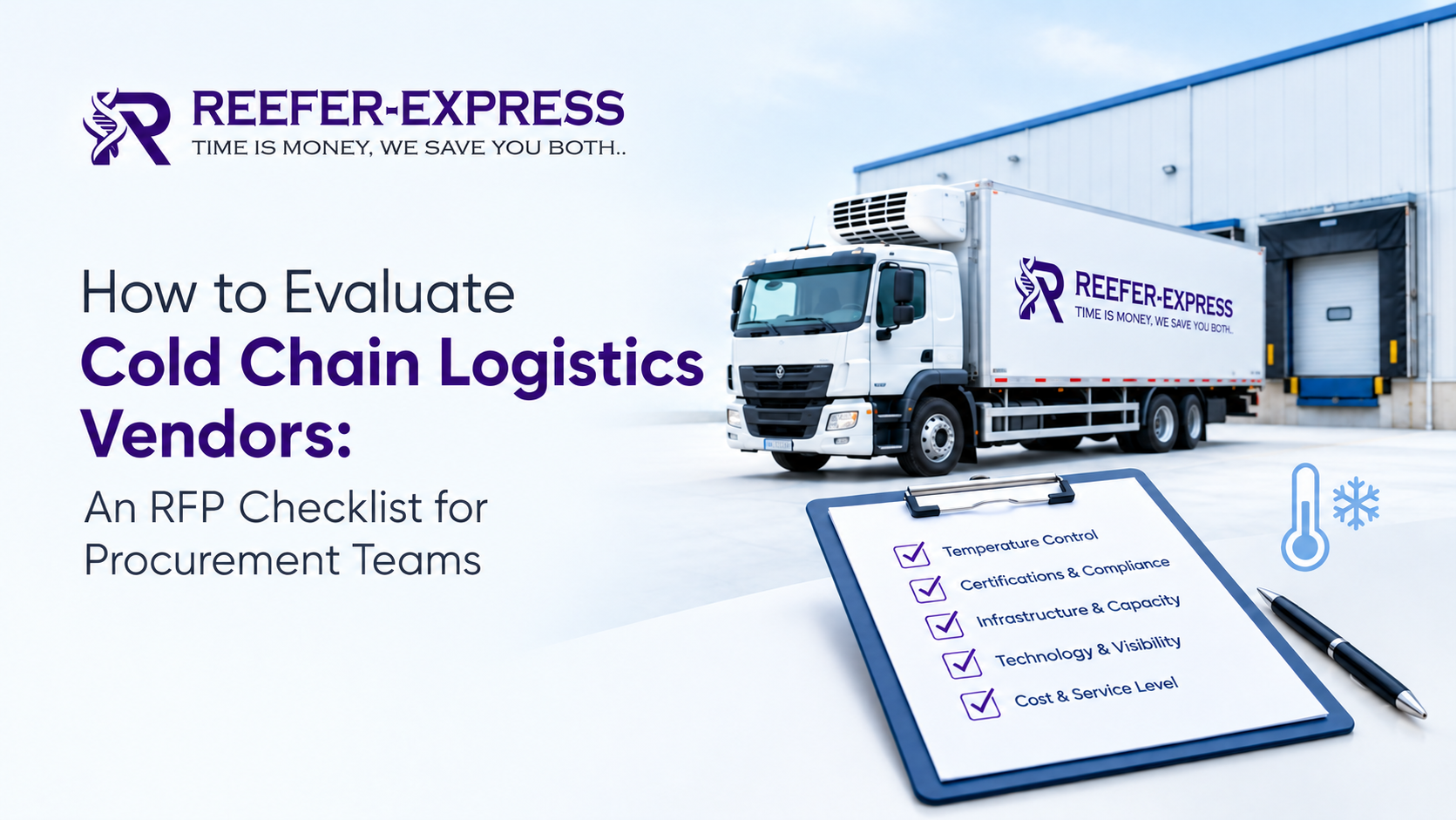
Before committing to a temperature controlled logistics India partner for your pharma supply chain, run through these questions in a direct conversation. Can they show you validation data specific to your route and your product’s temperature range? What is their written SOP for a temperature excursion during transit? Do temperature logs come with every shipment as standard documentation? How do they handle last-mile delivery for temperature-sensitive products? Have they shipped your product category before?
A provider who can answer each of these clearly, with documentation to back it up, is one worth taking seriously. Vague answers or hesitation on any of them tells you exactly where the gaps are before you commit, not after a loss.
Key Factors That Define a Reliable Temperature-Controlled Logistics Provider
The most important factors include:
Real-time temperature monitoring
Route-specific validation
GDP-compliant processes
Temperature excursion management
Last-mile cold chain protection
Nationwide transportation coverage
Documented temperature records
Businesses should evaluate these factors before selecting a logistics partner.
The Bottom Line
Cold chain transportation in India is not a commodity decision. Who you choose determines whether your product arrives compliant, whether your documentation holds up under audit, and whether you carry the liability when something goes wrong in transit. Price is a factor, but it should not be the primary filter when the cost of failure is this high.
Choose based on documented route validation, infrastructure that covers the full chain including last-mile, real-time temperature monitoring with accessible logs, and a provider who can answer hard questions without deflecting. If you are shipping pharma product and want to discuss specifics, routes, product categories, and turnaround times, Reefer Express is the right conversation to start.
Contact Reefer Express for a route-specific assessment of your pharmaceutical cold chain logistics India requirements.
According to WHO, GDP guidelines, and CDSCO regulations, temperature-sensitive products should be stored and transported under validated conditions to maintain safety, quality, and effectiveness.
FAQ
What is temperature-controlled logistics?
Temperature-controlled logistics involves storing and transporting products within specific temperature ranges to maintain quality and safety.
Why is cold chain monitoring important?
It helps ensure products remain within required temperatures and prevents spoilage or quality loss.
What is a temperature excursion?
A temperature excursion occurs when products are exposed to temperatures outside their approved range.
How do pharmaceutical companies maintain cold chain compliance?
They use validated storage, temperature-controlled transport, real-time monitoring, and regulatory guidelines.
What should businesses look for in a logistics provider?
Look for temperature monitoring, compliance expertise, reliable transportation, and cold chain experience.
Comments6
Finally found a platform that actually works without lagging. The interface is very user friendly and the bonuses are legit. pk365apkpk
I've been looking for a reliable way to access my account and this site is a lifesaver. Super fast loading and very intuitive interface. Highly recommend phx777link to everyone here!
I've tried a few sites lately but this one is definitely the smoothest for logging in. Super fast and no lag at all. Check out 2phcomlogin for a great experience.
Perfect for local players! The bonuses are generous and the site loads quickly even on mobile data. Glad I found jilibet019philippines.
I've tried a few platforms lately but this one really stands out. The loading speed is impressive and the interface is super friendly. Definitely my new go-to spot! phjilibey
Finally found a place where the gameplay feels fair and the community is actually helpful. Had a great run last night on pkbatpkrgameonline, highly recommend it to all poker fans.