



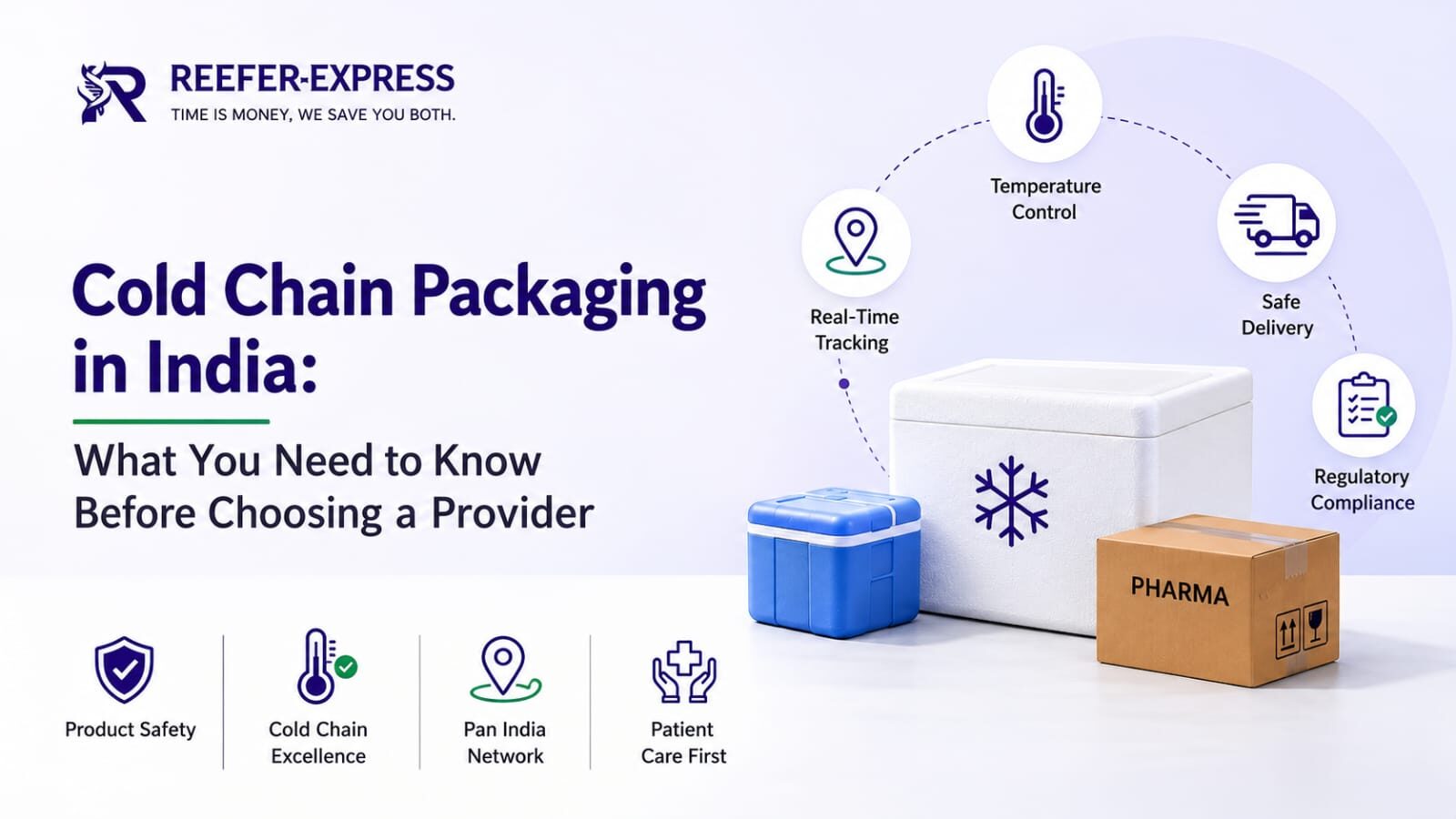
If you’re already comparing providers, you’re past the what is cold chain stage. You know the basics. What you’re trying to figure out now is which provider won’t let you down when it actually matters when your biologics are in transit, when it’s 42°C outside in May, and when your shipment needs to arrive within a compliant temperature window or it’s a write off.
Why Cold Chain Packaging in India Is Harder Than It Looks
India’s logistics sector has grown quickly, and cold chain has grown with it. But growth in infrastructure doesn’t always mean growth in standards. A lot of what gets sold as “cold chain packaging” in India is passive insulated packaging a thermocol box with a gel pack that was never validated for the routes it’s being used on.
India’s pharmaceutical cold chain sector is growing rapidly as demand for temperature-sensitive medicines and biologics increases globally. According to https://www.who.int/, maintaining temperature integrity during transportation is critical for product safety and efficacy.
The pharma supply chain in India is also more complex than most sectors. You’re dealing with climate variation across zones, regulatory requirements that keep tightening, and a last-mile reality where the final leg of delivery often happens outside controlled environments entirely. Packaging that works in a warehouse-to-warehouse context can fail completely once it hits the field.
India’s pharma logistics sector is also increasingly aligning with international compliance standards such as GDP (Good Distribution Practices). The https://health.ec.europa.eu/ outline strict controls for storage, transportation, and documentation of temperature-sensitive medicines.
The core issue is accountability. When packaging fails and product is compromised, there’s often no clean documentation trail. No temperature log. No route validation record. Just a loss, and a conversation about who’s responsible.
What Separates Real Cold Chain Packaging From the Rest
Validation Data That’s Actually Specific to Your Route
Generic validation means very little. A packaging solution tested in a controlled environment at a standard ambient temperature tells you almost nothing about how it performs on a Chennai to Hyderabad route in summer versus a Delhi-to-Mumbai route in January. India has enough climate variation that route-specific qualification isn’t optional it’s the baseline.
When you ask a provider for validation data, they should be able to give you documentation tied to specific temperature profiles, duration windows, and ambient conditions. If they hand you a generic test certificate, that’s a gap worth taking seriously.
Packaging Material Matched to the Product
EPS foam, vacuum-insulated panels, PCM-based systems these aren’t interchangeable. Each has a performance profile suited to specific temperature ranges and hold times. A provider offering one solution for everything 2–8°C vaccines, 15–25°C diagnostics, and frozen biologics is cutting corners somewhere. The packaging that protects your product should be selected based on what your product actually needs, not on what the provider has in stock.
Temperature and Location Visibility in Transit
Real-time tracking should mean temperature and location together, not just GPS. If you can see where a shipment is but not whether it’s been breached, you can’t make a release decision when it arrives.
Organizations such as https://www.iata.org/ emphasize end-to-end shipment visibility, including both GPS tracking and live temperature monitoring, to reduce product excursion risks.
Good cold chain packaging providers build monitoring into the shipment, not just the warehouse, and they give you access to that data in a format that’s useful not just a spreadsheet you have to request after the fact.
A Written Excursion Protocol
Ask any provider what happens when a temperature excursion occurs in transit. If they don’t have a documented answer who gets notified, what the decision tree looks like, how the product is quarantined or disposed of that’s a serious gap.
An excursion protocol isn’t a sign that things will go wrong. It’s a sign that the provider has thought seriously about what happens when they do.
The Last-Mile Problem Nobody Talks About Enough
Most cold chain failures in India don’t happen at the warehouse. They happen at the handoff. The reefer vehicle is compliant. The packaging is validated. And then the shipment sits on a delivery agent’s bike in direct sunlight for 45 minutes while they complete another drop.
This is a structural problem in how last-mile delivery works in India, and it’s one that most cold chain providers haven’t actually solved. They’ve solved the middle leg. The first and last legs particularly last-mile remain weak points that need to be addressed at the process level, not just the packaging level.
Research from https://www.unicef.org/ highlights how exposure during final delivery stages can compromise vaccines, biologics, and other sensitive pharmaceutical products.
When evaluating a cold chain solution in India, ask specifically about last-mile handling. How does the product get from the reefer vehicle to the recipient? What’s the maximum allowable time between vehicle and delivery Is that monitored? The answers will tell you a lot about whether a provider has actually thought through the full chain or just the parts that are easy to control.
Why Reefer Express for Pharma Cold Chain in India
Reefer Express is built around pharma supply chain requirements in India not adapted from a general logistics model. The distinction matters because pharma cold chain has specific compliance requirements, documentation needs, and failure consequences that general logistics providers aren’t designed to handle.
The reefer fleet maintains temperature continuity throughout the route, not just at pickup and delivery. Packaging is qualified for India’s actual climate zones, which means the validation reflects the ambient conditions your product will face on the road, not in a test chamber.
Documentation temperature logs, excursion reports, chain of custody records is built into every shipment, not available on request.
On last-mile, Reefer Express has specific handling protocols designed to maintain cold chain integrity through the final leg, which is where most competitors’ coverage ends. If you’re shipping pharmaceutical product that needs to arrive compliant, this is the part of the chain that determines whether your effort on the earlier legs actually holds.
The difference between a logistics company that offers cold chain as a service line and a provider built around cold chain is that the second one has thought through the failure modes. Reefer Express is the second kind.
What to Ask Before You Sign With Any Cold Chain Provider
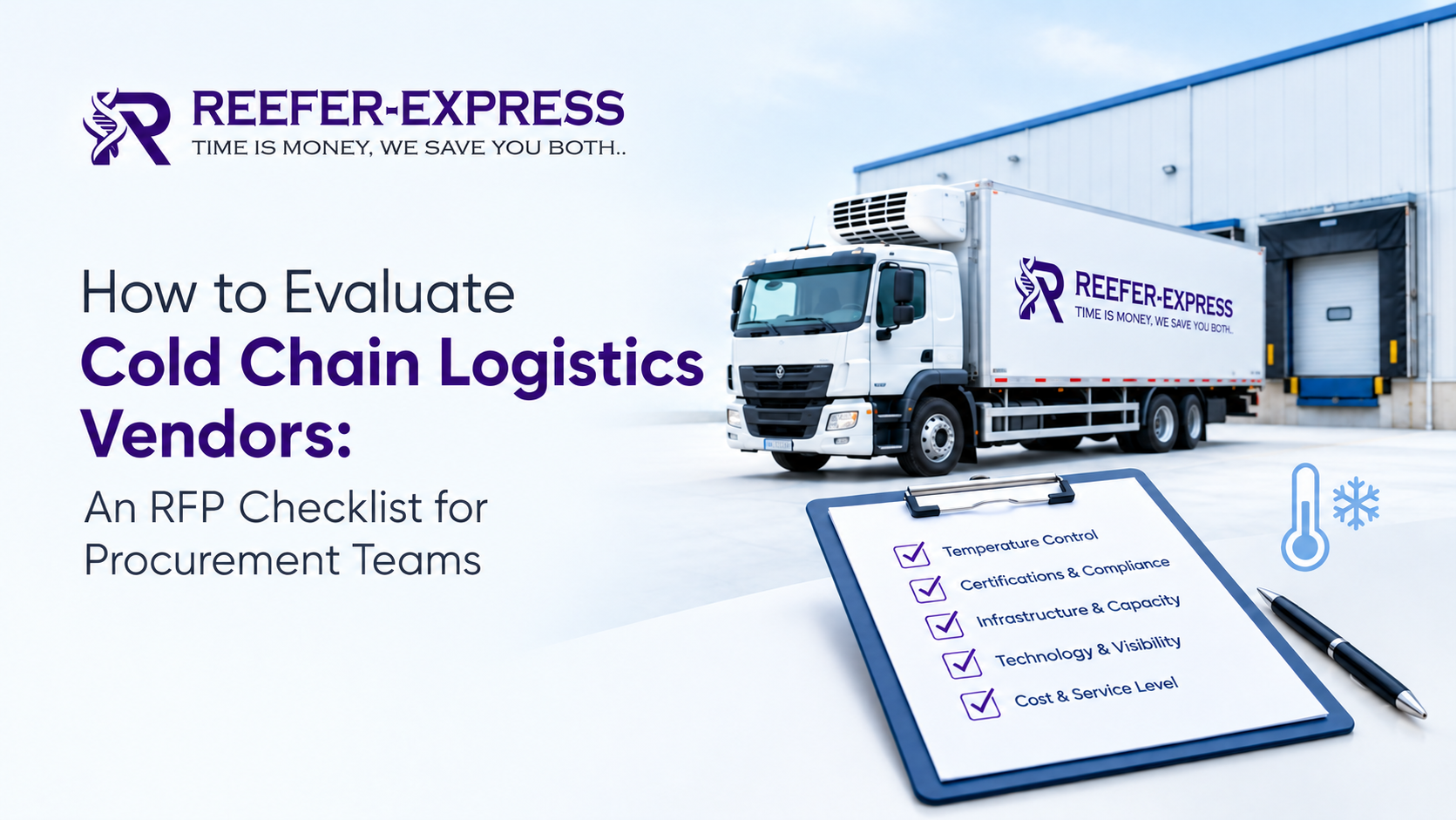
Before committing to a provider for your pharma supply chain in India, run through these questions in a direct conversation:
Can they show you validation data specific to your route and your product’s temperature range?
What is their written SOP for a temperature excursion during transit?
Do temperature logs come with every shipment or only on request?
How do they handle last-mile delivery for temperature-sensitive products?
Have they shipped your product category before, and can they share relevant case data?
The https://www.cdc.gov/ provides practical guidance on temperature monitoring, excursion management, and handling protocols for sensitive healthcare products.
A provider who can answer all of these clearly, with documentation to back it up, is one worth taking seriously. Hesitation or vague answers on any of them tells you where the gaps are.
Bottom Line
Cold chain packaging in India is not a commodity decision. Who you choose affects product integrity, batch release decisions, regulatory standing, and your liability if something goes wrong in transit. Price matters, but it shouldn’t be the primary filter when the cost of failure is this high.
As India’s healthcare and biologics sector expands, reliable cold chain infrastructure is becoming increasingly important for regulatory compliance and product integrity. Industry insights from https://www.deloitte.com/ show that pharmaceutical companies are prioritizing validated cold chain systems and real-time shipment visibility to reduce risk across the supply chain.
Choose based on documented validation, infrastructure that covers the full chain including last-mile, real-time temperature monitoring, and a provider who can answer hard questions without deflecting.
If you’re shipping pharma product and want to talk specifics routes, product categories, turnaround times Reefer Express is the right conversation to have.
Looking for a cold chain solution in India built for pharma supply chain compliance? Contact Reefer Express for a route-specific assessment.
Comment1
Great platform with a very professional feel. I appreciate the security measures they have in place for deposits. bdk7777vip is definitely a five star choice for me.