

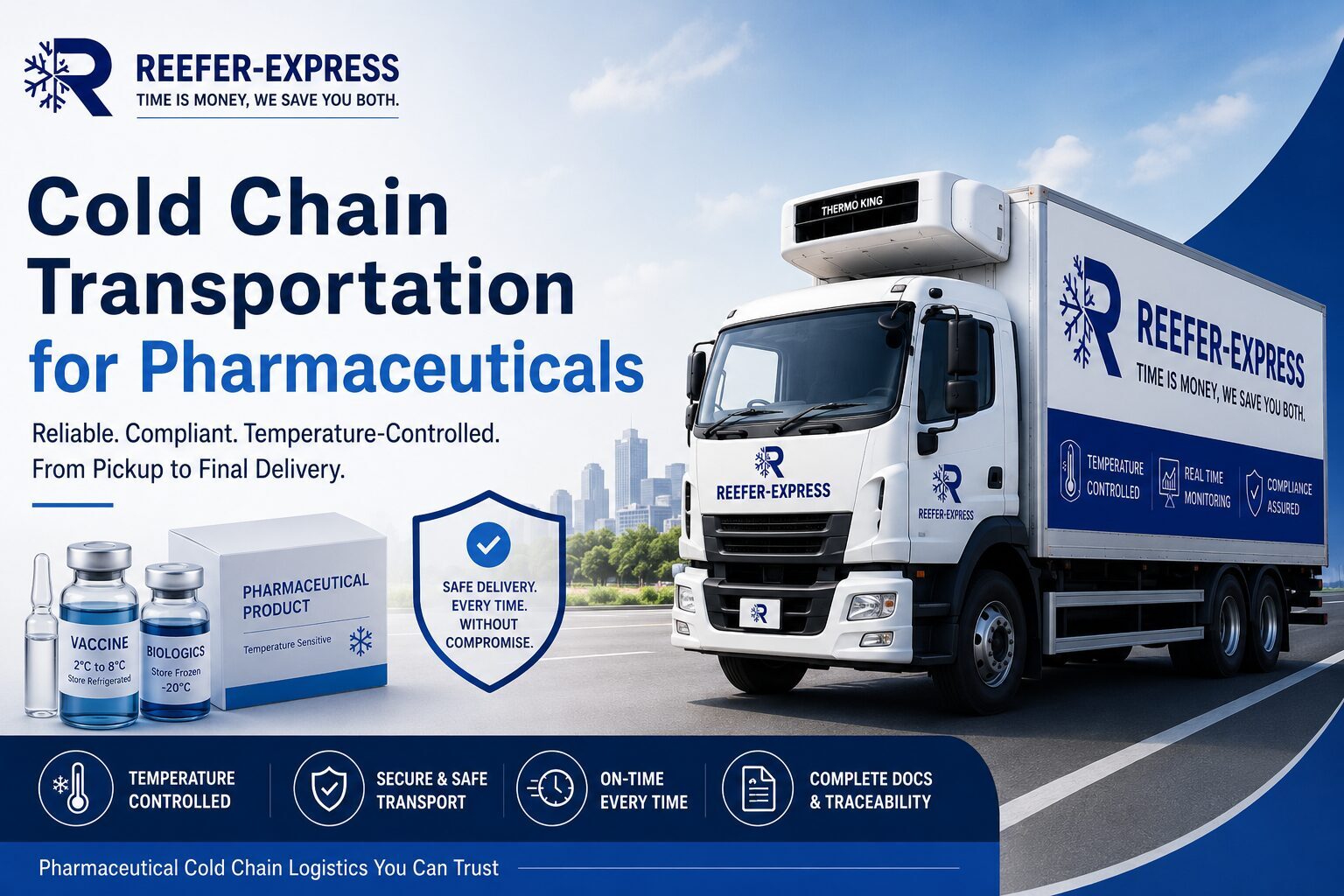
The pharmaceutical industry depends on precision. A small temperature variation during transportation can affect product quality, reduce effectiveness, and create compliance issues. Whether it is vaccines, biologics, diagnostic kits, insulin, specialty medicines, or clinical trial materials, temperature-sensitive products require a transportation system that maintains the required conditions from pickup to delivery.
Many logistics companies claim to offer cold chain services, but not all of them provide the level of control, monitoring, and documentation needed for pharmaceutical shipments. Choosing the right cold chain transportation partner is not simply about moving products from one location to another. It is about protecting product integrity throughout the journey.
This guide explains what pharmaceutical companies should look for when selecting a cold chain transportation provider and how to identify a logistics partner that can consistently maintain compliance and product safety.
Why Pharmaceutical Cold Chain Transportation Matters
Pharmaceutical products are often highly sensitive to temperature changes. Some products must remain between 2°C and 8°C, while others require frozen or controlled room-temperature conditions. Even a short temperature excursion can result in product degradation, reduced effectiveness, or complete product loss.
The financial impact of a failed shipment can be significant, but the larger concern is patient safety. A compromised pharmaceutical product may not perform as intended, creating risks for healthcare providers and patients.
According to the World Health Organization (WHO) Good Distribution Practices Guidelines, maintaining proper storage and transportation conditions throughout the supply chain is essential to preserve the quality, safety, and efficacy of pharmaceutical products. This is why pharmaceutical cold chain transportation must follow strict handling and monitoring procedures.
Understanding the Difference Between Basic Transport and True Cold Chain Logistics
Many companies market temperature-controlled transportation as cold chain logistics, but there is a major difference between the two.
Basic transport solutions often rely on insulated boxes, gel packs, or temporary cooling methods. These solutions may work for short-distance deliveries but often lack route validation, real-time monitoring, and contingency planning.
A true pharmaceutical cold chain system includes validated packaging, temperature-controlled vehicles, continuous monitoring, documented handling procedures, and complete shipment visibility.
| Factor | Basic Temperature-Controlled Transport | Pharmaceutical Cold Chain Transportation |
| Temperature Control | Limited | Continuous |
| Monitoring | Manual checks | Real-time tracking |
| Documentation | Limited | Comprehensive |
| Route Validation | Rarely available | Route-specific validation |
| Compliance Support | Basic | Industry-focused |
| Excursion Management | Reactive | Defined SOPs |
Understanding this difference helps businesses avoid choosing providers that offer only partial cold chain solutions.
Packaging Is Just As Important As Transportation
One of the most common mistakes in pharmaceutical logistics is assuming that all products can be transported using the same packaging solution.
Different products require different temperature ranges and protection methods. Packaging must be selected based on product sensitivity, transit duration, weather conditions, and route requirements.
| Product Category | Temperature Range | Recommended Packaging |
| Vaccines | 2°C to 8°C | VIP Panels + PCM |
| Biologics | 2°C to 8°C | Advanced Thermal Packaging |
| Diagnostic Kits | 15°C to 25°C | Ambient-Controlled Packaging |
| Frozen Products | Below -20°C | Dry Ice + Reefer Support |
| Clinical Trial Materials | Product Specific | Validated Custom Solutions |
A reliable provider should be able to explain exactly why a particular packaging solution is being used and provide validation data to support its performance.
The Importance of Real-Time Temperature Monitoring
Shipment tracking has become standard in logistics, but location tracking alone is not enough for pharmaceutical products.
Knowing where a shipment is located does not tell you whether the required temperature range has been maintained. Pharmaceutical cold chain transportation requires continuous temperature monitoring throughout the journey.
Real-time monitoring provides visibility into temperature conditions as they occur. If a temperature excursion happens, corrective action can be taken immediately instead of discovering the problem after delivery.
The CDC Vaccine Storage and Handling Toolkit highlights the importance of continuous temperature monitoring and documentation for temperature-sensitive products. These practices help reduce risks and ensure products remain within their approved temperature range throughout transportation.
Why Last-Mile Delivery Remains the Biggest Challenge
The final stage of delivery is often the weakest part of the pharmaceutical cold chain.
Many shipments leave a temperature-controlled vehicle and spend the final part of their journey exposed to external conditions. Even if the product remained compliant throughout transportation, poor handling during the last mile can compromise the shipment.
A reliable cold chain provider should have defined procedures for handling products during final delivery. This includes temperature protection during unloading, controlled transfer processes, and documented chain-of-custody records.
The last mile should be treated as part of the cold chain, not as a separate delivery activity.
Questions to Ask Before Choosing a Cold Chain Transportation Provider
Selecting a pharmaceutical logistics partner requires more than comparing pricing. Businesses should evaluate operational capabilities, compliance standards, and experience.
Here are some important questions to ask:
Do You Have Experience Transporting Pharmaceutical Products?
A provider with pharmaceutical experience understands product sensitivity, compliance requirements, and handling procedures.
Is Your Packaging Validated?
Packaging should be tested and validated under real transportation conditions rather than relying on theoretical performance claims.
Do You Offer Real-Time Temperature Monitoring?
Continuous temperature visibility helps identify and resolve issues before they affect product quality.
How Are Temperature Excursions Managed?
Every provider should have documented procedures explaining how temperature deviations are handled and reported.
Are Temperature Reports Included with Every Shipment?
Documentation should be automatically provided rather than available only upon request.
How Do You Manage Last-Mile Delivery?
A strong answer should include specific protocols designed to maintain cold chain integrity during final delivery.
Key Features of a Reliable Pharmaceutical Cold Chain Provider
The best cold chain transportation providers share several common characteristics.
They use validated packaging systems that match product requirements. Their fleet includes temperature-controlled vehicles designed for pharmaceutical transportation. They provide real-time shipment visibility and continuous temperature monitoring. They maintain detailed documentation and support compliance requirements. Most importantly, they have clear operating procedures that cover every stage of the shipment.
Reliability is built through process control, not marketing claims.
Why Documentation Matters
Documentation is often overlooked until it becomes necessary.
Regulatory audits, quality reviews, customer requirements, and internal compliance programs all depend on accurate shipment records. A professional cold chain provider should be able to provide temperature logs, chain-of-custody records, delivery confirmations, and excursion reports whenever required.
Complete documentation creates accountability and provides confidence that products remained within their required temperature range throughout transportation.
International programs such as IATA CEIV Pharma emphasize shipment traceability, temperature visibility, and compliance documentation. These standards have become important benchmarks for pharmaceutical logistics providers worldwide.
Choosing the Right Partner for Long-Term Success
Cold chain transportation should not be viewed as a simple logistics expense. It is a critical part of pharmaceutical quality management.
The right provider helps reduce risk, maintain compliance, protect product integrity, and support business growth. The wrong provider can create product losses, regulatory concerns, and operational disruptions that cost far more than any initial savings.
Before making a decision, evaluate providers based on their infrastructure, monitoring capabilities, documentation processes, packaging validation, and pharmaceutical experience. Ask detailed questions and request evidence rather than relying on marketing promises.
Pharmaceutical companies should stay updated with globally recognized cold chain standards and best practices. Resources such as the WHO Good Distribution Practices (GDP) Guidelines, the CDC Vaccine Storage and Handling Guidelines, and IATA CEIV Pharma Standards provide valuable guidance for maintaining product quality, regulatory compliance, and patient safety during transportation.
Conclusion
Pharmaceutical products require a transportation system that can maintain temperature control, visibility, compliance, and documentation throughout every stage of the journey. Choosing a reliable cold chain transportation provider is one of the most important decisions pharmaceutical companies can make.
A strong cold chain partner delivers more than transportation. They provide confidence that every shipment reaches its destination safely, remains compliant, and maintains the quality standards expected within the pharmaceutical industry.
When evaluating providers, focus on proven processes, validated solutions, and complete cold chain coverage from pickup to final delivery. That approach will help protect both your products and the patients who depend on them.