



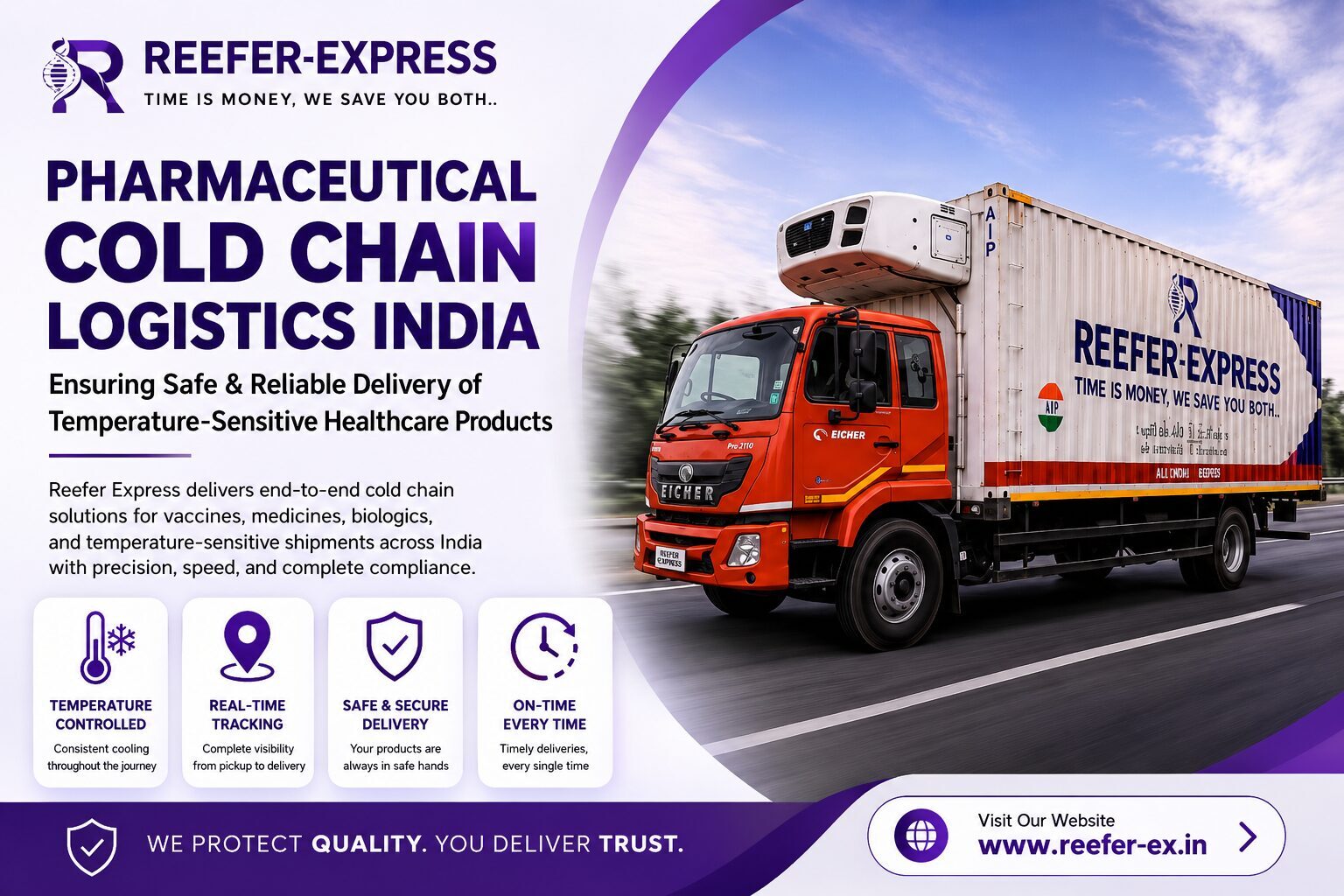
India is one of the world’s largest pharmaceutical producers. From vaccines and insulin to biologics and specialty medicines, the country supplies healthcare products to domestic and global markets every day. Many of these medicines are temperature sensitive, which means they must stay within a fixed temperature range during storage and transportation.
This is where Pharmaceutical Cold Chain Logistics India becomes important.
Cold chain logistics helps pharmaceutical companies maintain product quality from manufacturing plants to hospitals, pharmacies, laboratories, and patients. A small temperature variation during transportation can reduce the effectiveness of medicines and vaccines. In critical healthcare situations, this can directly affect patient safety.
According to the World Health Organization, temperature control is one of the most important requirements in pharmaceutical distribution systems. You can read more about pharmaceutical storage standards on the official WHO website: https://www.who.int/
India’s pharmaceutical market is growing rapidly, and so is the demand for reliable cold chain systems. Today, pharmaceutical companies are investing heavily in cold storage facilities, refrigerated transportation, insulated packaging, and real time monitoring systems.
What is Pharmaceutical Cold Chain Logistics?
Pharmaceutical cold chain logistics refers to the process of storing and transporting medicines under controlled temperature conditions.
Some pharmaceutical products remain stable only within a specific temperature range. If they are exposed to excessive heat, freezing conditions, or humidity, they may lose their effectiveness.
Products that usually require cold chain logistics include vaccines, biologics, insulin, blood plasma, specialty medicines, and laboratory samples.
In India, pharmaceutical cold chain systems generally work within these temperature ranges.
| Product Category | Recommended Temperature |
| Vaccines | 2°C to 8°C |
| Insulin | 2°C to 8°C |
| Frozen products | -20°C or below |
| Blood products | 1°C to 6°C |
| Biologics | 2°C to 8°C |
These products require uninterrupted temperature control throughout the supply chain.
Why Pharmaceutical Cold Chain Logistics India is Growing Fast
India has become a major pharmaceutical manufacturing hub. The country exports medicines to more than 200 countries and plays an important role in global vaccine production.
The demand for Pharmaceutical Cold Chain Logistics India is increasing because of several important reasons.
The first reason is the growing use of biologics and specialty medicines. These medicines are highly sensitive to temperature fluctuations and require advanced logistics systems.
The second reason is vaccine distribution. During the pandemic, India’s healthcare and logistics industries expanded cold chain infrastructure to support large scale vaccine transportation.
The third reason is the growth of online pharmacies and home healthcare services. Patients now expect medicines to be delivered safely to their homes, including temperature sensitive products.
India’s pharmaceutical sector is also supported by government healthcare initiatives and infrastructure development projects. You can explore more about India’s pharmaceutical industry through the official Invest India platform: https://www.investindia.gov.in/
Importance of Cold Chain Transportation India
Cold Chain Transportation India plays a major role in protecting pharmaceutical products during transit.
Unlike regular logistics systems, pharmaceutical transportation requires temperature controlled vehicles, insulated packaging, and continuous monitoring.
Modern cold chain transportation systems use refrigerated trucks, temperature sensors, GPS tracking, and automated alerts to maintain product safety.
The difference between regular logistics and pharmaceutical cold chain logistics is significant.
| Standard Logistics | Pharmaceutical Cold Chain Logistics |
| Normal delivery vehicles | Refrigerated vehicles |
| Basic packaging | Temperature validated packaging |
| No live monitoring | Real time temperature tracking |
| Suitable for general products | Suitable for medicines and vaccines |
| Lower compliance standards | Strict healthcare regulations |
Pharmaceutical transportation also requires trained handling staff because improper loading or unloading can affect product stability.
Key Components of Pharmaceutical Cold Chain Logistics
Cold Storage Facilities
Cold storage warehouses help maintain medicines under controlled temperature conditions before distribution.
Modern cold storage facilities use advanced cooling systems, backup power support, and digital monitoring tools.
Many pharmaceutical companies establish storage units near manufacturing plants and export hubs to improve distribution efficiency.
Refrigerated Transportation
Refrigerated trucks and insulated containers help maintain stable temperatures during transportation.
Different transportation systems are used depending on shipment size, travel distance, and product sensitivity.
Long distance transportation in India can be challenging because climate conditions vary across regions.
Temperature Monitoring Systems
Real time monitoring systems are becoming essential in pharmaceutical logistics.
IoT sensors and tracking devices continuously monitor temperature and humidity during transportation. If any temperature variation occurs, alerts are generated immediately.
This technology helps companies reduce product loss and maintain regulatory compliance.
You can learn more about IoT based cold chain systems from IBM’s supply chain insights platform: https://www.ibm.com/in-en
Insulated Packaging
Temperature sensitive medicines are packed using insulated containers, gel packs, dry ice, and phase change materials.
Effective packaging helps maintain stable conditions during unexpected transportation delays.
Challenges in Pharmaceutical Cold Chain Logistics India
Although the sector is expanding quickly, several operational challenges still exist.
Infrastructure Gaps
Cold storage and refrigerated transportation infrastructure are improving in India, but access is still uneven in smaller cities and remote regions.
Road quality and traffic congestion can also affect delivery timelines.
Temperature Excursions
A temperature excursion happens when pharmaceutical products move outside their approved temperature range.
Even short exposure to unsuitable conditions can damage medicines permanently.
This is one of the biggest risks in pharmaceutical logistics.
High Operational Costs
Cold chain systems require significant investment in refrigeration equipment, fuel, backup power systems, packaging, and monitoring technology.
These costs are often challenging for smaller pharmaceutical businesses.
Regulatory Compliance
Pharmaceutical logistics providers must comply with strict healthcare regulations and documentation standards.
Maintaining compliance across multiple transportation and storage points requires continuous monitoring and trained staff.
You can explore pharmaceutical distribution standards through the Central Drugs Standard Control Organization of India: https://cdsco.gov.in/
Technologies Improving Cold Chain Shipping Companies India
Technology is transforming the operations of Cold Chain Shipping Companies India.
Modern digital systems improve efficiency, reduce product loss, and increase visibility throughout the supply chain.
IoT and Real Time Tracking
IoT devices monitor temperature, humidity, and vehicle conditions continuously.
Real time monitoring allows companies to take corrective action immediately if temperature conditions change.
GPS Tracking
GPS systems improve route planning and shipment visibility.
Logistics companies can track deliveries and reduce transportation delays.
Data Analytics
Analytics platforms help companies study transportation patterns, delivery timelines, storage utilization, and fuel efficiency.
This helps improve operational performance and cost management.
Automated Warehouses
Automated cold storage facilities improve inventory management and reduce human handling errors.
Automation also increases operational speed and accuracy.
Comparison of Different Cold Chain Transport Methods
Different transportation methods are used depending on delivery urgency and shipment size.
| Transport Method | Best Use Case | Advantages | Limitations |
| Refrigerated trucks | Domestic deliveries | Flexible and cost effective | Traffic delays |
| Air cargo | Emergency shipments | Fast transportation | Higher cost |
| Rail refrigeration | Bulk distribution | Lower fuel cost | Limited routes |
| Sea freight | International exports | Suitable for large shipments | Longer transit time |
Many pharmaceutical companies use multiple transportation methods together to balance speed and cost.
Role of Cold Chain Shipping Companies India in Pharmaceutical Exports
India exports pharmaceutical products worldwide, and international shipments require strict temperature management.
Cold Chain Shipping Companies India help exporters maintain product quality during long distance transportation.
Export logistics includes temperature controlled packaging, refrigerated containers, customs support, and live shipment monitoring.
Global healthcare markets have strict pharmaceutical quality standards, and reliable cold chain systems help Indian companies maintain compliance.
You can explore India’s export industry updates through the Pharmaceutical Export Promotion Council of India: https://pharmexcil.com
How to Choose the Right Cold Chain Logistics Partner
Selecting the right logistics partner is critical for pharmaceutical companies.
A reliable logistics provider helps reduce product damage, maintain compliance, and improve delivery efficiency.
Here are some important factors businesses should evaluate.
| Evaluation Factor | Why It Matters |
| Temperature control systems | Protects product quality |
| Real time tracking | Improves shipment visibility |
| Regulatory compliance | Reduces legal risks |
| Cold storage network | Supports nationwide delivery |
| Emergency response systems | Handles unexpected issues |
| Industry experience | Improves reliability |
Companies should also check whether the logistics provider has trained staff and backup refrigeration systems.
Sustainability in Pharmaceutical Cold Chain Logistics
Sustainability is becoming an important focus area in cold chain operations.
Cold storage facilities and refrigerated transportation consume large amounts of energy. To reduce environmental impact, companies are investing in energy efficient refrigeration systems and eco friendly packaging.
Electric refrigerated vehicles and solar powered cold storage units are also gaining attention in India.
Many global healthcare and logistics companies are now focusing on sustainable supply chain practices. You can learn more about sustainable logistics from DHL’s sustainability initiatives: https://www.dhl.com/
Future of Pharmaceutical Cold Chain Logistics India
The future of Pharmaceutical Cold Chain Logistics India looks strong because healthcare demand is increasing continuously.
The growth of biologics, vaccines, specialty medicines, and online healthcare services will increase the need for advanced temperature controlled supply chains.
Artificial intelligence, automation, predictive analytics, and real time monitoring systems are expected to improve logistics efficiency in the coming years.
Government investment in healthcare infrastructure and logistics parks will also strengthen India’s cold chain ecosystem.
As pharmaceutical exports continue to grow, Indian companies will invest more in world class cold storage and transportation systems.
Why Reliable Cold Chain Systems Matter for Patient Safety
The most important purpose of pharmaceutical cold chain logistics is patient safety.
If medicines lose effectiveness because of poor temperature management, patients may not receive proper treatment benefits.
This is especially important for vaccines, cancer treatments, insulin products, and biologics.
Reliable cold chain systems help maintain medicine quality from production to final delivery.
Healthcare providers, pharmaceutical manufacturers, and logistics companies all share the responsibility of maintaining safe healthcare supply chains.
Conclusion
Pharmaceutical Cold Chain Logistics India has become an essential part of the healthcare and pharmaceutical industry.
As India strengthens its position as a global pharmaceutical manufacturing and export hub, the importance of reliable temperature controlled logistics will continue to grow.
Cold Chain Transportation India supports the safe movement of vaccines, biologics, insulin products, and specialty medicines across domestic and international markets.
At the same time, Cold Chain Shipping Companies India are investing in modern technology, refrigerated infrastructure, and advanced monitoring systems to improve product safety and operational efficiency.
Despite challenges such as infrastructure gaps, high operational costs, and regulatory complexity, the sector is evolving rapidly.
Businesses that invest in strong cold chain systems can reduce product losses, improve compliance, strengthen customer trust, and protect patient health.
In the pharmaceutical industry, maintaining the correct temperature is not just a logistics requirement. It is directly connected to healthcare quality and human safety.
FAQS
What is Pharmaceutical Cold Chain Logistics India?
It is the temperature controlled storage and transportation of medicines, vaccines, and healthcare products.
Why is cold chain transportation important?
It helps maintain medicine quality and prevents temperature damage during delivery.
Which products require cold chain logistics?
Vaccines, insulin, biologics, blood products, and specialty medicines require cold chain handling.
What temperature is used in pharmaceutical cold chains?
Most medicines are stored between 2°C to 8°C depending on the product type.
What are the main challenges in cold chain logistics?
Infrastructure gaps, high costs, temperature fluctuations, and regulatory compliance are major challenges.
How do Cold Chain Shipping Companies India ensure safety?
They use refrigerated vehicles, insulated packaging, and real time temperature monitoring systems.
What technologies are used in Cold Chain Transportation India?
IoT sensors, GPS tracking, automated storage systems, and live temperature monitoring are commonly used.
Why is cold chain logistics important for exports?
It helps maintain medicine quality during international shipping and supports global compliance standards.
Comments6
Really impressed with the variety of betting options available. It is easy to navigate even for beginners. I'm sticking with 2nnbet for my weekend games.
Top tier service and very fair odds. I've recommended this site to a few friends and we all have had a blast playing together. Visit jilifunregisteronline for a premium experience.
The slots on this app are incredibly rewarding. I love the variety of themes and the smooth animations. For all slot lovers, slotmestreapk is the way to go.
Five stars for the amazing promotions and the friendly atmosphere. Definitely give f05plataforma a try.
Really great community and exciting gameplay. It is hard to find a site that balances fun and reward this well. Check out pak888game
Professional Freezer Repair Services help prevent food waste caused by unexpected cooling problems. Experienced specialists repair faulty thermostats, blocked vents, and damaged components while restoring consistent freezing temperatures.