



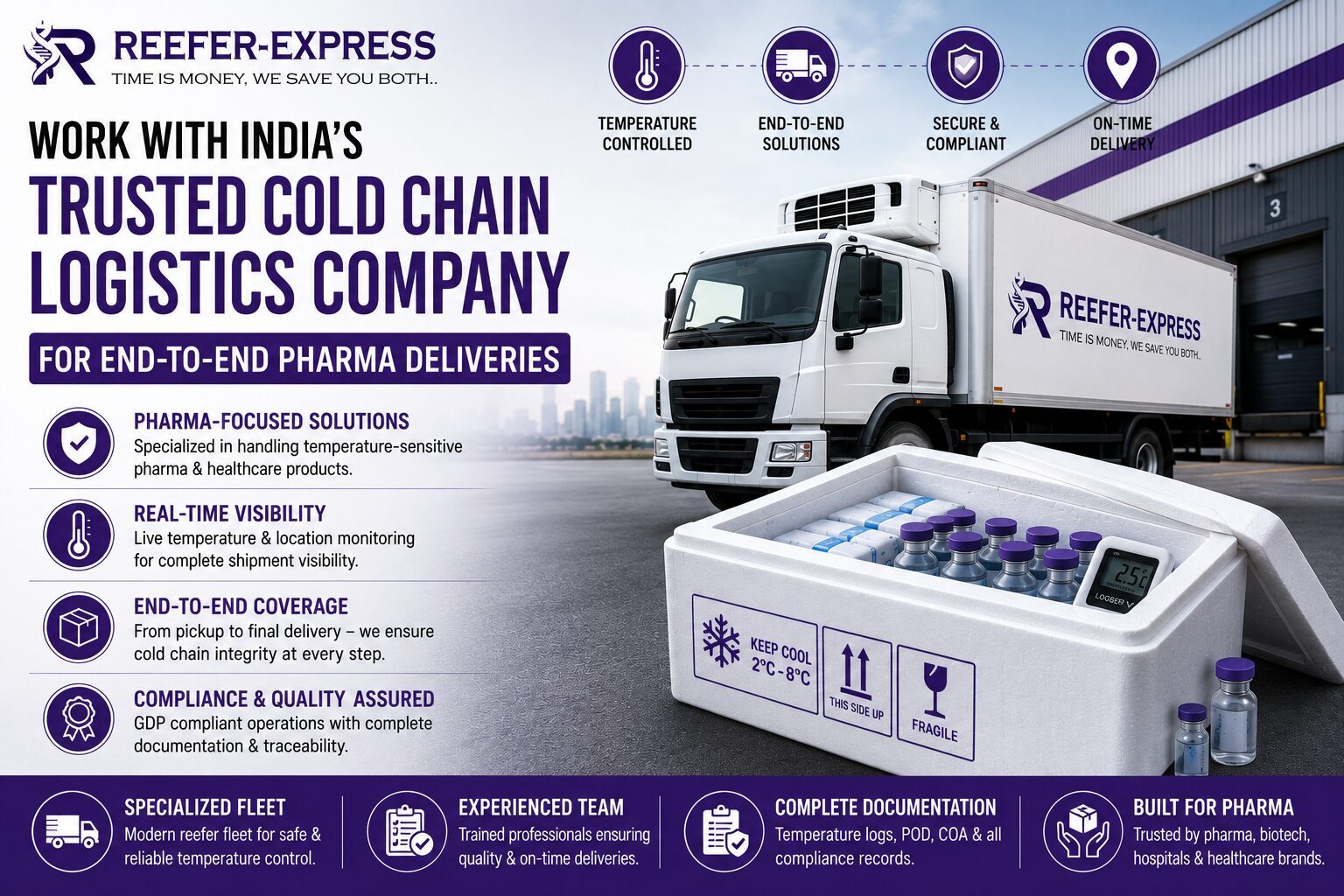
If you are already searching for a cold chain logistics company in India, you are not looking for a basic explanation of what cold chain means. You are trying to figure out which provider will actually protect your product when the ambient temperature hits 44°C in May, the route runs through three climate zones, and any excursion means a full batch write-off.
Why Cold Chain Logistics in India Is More Demanding Than Most Markets
India’s cold chain sector has expanded significantly over the last decade, but infrastructure growth and operational reliability are two different things. A large portion of what gets marketed as cold chain logistics in India is still built on passive packaging, unvalidated routes, and general freight vehicles that were never designed for temperature-sensitive cargo.
The pharma sector compounds this. You are dealing with regulatory requirements under Schedule M and GDP guidelines that keep tightening, climate variation between the northern plains, the coastal south, and the northeast, and a distribution network where the last leg often runs outside any controlled environment. A provider that handles warehouse-to-warehouse well can still fail your product completely on the final drop.
The accountability gap is also real. When a shipment fails and product is compromised, there is often no documentation trail that clearly assigns responsibility. No temperature log. No route record. Just a loss, a dispute, and a write-off sitting on your books.
What Separates a Serious Cold Chain Logistics Company from a General Freight Provider
Route-Specific Validation, Not Generic Certificates
Any provider can hand you a test certificate. What matters is whether that certificate reflects your actual route, your product’s temperature range, and the ambient conditions your shipment will face in transit. A solution validated in a controlled test chamber at 25°C tells you very little about how it performs on a Hyderabad-to-Chennai run in June or a Delhi-to-Kolkata lane in August.
When you ask for validation data, the response should be route-specific documentation tied to real ambient profiles, actual hold durations, and seasonal conditions. If the answer is a generic compliance certificate, that is a gap worth taking seriously.
Infrastructure That Covers the Full Chain
A reefer fleet is table stakes. What differentiates a real cold chain logistics company in India is whether temperature continuity is maintained through every handoff point, not just at origin and destination. Temperature monitoring needs to be continuous through transit, not just at loading and unloading. Location data alone is not enough. If you can see where a shipment is but not whether the temperature has been breached, you cannot make a valid release decision when it arrives.
A Written Excursion Protocol
Ask any provider what happens when a temperature excursion occurs during transport. The answer should be a documented SOP: who gets notified, what the decision tree looks like, how the product is quarantined, and what the reporting chain is. A provider without a written excursion protocol has not thought through failure. A provider with one has.
Documentation Built Into Every Shipment
Temperature logs, chain of custody records, and excursion reports should come with every shipment as a standard output, not on request. If you have to ask for documentation after the fact, you do not have a cold chain provider. You have a freight company that added a reefer truck.
The Last-Mile Problem That Most Cold Chain Providers Have Not Solved
Most cold chain failures in India do not happen in the reefer vehicle. They happen at the handoff. The vehicle is compliant. The packaging meets spec. And then the shipment sits on a delivery agent’s bike in direct sunlight for 40 minutes while they complete another stop.
This is not a packaging problem. It is a process problem, and it is one that general logistics providers have not solved because they were not built around it. They have solved the middle leg of the journey. The last mile, which is where pharma products most frequently reach patients and where temperature breaches are most common, is still a weak point in most supply chains in India.
Before committing to any provider, ask specifically about last-mile handling. How does your product move from the reefer vehicle to the end recipient? What is the maximum allowable time between unloading and delivery? Is that window monitored? The answers will tell you whether the provider has actually built a cold chain or just a cold fleet.
Healthcare Logistics in India: Why the Compliance Standard Is Higher Than General Cargo
Healthcare logistics in India operates under a different compliance standard than general freight. GDP (Good Distribution Practice) guidelines require documented evidence of temperature control throughout the distribution chain, not just at origin and destination. The Central Drugs Standard Control Organisation (CDSCO) and state drug authorities have authority to reject batches where the temperature record is incomplete or shows unexplained gaps.
According to the WHO’s guidelines on good storage and distribution practices for pharmaceutical products, the cold chain must be maintained and documented from manufacturer to patient. Any gap in documentation is treated the same as a gap in control.
This matters because a logistics company that does not understand the regulatory framework does not just create operational risk. It creates batch release risk, audit risk, and liability risk. Choosing a healthcare logistics company in India means choosing a provider that understands what documentation is required, keeps that documentation automatically, and can produce it in the format your regulatory team or auditors need.
Why Reefer Express Is Built for This Specifically
Reefer Express was designed around pharma supply chain requirements in India, not adapted from a general logistics model. That distinction matters because the failure modes in pharma cold chain are specific, the consequences are higher, and the documentation requirements are different from standard freight.
The reefer fleet maintains continuous temperature control through the full route. Packaging qualifications are based on India’s actual climate zones, which means validation data reflects what your product will experience on the road, not in a test lab. Every shipment includes complete documentation as a standard output. And for last-mile, Reefer Express operates specific handling protocols designed to protect temperature integrity through the final leg, which is where most competitors’ coverage ends. For an overview of how these challenges are addressed operationally, see how Reefer Express solves modern cold chain transportation challenges in India.
The difference between a logistics company that offers cold chain as a service line and one built around it is that the second has thought through every failure mode. Route failures. Packaging failures. Excursion handling. Last-mile gaps. Regulatory documentation. Reefer Express is the second kind.
Questions to Ask Before Signing With Any Cold Chain Logistics Company in India
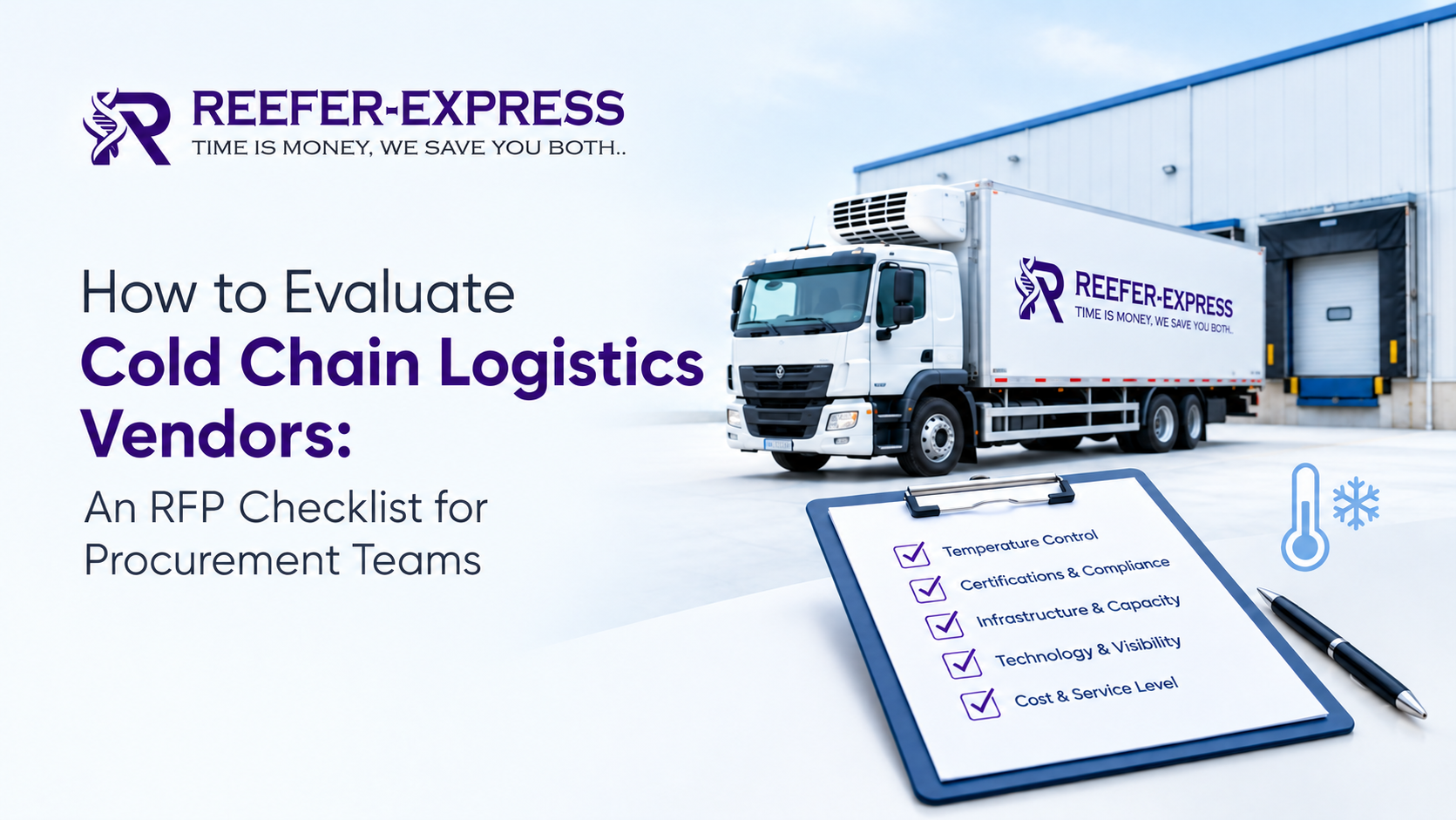
Run these in a direct conversation with any provider before you commit.
Can they show you validation data specific to your route and your product’s temperature range? Not a generic certificate — actual route qualification.
What is their written SOP when a temperature excursion happens during transit? Who gets notified, in what timeframe, and what is the decision process?
Do temperature logs come with every shipment as a standard output, or only when you request them?
How is last-mile delivery handled for temperature-sensitive products? What is the maximum unmonitored window between the reefer vehicle and final delivery?
Have they shipped your product category before on similar routes? Can they provide relevant case data or references?
A provider who answers all of these clearly, with documentation to back up the answers, is worth taking seriously. Hesitation or vague answers on any of them tells you exactly where the gaps are.
The Bottom Line
Choosing a cold chain logistics company in India is not a commodity decision. Who you select directly affects product integrity, batch release decisions, regulatory standing, and your exposure if something goes wrong in transit. Price matters, but it is not the right primary filter when the cost of failure is this high.Choose based on documented route validation, real-time temperature monitoring, infrastructure that covers the full chain including last-mile, and a provider that can answer hard questions without deflecting. If you are shipping pharma product and want to talk specifics — routes, product categories, turnaround requirements contact Reefer Express for a route-specific assessment
Comments6
Here you are
Honestly the best experience I have had in a long time. The bonuses are actually generous and the games load instantly. Definitely sticking with 5k5k777 from now on.
Finally found a site that actually pays out quickly. The login process is seamless, definitely check out jilip8login if you want a hassle-free experience.
The game variety is insane! I spent hours exploring the different options and everything works perfectly on my mobile phone. Big shoutout to b444bet
Really impressed with the graphics and the overall feel of the site. It feels very premium and secure. You should visit ph311jilipark.
The app version is so much more convenient than the browser. Everything is just a tap away and it runs perfectly on my phone. Love 89batapp